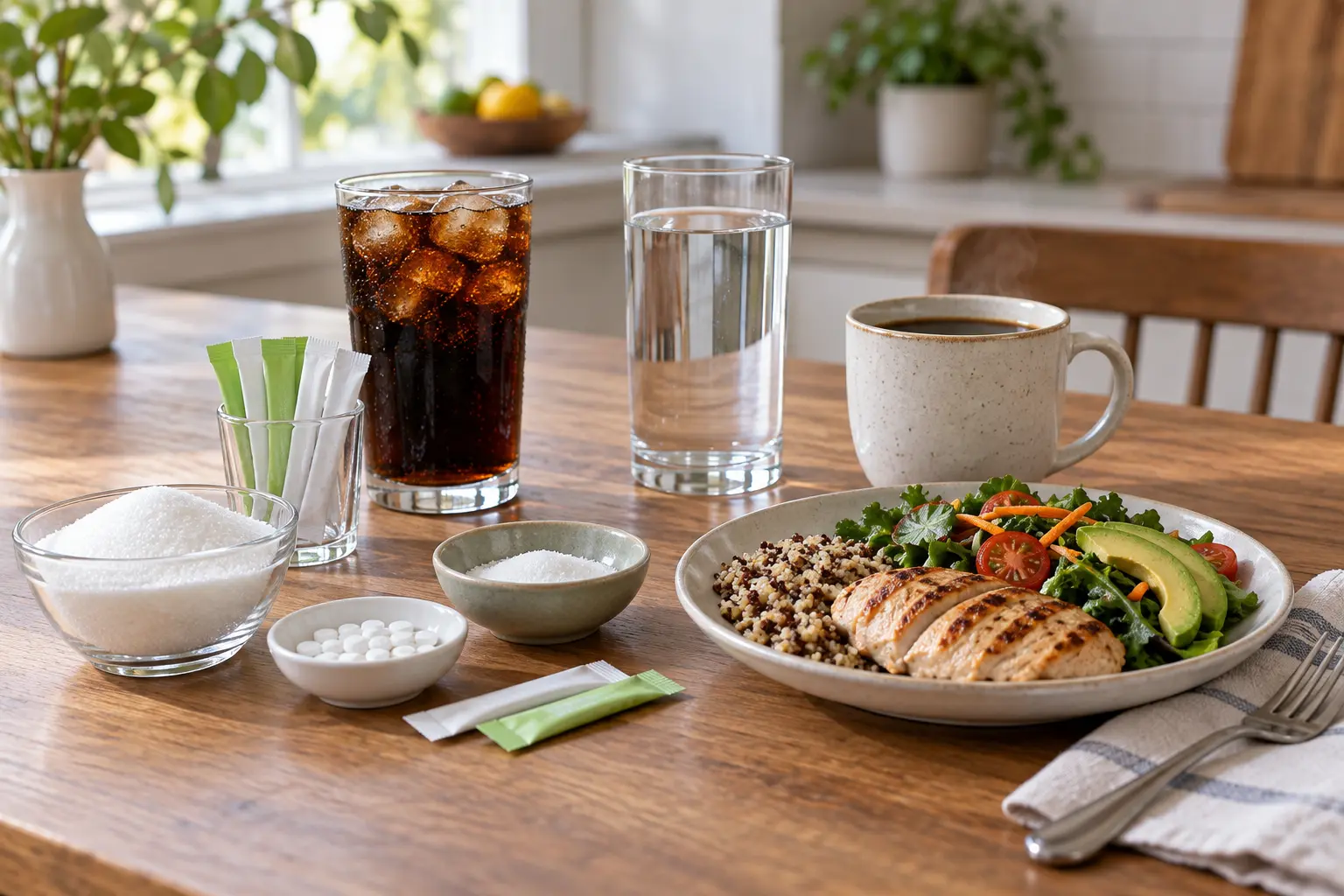
Why studies appear to disagree
Randomized trials test an assigned substitution and can show what happens over a defined period. Observational studies follow people who choose diet products; those users may already have higher weight or health risk, creating reverse causation and confounding. The designs answer different questions.
Safety is another question again. Approval within acceptable intake limits does not make a sweetener a weight-loss treatment. Individual digestive response, taste preference, dental context, phenylketonuria warnings for aspartame, and total diet still matter.
Judge the substitution
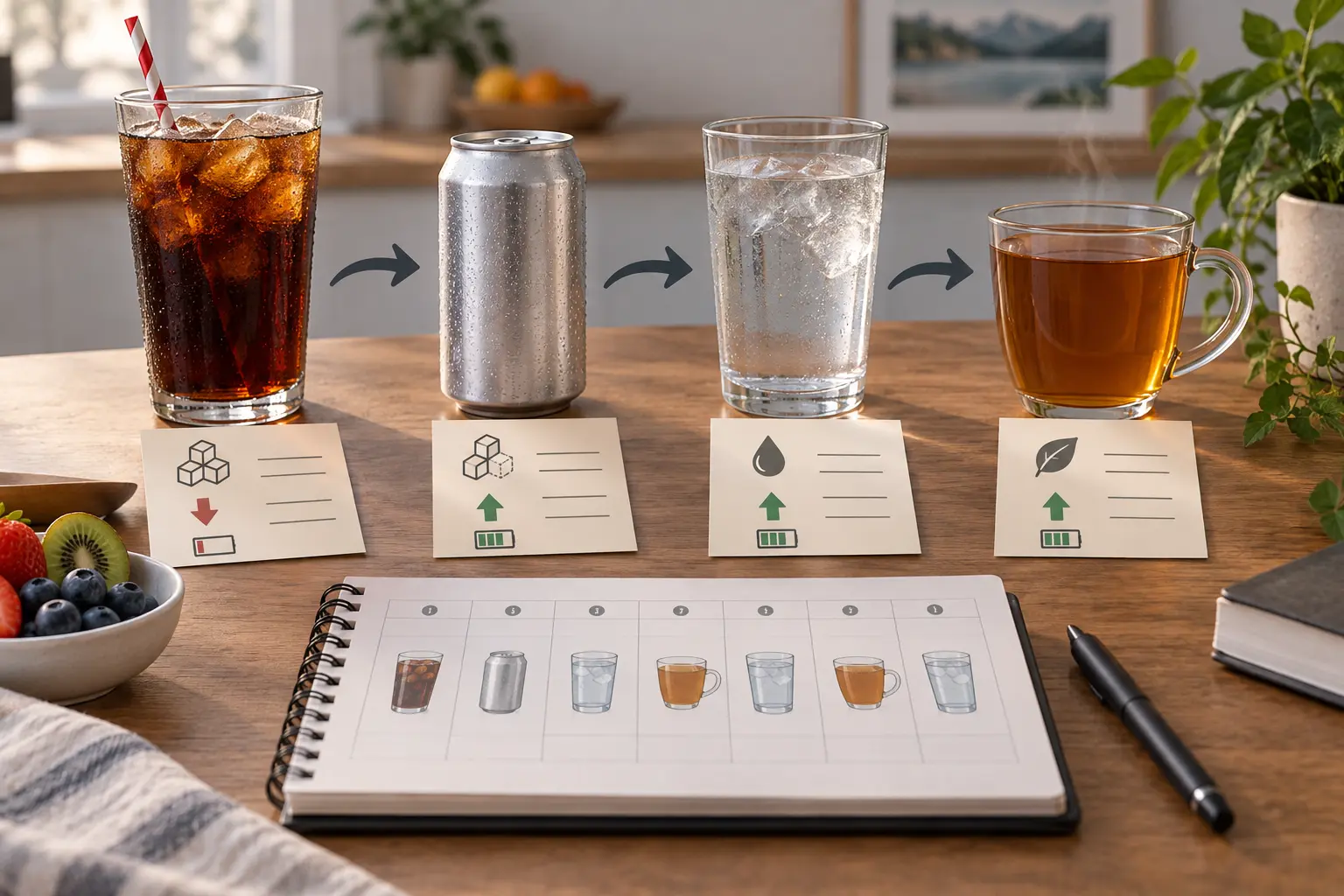
Example: a useful but limited swap
Priya replaces a daily large sugary drink with a diet version while keeping meals stable. Weekly intake falls. Later she alternates water and unsweetened tea because those choices satisfy her. The sweetener was a transition tool, not the cause of all progress or a requirement for maintenance.
Common sweeteners at a glance
- Aspartame, sucralose, acesulfame-K, saccharin: high-intensity sweeteners approved in the US with set acceptable daily intakes.
- Stevia and monk fruit extracts: plant-derived high-intensity sweeteners.
- Sugar alcohols such as erythritol and xylitol: lower in calories than sugar but can cause gas or diarrhea in larger amounts.
Approval means a sweetener is considered safe within its acceptable intake, not that it helps weight loss.
Who may benefit most
The clearest use is replacing regular sugary drinks. For someone drinking several sodas a day, a diet version can cut a large number of calories immediately. For someone who already drinks mostly water, adding sweeteners offers little. In 2023 the WHO advised against using non-sugar sweeteners as a weight-control strategy, mainly because long-term benefits were not shown and observational studies raised possible health concerns.
Using sweeteners as a step, not a destination
Treat a diet drink as a bridge: first replace the sugary version, then gradually move some servings to water, sparkling water or unsweetened tea. Watch whether the switch changes anything else. If a "diet" drink leads to an extra snack, the swap may not save as much as expected.
Where a supplement fits
Fat burners and sweeteners solve different problems. Cutting sugary drinks is the change that matters most for most people.
Treat Fat Burn Active as an optional addition, not a substitute for the steps in this guide. Review its listed ingredients and limitations in our product analysis. If the evidence, warnings, and cost fit your decision, check the current price and formula on the official site. We may earn a commission.
Frequently asked questions
Do artificial sweeteners cause weight gain?
They do not automatically cause gain; study design and the actual substitution matter.
Are they safe?
Regulators set conditions and intake limits for approved uses; individual restrictions still apply.
Should everyone use them?
No. Water and unsweetened drinks work well, and preference and tolerance matter.
Sources
- WHO: Guideline on Non-Sugar Sweeteners
- FDA: Aspartame and Other Sweeteners
- EFSA: Sweeteners
- Low- and no-calorie sweetened beverages meta-analysis
- Non-sugar sweeteners systematic review
Sources reviewed September 17, 2026. This article is general educational information, not medical advice, diagnosis, or treatment.