
Where fidgeting fits inside NEAT
Non-exercise activity thermogenesis includes energy used for posture, walking, chores, occupational tasks and spontaneous movements outside formal exercise. Fidgeting is the smallest and least predictable slice. People differ in how much they move, how large the movements are and whether movement falls when food intake or body weight decreases.
Laboratory chambers can detect differences between stillness and repeated movement, but translating those observations into a daily personal number is difficult. A foot tap, frequent chair shift and repeated standing transition are not equivalent activities.
Why headline calorie numbers are unreliable
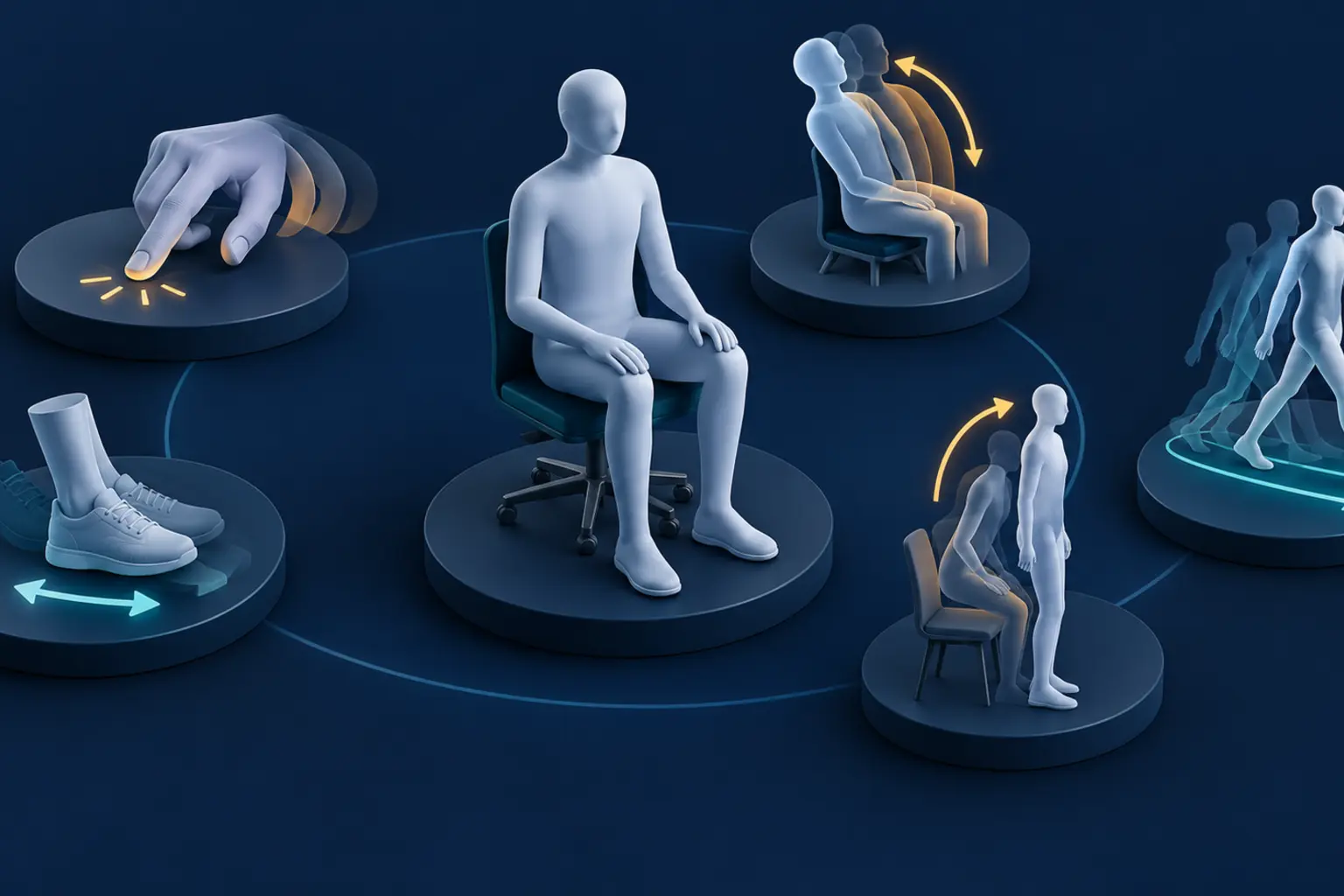
Encourage movement without policing your body
Use environmental opportunities: keep frequently used items a short walk away, stand when changing tasks, walk during appropriate audio calls, take the stairs when safe, and complete small household jobs. These behaviors are observable and easier to repeat than ordering yourself to remain restless.
Fidgeting can also reflect discomfort, anxiety, medication effects, caffeine, attention differences or a movement disorder. Do not frame involuntary restlessness as a desirable fat-loss hack. New, severe or distressing restlessness deserves medical review, especially after a medication change.
Run a movement-opportunity experiment
- Record a normal seven-day step and sitting baseline.
- Choose three task transitions that can include movement.
- Add two to five minutes of easy walking or a practical errand.
- Keep formal exercise and food reasonably stable.
- Review completion, fatigue, discomfort and total steps.
- Retain the easiest cue and modify only one weak point.
This experiment measures a behavior you can control. It does not pretend to calculate calories from every movement.
What the research found
Laboratory studies by James Levine and colleagues showed that non-exercise activity varies between people by up to several hundred calories a day, and that some people who overeat increase this activity more than others. Fidgeting while seated or standing raised energy use above rest in these studies, but most of the difference between people came from time spent standing and walking rather than small movements alone.
Practical ways to add everyday movement
- Stand for phone calls and short meetings.
- Pace while thinking or reading.
- Use a farther printer, bathroom or water point.
- Break up sitting every 30–60 minutes with a short walk.
- Carry shopping instead of using a trolley for small trips.
Where a supplement fits
Everyday movement adds up to real energy use; supplements do not replace it.
A stimulant may make someone feel restless, but restlessness is not evidence of meaningful fat loss and can signal excessive caffeine or poor fit. Fat Burn Active is optional and cannot repair an eating environment, replace sleep or treat emotional eating. Its current official page lists at least 120 mg caffeine per serving from caffeine anhydrous and guarana, additional unquantified caffeine from green-tea extract, and bitter-orange extract standardized to 6 mg synephrine. Feeling more alert or less hungry for a short time is not proof of meaningful fat loss.
A supplement is not required to benefit from this guide. If your foundations are already in place, use the independent Fat Burn Active review to judge whether the formula has a useful optional role. If it fits your expectations and stimulant tolerance, check the current price on the official site. We may receive a commission.
Frequently asked questions
Does fidgeting burn many calories?
A little. Standing and walking more during the day matter more.
Can I train myself to fidget?
It is easier to build planned standing and walking breaks into your routine.
Do standing desks help?
Standing uses slightly more energy than sitting; adding walking breaks helps more.
Sources
- NCBI overview of non-exercise activity thermogenesis
- Human energy expenditure and spontaneous physical activity
- 2024 Adult Compendium of Physical Activities
- CDC physical activity basics
Sources reviewed September 13, 2026. This article is general educational information, not medical advice, diagnosis, or treatment.