
Start with the days that are actually low
An average can hide a Monday with 2,500 steps and a Saturday with 11,000. Review individual days, work location, commute and the longest sitting blocks. Choose the lowest repeatable day rather than adding more to the day that is already active.
Keep the same phone or tracker location because devices count differently. The baseline is a comparison tool, not a verdict on health or effort. People who cycle, swim, wheel or perform physical work may need another movement measure.
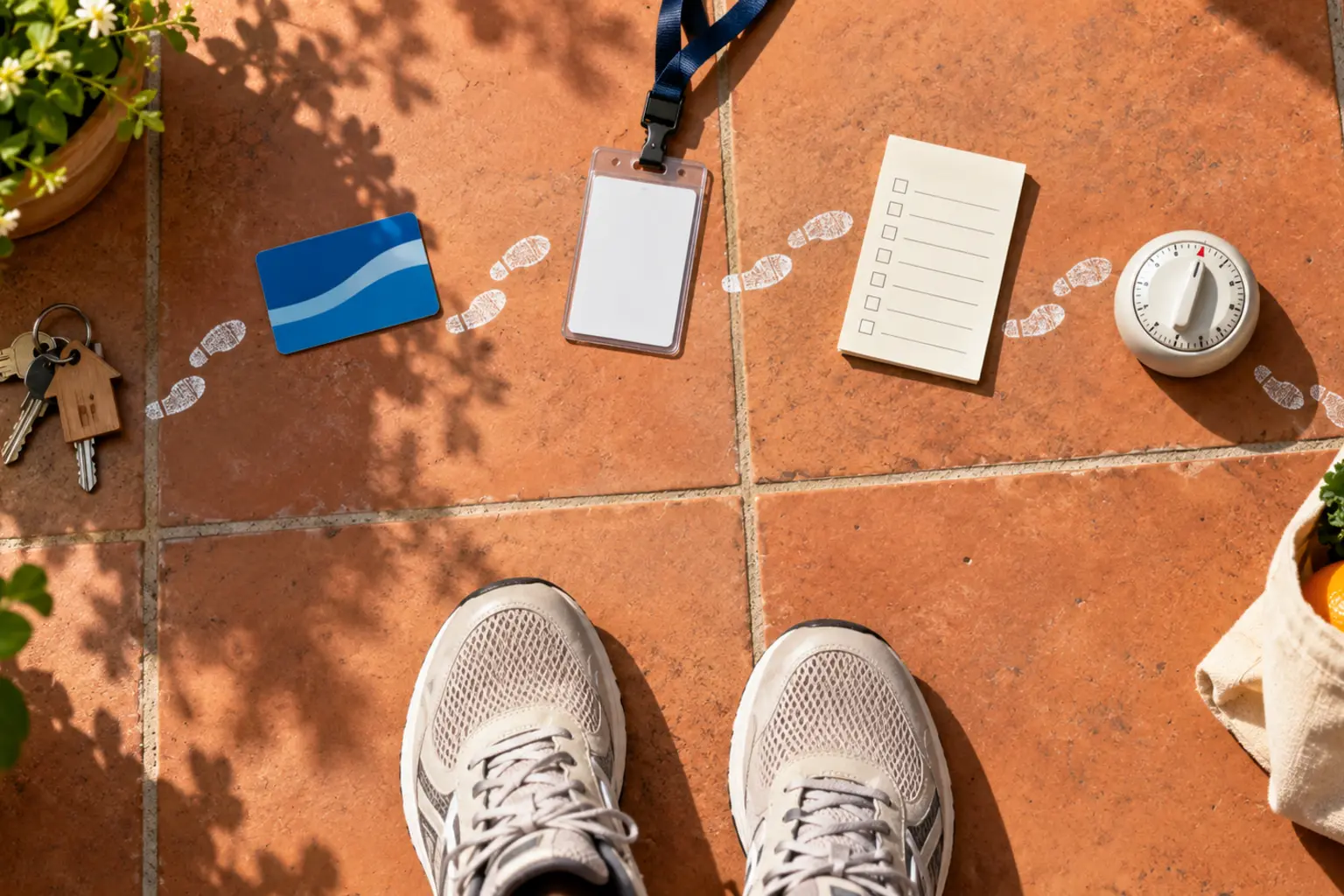
Ten step opportunities already inside the day
Pick only the cues that fit access, weather, safety and responsibilities. More options are not better if none becomes automatic.
Use a three-level progression
- Level 1: add roughly 500 daily steps from one or two cues.
- Level 2: add another 500 when the first level feels routine.
- Level 3: make one bout brisk enough to raise breathing when appropriate.
Step targets are examples rather than medical prescriptions. Reduce volume when pain persists, and use individualized advice for balance problems, neuropathy, significant heart or lung disease, recent surgery or pregnancy.
Remove the friction before relying on motivation
Keep shoes and weather layers ready, save an indoor route, place a calendar cue after a predictable event and define a two-minute fallback for busy days. A minimum version protects the habit without turning one missed walk into failure.
Do not repay missed steps with a punishing late workout. Resume the next cue. Track weekly completion and step averages, then review whether appetite, fatigue or sitting changed. If weight is the goal, do not eat back a watch estimate; use several weeks of weight and waist data to evaluate the complete plan.
Easy daily additions
- Walk while on phone calls.
- Take a 10-minute walk after lunch and dinner.
- Park farther away or get off transport one stop early.
- Walk to a colleague instead of messaging.
- Carry laundry and shopping in more trips.
- Use stairs for one or two floors.
Tracking without pressure
Use your phone or a simple step counter, but look at the weekly average rather than daily totals. Increase your target by 500–1,000 steps only after two weeks at the current level.
Where a supplement fits
Walking more during the day needs no supplement and adds up to meaningful energy use.
A supplement cannot create a walking route, schedule cue or accessible environment. Establish those foundations before evaluating an optional product. Fat Burn Active is optional and cannot repair an eating environment, replace sleep or treat emotional eating. Its current official page lists at least 120 mg caffeine per serving from caffeine anhydrous and guarana, additional unquantified caffeine from green-tea extract, and bitter-orange extract standardized to 6 mg synephrine. Feeling more alert or less hungry for a short time is not proof of meaningful fat loss.
Once the practical steps in this guide are working, decide whether an optional supplement adds enough value. Start with the Fat Burn Active review; if the formula and limitations are acceptable, see the current price on the official site. We may receive a commission.
Frequently asked questions
How many extra steps should I add?
Start with 500–1,000 a day above your current average.
Does walking at home count?
Yes. All steps count toward your daily total.
Should I eat more because I walk more?
Usually not; let your weekly weight trend guide any adjustment.
Sources
- CDC walking guidance
- US Physical Activity Guidelines
- Daily steps and health outcomes meta-analysis
- NIDDK weight-management treatment
Sources reviewed September 13, 2026. This article is general educational information, not medical advice, diagnosis, or treatment.