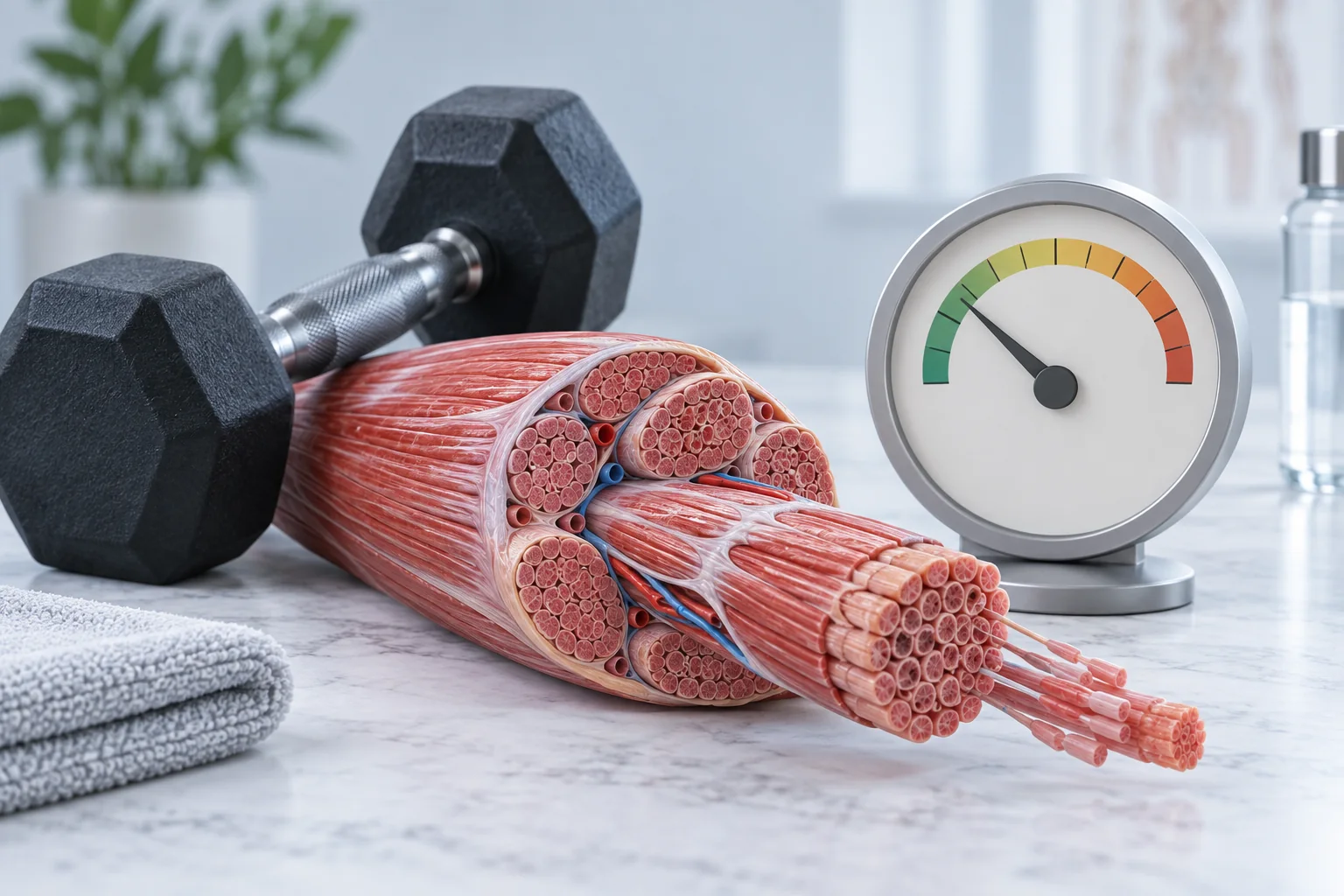
Muscle at rest is metabolically active—but not a furnace
Organs such as the brain, liver, heart and kidneys consume far more energy per kilogram than resting skeletal muscle. Muscle matters because people have much more of it and because it enables movement. Marketing often multiplies an exaggerated per-pound figure to promise effortless fat loss.
Resting-metabolism changes after training can reflect muscle gain, measurement variation, hormones and recovery. One study found an average measured increase around 73 kcal/day after resistance training, but individual variation was wide and the change was not explained solely by measured muscle.
The indirect effects may matter more
Stronger muscles can increase the amount and quality of work a person performs, protect independence and make daily movement easier. Training itself expends energy and recovery has a smaller cost. These benefits can support a plan even when resting metabolism barely changes.
Exercise can also increase appetite or reduce other movement in some people. Do not automatically add wearable exercise calories back to food intake.

Why preservation matters during dieting
Weight loss can include lean tissue. Resistance training, adequate protein and a moderate deficit help preserve it better than restriction alone. Preserving muscle protects strength and keeps the expected decline in expenditure closer to what is unavoidable from becoming smaller.
The goal is not maximum muscle at any cost. Training volume, protein and recovery should fit age, preferences, kidney or other medical conditions and injury history.
A practical muscle-first plan
- Train major movement patterns at least twice weekly when appropriate.
- Start with loads and ranges you can control without pain.
- Progress repetitions, resistance or technique gradually.
- Distribute suitable protein across meals.
- Track strength, waist and weight averages—not estimated workout calories alone.
- Use qualified coaching or rehabilitation support when needed.
Putting the numbers in perspective
If muscle uses roughly 13 calories per kilogram per day at rest, gaining 2 kg of muscle adds around 25–30 calories a day, about the energy in a small apple. Fat tissue uses about 4–5 calories per kilogram. The larger benefit of more muscle is better blood sugar control, strength and ability to stay active, which increases energy use through movement.
Building and keeping muscle
Resistance training two to three times a week with gradually increasing difficulty, adequate protein spread across the day and enough sleep are the main tools. During a diet, keeping strength training helps preserve muscle that would otherwise be lost.
Where a supplement fits
No supplement significantly increases metabolic rate by building muscle. Strength training and protein do the work.
A stimulant is not a substitute for progressive training, protein and recovery, and a temporary energy effect does not build muscle. Fat Burn Active is optional. Its current official page lists at least 120 mg caffeine per serving from caffeine anhydrous and guarana, unquantified additional green-tea caffeine, and bitter-orange extract standardized to 6 mg synephrine. Feeling warmer or more alert is not a measurement of resting metabolism or long-term fat loss.
A supplement is not required to benefit from this guide. If your foundations are already in place, use the independent Fat Burn Active review to judge whether the formula has a useful optional role. If it fits your expectations and stimulant tolerance, check the current price on the official site. We may receive a commission.
Frequently asked questions
Does building muscle boost metabolism a lot?
Modestly at rest; its bigger benefits are strength, function and blood sugar control.
How much protein do I need to keep muscle?
Around 1.2–1.6 g per kg of body weight a day is common in research on dieting adults.
Can older adults build muscle?
Yes. Resistance training helps at any age.
Sources
- Resistance training and resting metabolic rate
- Physical Activity Guidelines for Americans
- NIDDK: Treatment for Overweight and Obesity
- NIH ODS: Weight-Loss Supplements
Sources reviewed September 13, 2026. This article is general educational information, not medical advice, diagnosis, or treatment.