
Change training priorities during the deficit
What to adjust when performance falls
One weak session can reflect sleep, stress, hydration, menstrual timing, equipment, or normal variation. A repeated decline across similar sessions is more informative. First verify the deficit and recovery, then consider reducing accessory sets, failure training, conditioning, or weekly frequency while retaining the main strength stimulus.
Do not assume that muscle is being lost because the scale falls quickly for several days; water and glycogen also change. Use strength trends, waist, photos taken consistently, and body-composition measurements with their known limitations.
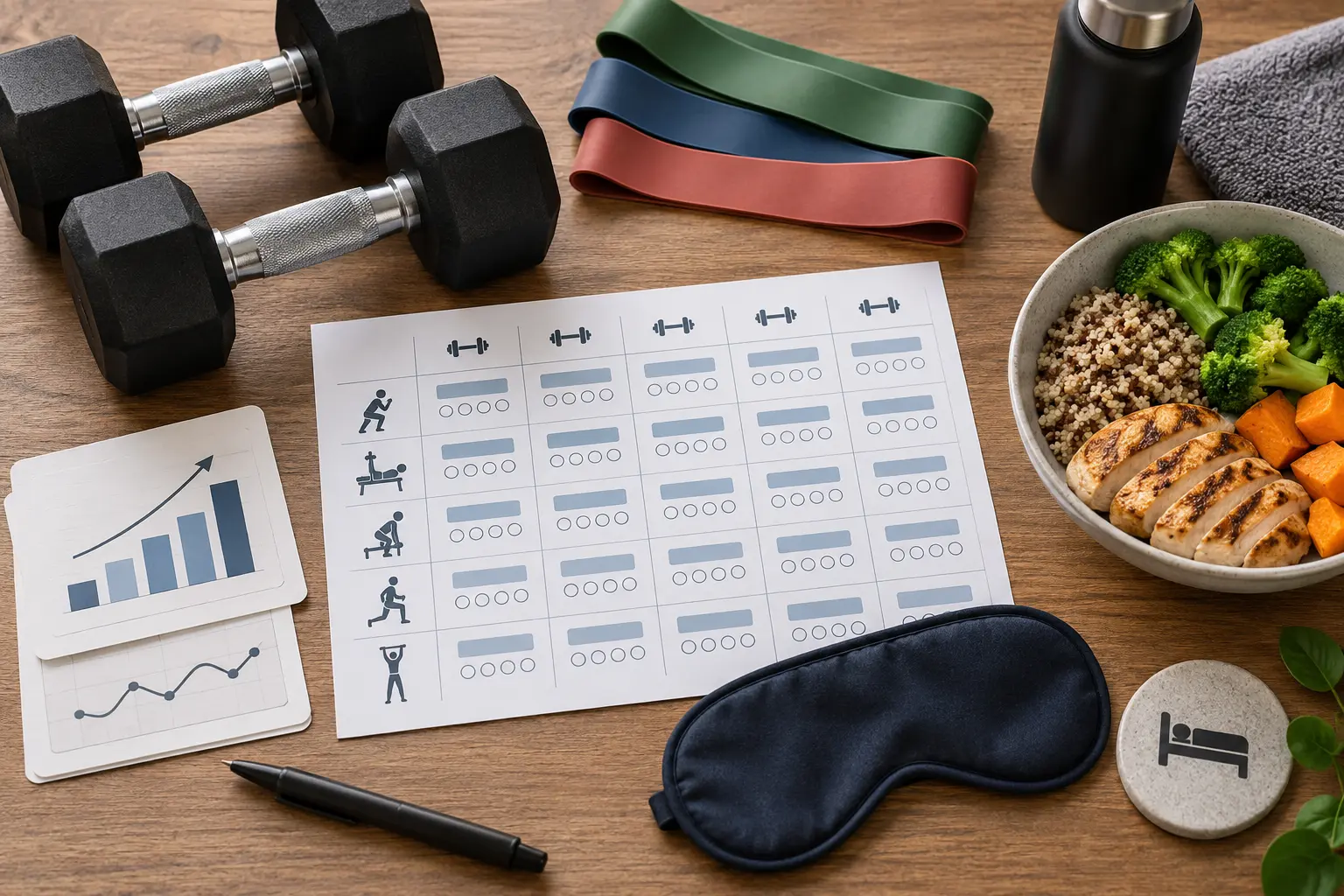
Example: maintain quality, reduce noise
Marcus adds five cardio sessions to four lifting days while reducing meals. His main lifts fall and he sits more after work. He removes two conditioning sessions, reduces accessory volume, restores a planned recovery meal, and keeps three focused strength days. The program becomes less dramatic but more repeatable.
He also standardizes his main exercises for four weeks instead of changing them daily. That makes repetitions, load, technique, and effort comparable. When a lift holds steady while body weight trends downward, he treats that as useful evidence of retention rather than demanding a personal record from every session.
What studies show
Meta-analyses of weight-loss trials show that adding resistance training during a calorie deficit helps preserve lean mass compared with dieting alone, and that more of the weight lost comes from fat. This matters for strength, mobility and long-term maintenance, especially in older adults.
A simple weekly routine
- Train two to four times a week, full body or split upper and lower.
- Include a squat or leg press, a hip hinge such as deadlift or hip thrust, a push, a pull and a carry or core exercise.
- Do two to four sets of six to fifteen repetitions, stopping one to three repetitions short of failure.
- Try to add a repetition or a little weight over the weeks while keeping good form.
Eating to support training
Aim for roughly 1.2–1.6 g of protein per kg of body weight a day, spread over meals, unless advised otherwise by a doctor. Eat a meal with carbohydrates and protein a few hours before training if sessions feel weak. Keep the calorie deficit moderate; a very large deficit makes strength harder to maintain.
Where a supplement fits
A fat burner does not preserve muscle or replace protein and progressive training. Caffeine may help some people feel more alert in a session, but it is not required.
Treat Fat Burn Active as an optional addition, not a substitute for the steps in this guide. Review its listed ingredients and limitations in our product analysis. If the evidence, warnings, and cost fit your decision, check the current price and formula on the official site. We may earn a commission.
Frequently asked questions
Can I gain strength in a deficit?
Some people can, especially newer trainees, but the size and duration of the deficit, training history, sleep, and program matter.
Should I reduce the weight I lift?
Not automatically. Adjust only when technique, symptoms, or repeated performance trends justify it.
Does lifting slow scale loss?
Training-related water and glycogen can obscure short-term scale change without stopping fat loss.
Sources
- Physical Activity Guidelines for Americans
- Resistance exercise during dietary weight loss meta-analysis
- Resistance training and body composition meta-analysis
- Energy deficiency and resistance-training outcomes
- NIDDK: Safe Weight-Loss Programs
Sources reviewed September 17, 2026. This article is general educational information, not medical advice, diagnosis, or treatment.