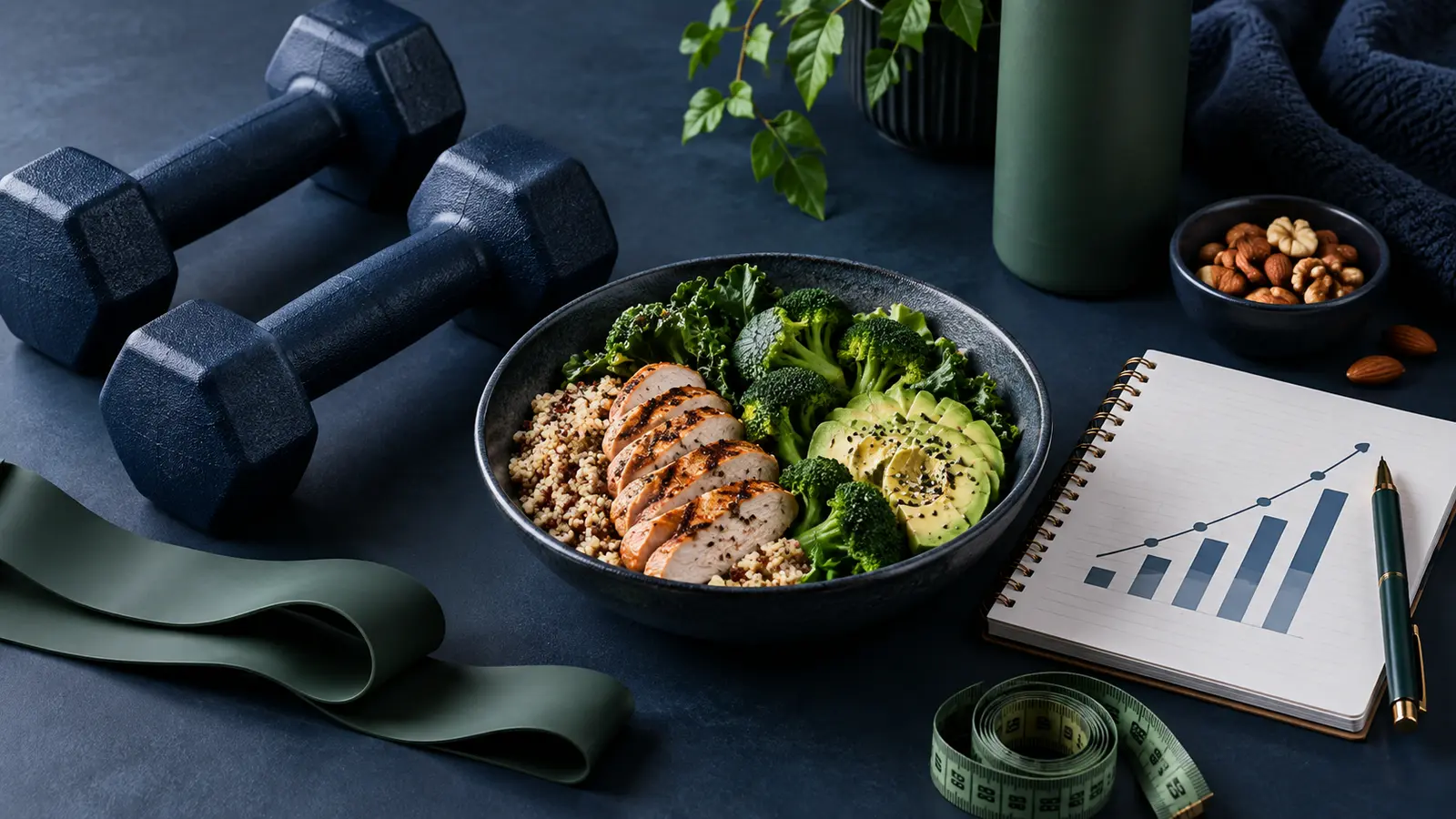
Why lean mass can fall in a deficit
Weight loss includes changing stores of fat, water, glycogen and sometimes fat-free tissue. Energy restriction reduces the resources available for maintenance and can lower training performance. The risk depends on deficit size, starting body composition, protein intake, training status, age, sleep and the speed of loss.
Scale weight cannot identify these compartments. A slower trend, stable gym performance and waist change may tell a better story than chasing the fastest weekly loss.
Protein and training are a team
Dietary protein supplies essential amino acids; resistance exercise sensitizes muscle to those amino acids and creates a retention signal. Trials of higher protein combined with intensive resistance exercise during a marked deficit have reported better lean-mass outcomes than lower protein, but the exact protocol and young male participants limit universal conclusions.
The after-50 weight-loss guide combines meal planning with resistance training and function tracking.
More protein is not endlessly better. Once needs are covered, additional grams can displace fiber-rich foods, fats or carbohydrates that support training. Individual targets depend on body size, age, health and activity; people with kidney disease or prescribed restrictions need clinical guidance.

Use a four-part preservation framework
Older adults, people already lean and highly trained individuals may need more conservative planning because preserving tissue becomes especially important.
Monitor signals that matter
- Use a multi-week average for body weight.
- Measure waist or clothing fit under consistent conditions.
- Track several repeatable lifts or functional tasks.
- Record fatigue, soreness, sleep and menstrual changes where relevant.
- Review protein consistency rather than one perfect day.
- Reduce the deficit or seek help if performance, mood or health declines.
Consumer body-fat scales are noisy. DEXA also has measurement error and hydration sensitivity; no single scan should dictate a drastic change.
How much and how to spread it
Studies on dieting adults commonly use about 1.2–1.6 g of protein per kg of body weight per day, with higher amounts sometimes used in lean athletes. Spreading protein across three or four meals of roughly 25–40 g each appears to support muscle building better than one large serving. People with kidney disease should follow their doctor's guidance.
Good protein sources
Eggs, Greek yogurt, cottage cheese, fish, poultry, lean meat, tofu, tempeh, beans and lentils all contribute. Protein shakes can help fill a gap but are not required.
Where a supplement fits
A fat burner does not preserve muscle. Protein and resistance training are what the research supports.
A fat-burner cannot replace the resistance-training signal or amino acids required to preserve muscle during dieting. Fat Burn Active is optional and cannot repair an eating environment, replace sleep or treat emotional eating. Its current official page lists at least 120 mg caffeine per serving from caffeine anhydrous and guarana, additional unquantified caffeine from green-tea extract, and bitter-orange extract standardized to 6 mg synephrine. Feeling more alert or less hungry for a short time is not proof of meaningful fat loss.
Once the practical steps in this guide are working, decide whether an optional supplement adds enough value. Start with the Fat Burn Active review; if the formula and limitations are acceptable, see the current price on the official site. We may receive a commission.
Frequently asked questions
How much protein do I need during a diet?
Around 1.2–1.6 g per kg of body weight a day is common in research.
Is protein alone enough to keep muscle?
No. Resistance training is also needed.
Can I eat too much protein?
Very high amounts add calories; people with kidney disease should check limits with a doctor.
Sources
- Higher protein during energy restriction and training trial
- Protein intake and lean mass during energy restriction review
- ACSM: Resistance exercise guidance
- NIDDK: Weight-management treatment
Sources reviewed September 13, 2026. This article is general educational information, not medical advice, diagnosis, or treatment.