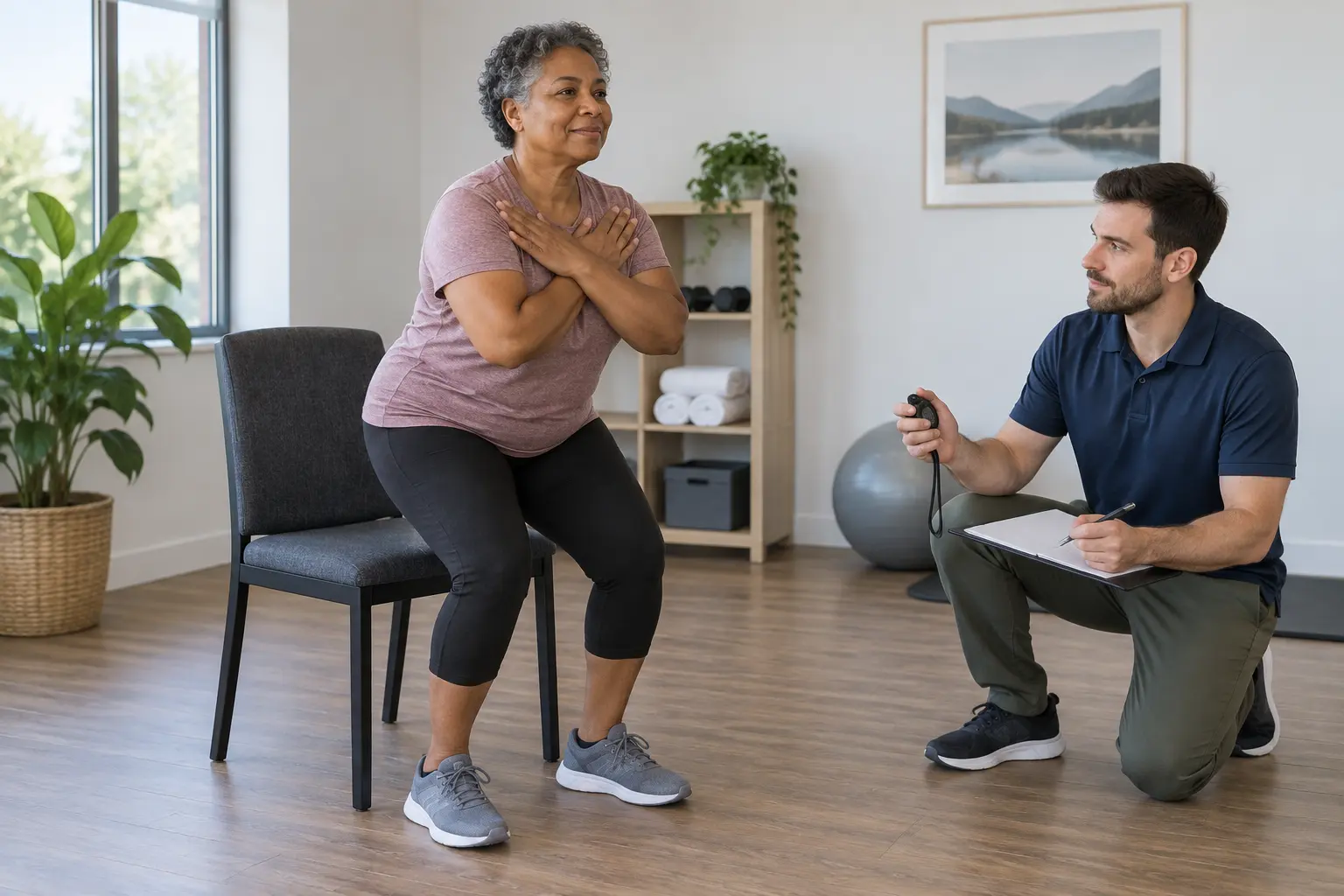
The problem with one-number progress tracking
A fitness-marker dashboard tracks strength, aerobic work, everyday movement, physical function, and recovery under repeatable conditions while body weight changes. That sounds objective, but every result is produced by a procedure. If the procedure changes, the number or image can change even when the body has not changed meaningfully. The first task is therefore not collecting more data. It is deciding what the method can answer and making the next comparison reproducible.
Its main advantage is showing whether useful capability is being preserved even when the scale cannot describe training quality or daily function. Its central limitation is that body-mass changes, technique, route, equipment, weather, fatigue, glycogen, sleep, and motivation can alter results, while wearables do not measure exercise calories precisely. Treat the result as an estimate or observation, not a diagnosis, moral score, or permission to make an aggressive diet change.
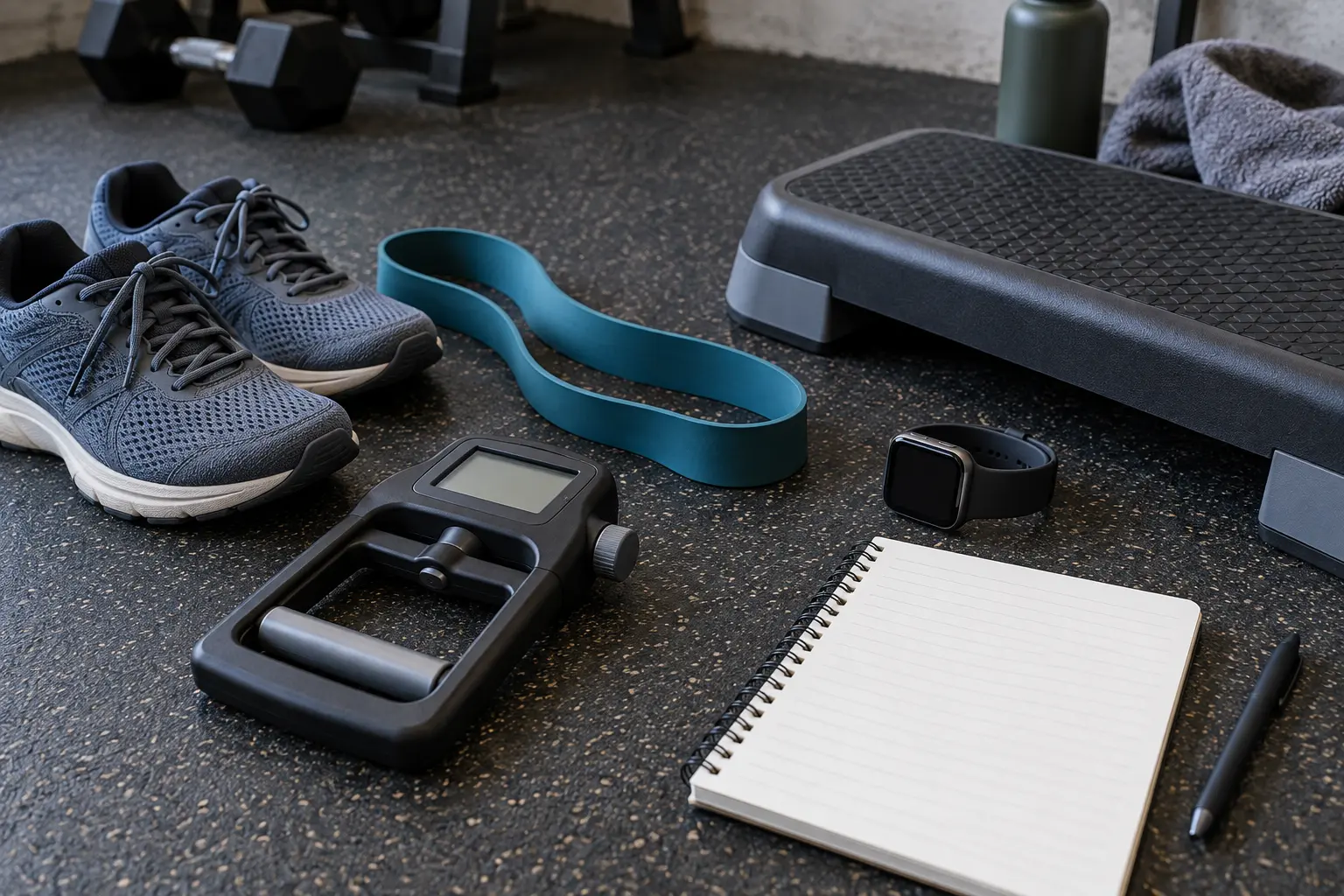
A repeatable practical protocol
- Choose one strength, one aerobic, one movement, one function, and one recovery marker.
- Keep the exercise variation, range of motion, warm-up, equipment, and rest periods stable.
- Compare weekly step averages rather than one active day.
- Record pace or workload with perceived effort and heart rate when appropriate.
- Review four-week trends and stop for chest pain, faintness, or unusual breathlessness.
Worked example
After ten weeks, weight is down five percent, squat repetitions are stable, push-ups and walking pace improve, but steps and sleep decline. The plan is preserving capacity but needs a realistic movement floor and better recovery—not more punishment.
A four-part decision system
- Baseline: preserve raw results, setup details, date, and context.
- Threshold: define how much change and how many repeat observations matter.
- Triangulation: require agreement with at least one independent measure.
- Action: prewrite continue, investigate, adjust, and seek-care rules.
Use a scheduled interval rather than checking after every difficult meal or weigh-in. A longer interval gives real change time to exceed noise and reduces compulsive testing. For a broader system, use recovery during a deficit and fitness tracker calorie error.
Track performance without confusing it with fat loss
Select a small number of tasks that matter to your life: a repeatable walk, a familiar strength exercise, stairs, or a daily activity that used to feel difficult. Record the setup, such as distance, pace, load, repetitions, rest, and perceived effort. A faster walk at the same effort or more controlled repetitions can show useful adaptation. It does not directly measure body-fat change, and a single personal-best day does not settle whether an eating plan is working.
Fitness tests fluctuate with sleep, heat, illness, caffeine, menstrual cycle, training fatigue, and the equipment used. A treadmill and a hilly outdoor route are not interchangeable. Compare similar sessions across several weeks instead of testing maximum effort every day. If performance drops, ask whether recovery, energy intake, or illness explains it before adding more exercise. Weight management that repeatedly makes ordinary activity worse may need a gentler plan.
Strength and aerobic markers answer different questions. Maintaining a lift during weight loss may be encouraging for function, while an easier walk can reflect practice or better conditioning. Neither is a precise stand-in for muscle mass. Pair performance with a reasonable weight or waist trend only when those measures are suitable; many people benefit more from a functional goal that is not tied to appearance. The aim is to preserve capability as the plan unfolds.
Write an action rule before reviewing the dashboard: if performance and recovery are stable, continue the routine; if both deteriorate for several comparable sessions, review sleep, food, training load, and medical context. If only one marker changes, repeat it under similar conditions before intervening. This protects against overreacting to noise. A useful fitness record helps choose tomorrow's activity, not just award a score to yesterday's body.
Frequently asked questions
Which fitness markers should I track?
Strength in a few main lifts, walking or running pace for a set distance, and resting heart rate.
How often should I test?
Every four to six weeks under similar conditions.
What if my fitness falls while losing weight?
Review sleep, protein, training load and the size of your deficit.
Keep the original record rather than only a summary. Future comparisons are easier when the raw observation, setup, relevant context, and reason for any excluded reading remain available. This also prevents a later change in an app, equation, garment, device, or personal goal from rewriting the baseline.
Sources
- Physical Activity Guidelines
- Resistance exercise during weight loss
- Exercise and lean-mass preservation
- Wearable validity review
- CDC physical activity basics
- Six-minute walk standards
Evidence reviewed September 16, 2026. Educational information only; not medical advice.