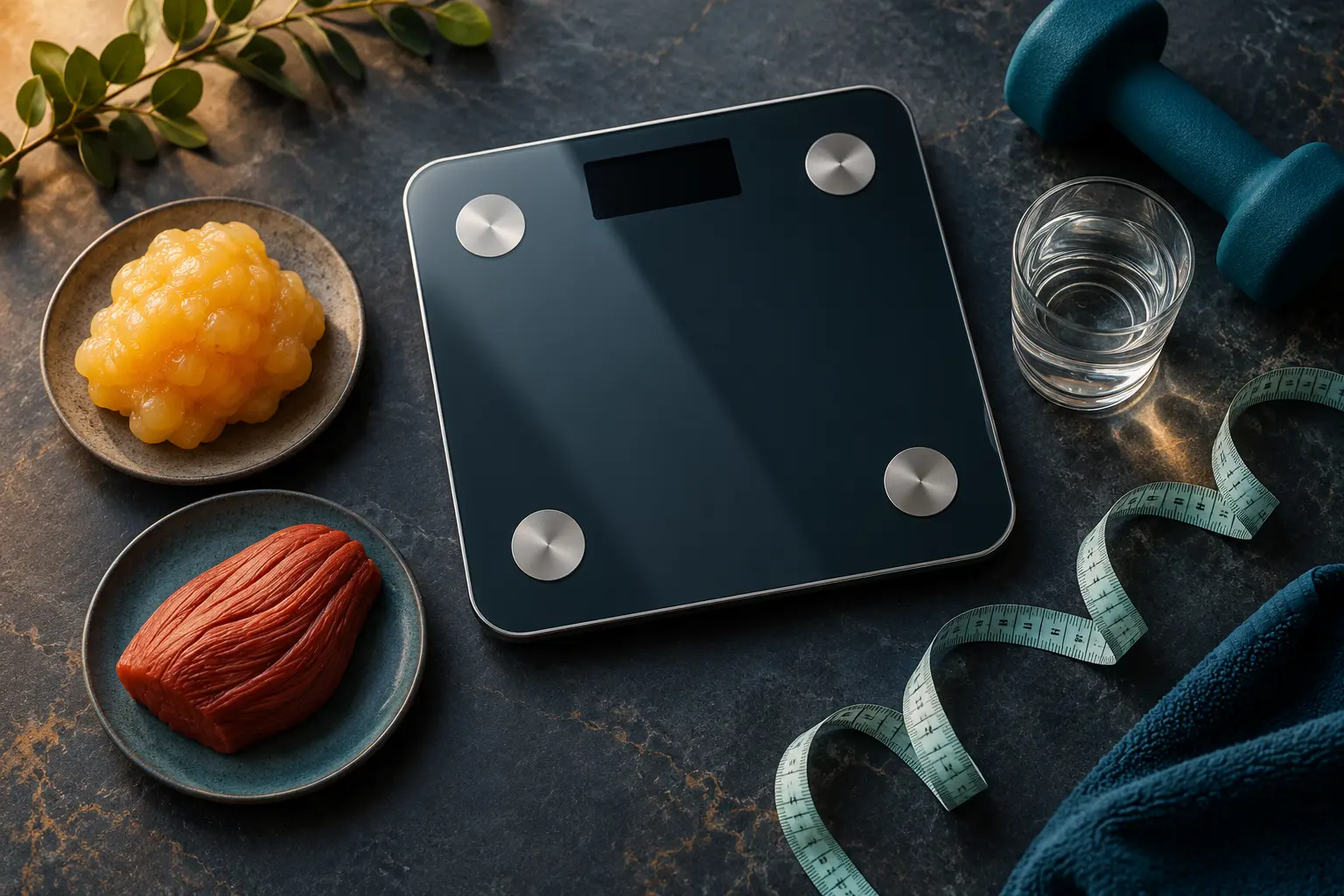
Body fat and body weight are not the same thing
Body weight is the combined mass of everything in your body. Fat mass is only one part. Lean mass includes skeletal muscle, organs, connective tissue, and body water; bone mineral and the contents of the digestive tract also contribute to the number on the scale.
This distinction matters because two people can weigh the same while carrying different amounts of fat and muscle. The same person can also lose fat while temporarily maintaining—or even gaining—scale weight if training, glycogen, water, or digestive contents change at the same time.
Why the scale creates false alarms
The frustrating pattern is familiar: you follow your plan, wake up, and the scale is higher. It is tempting to conclude that the diet stopped working or that yesterday’s meal turned directly into body fat. A single reading cannot support that conclusion.
Water balance can change with sodium intake, carbohydrate intake, menstrual-cycle phase, heat, stress, sleep, medicines, illness, and exercise. Glycogen stored in muscle and liver is accompanied by water. A larger meal also adds food and fluid mass before digestion is complete. Hard training can temporarily increase water retention while tissues recover.
Can you lose fat without losing weight?
Yes. During body recomposition, fat mass may decrease while muscle, glycogen, or water increases. This is more plausible when someone begins resistance training, returns after a break, improves protein intake, or is new to structured exercise.
The opposite is also possible: body weight may fall while a meaningful share comes from water or lean tissue. Rapid loss is not automatically better. Preserving muscle matters for strength, function, appearance, and long-term weight management.

How to track fat-loss progress more accurately
- Standardize weigh-ins. Use the same scale under similar conditions—commonly after waking and using the bathroom, before food or drink.
- Use a rolling average. Compare seven-day averages rather than isolated highs and lows.
- Measure your waist. Use the same anatomical point, tape tension, posture, and time of day.
- Track performance. Strength and work capacity help show whether useful lean mass and function are being preserved.
- Use consistent photos. Keep lighting, distance, clothing, and pose the same; avoid dramatic before-and-after staging.
- Review several weeks together. A meaningful pattern needs enough observations to rise above normal noise.
What about smart scales and body-fat percentages?
Bioelectrical impedance scales estimate body composition from electrical resistance plus prediction equations. Hydration, food, exercise, skin temperature, and device assumptions can change the result. The percentage may be useful for a consistently measured trend, but it should not be treated as an exact laboratory value.
More advanced methods—including dual-energy X-ray absorptiometry and air-displacement or isotope-based techniques—have their own assumptions and practical limits. No method removes the need for consistent conditions and careful interpretation.
Where fat burners fit—and where they do not
A supplement cannot make the scale identify fat loss. Stimulant or thermogenic ingredients may change alertness, appetite, water intake, bowel habits, or training behavior; those changes can move weight without proving that stored body fat changed.
If you are considering a product, first establish a reliable baseline and decide which outcome you will measure. Then read our fat-burner evidence guide and see how the same standards are applied in the Fat Burn Active review.
The four-signal progress audit
If none of the signals change over several weeks, review energy intake, activity, measurement consistency, sleep, medicines, and health factors. If weight changes unexpectedly or rapidly without a clear reason, seek qualified medical advice rather than assuming it is a simple fat-loss issue.