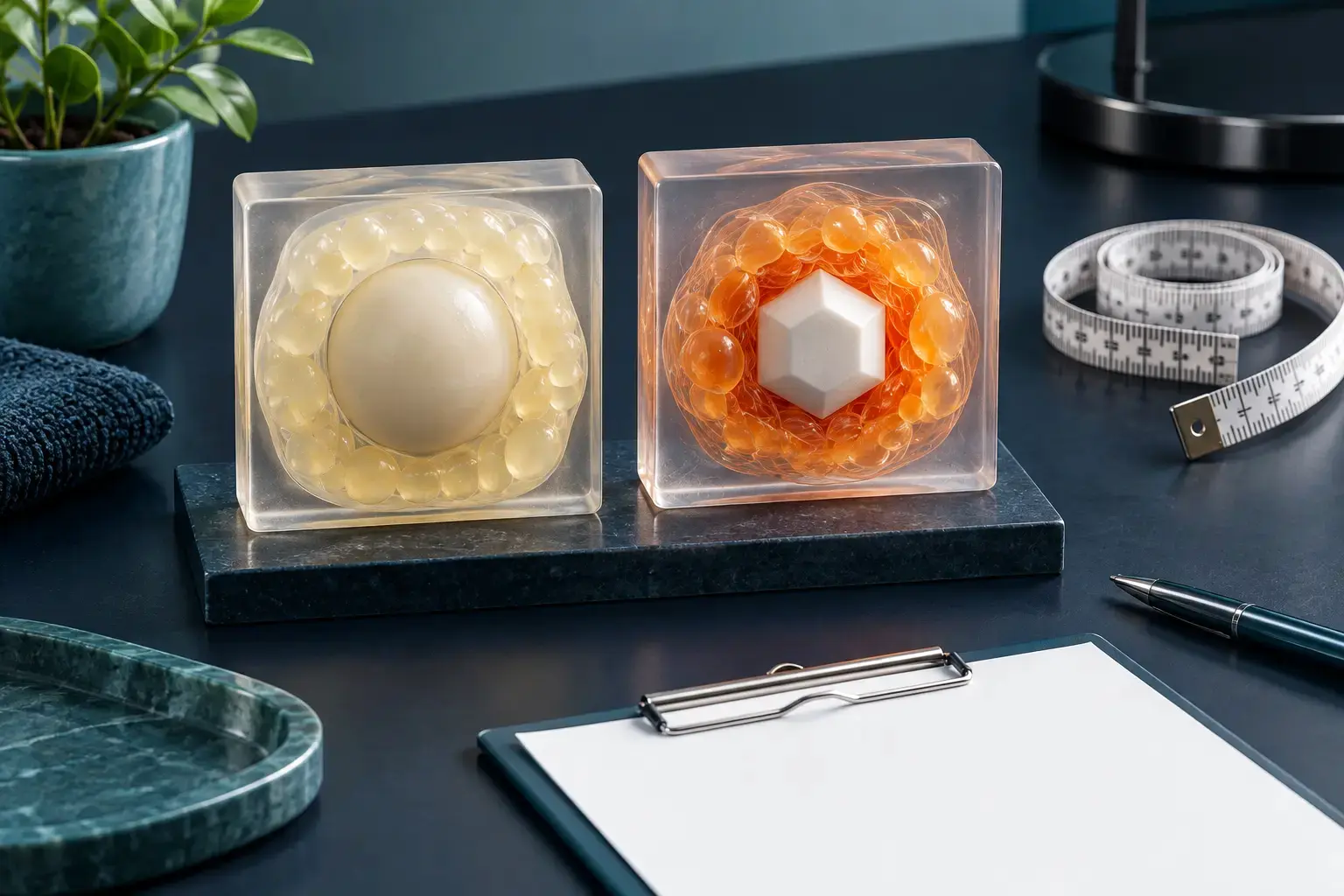
Body fat is not one uniform compartment
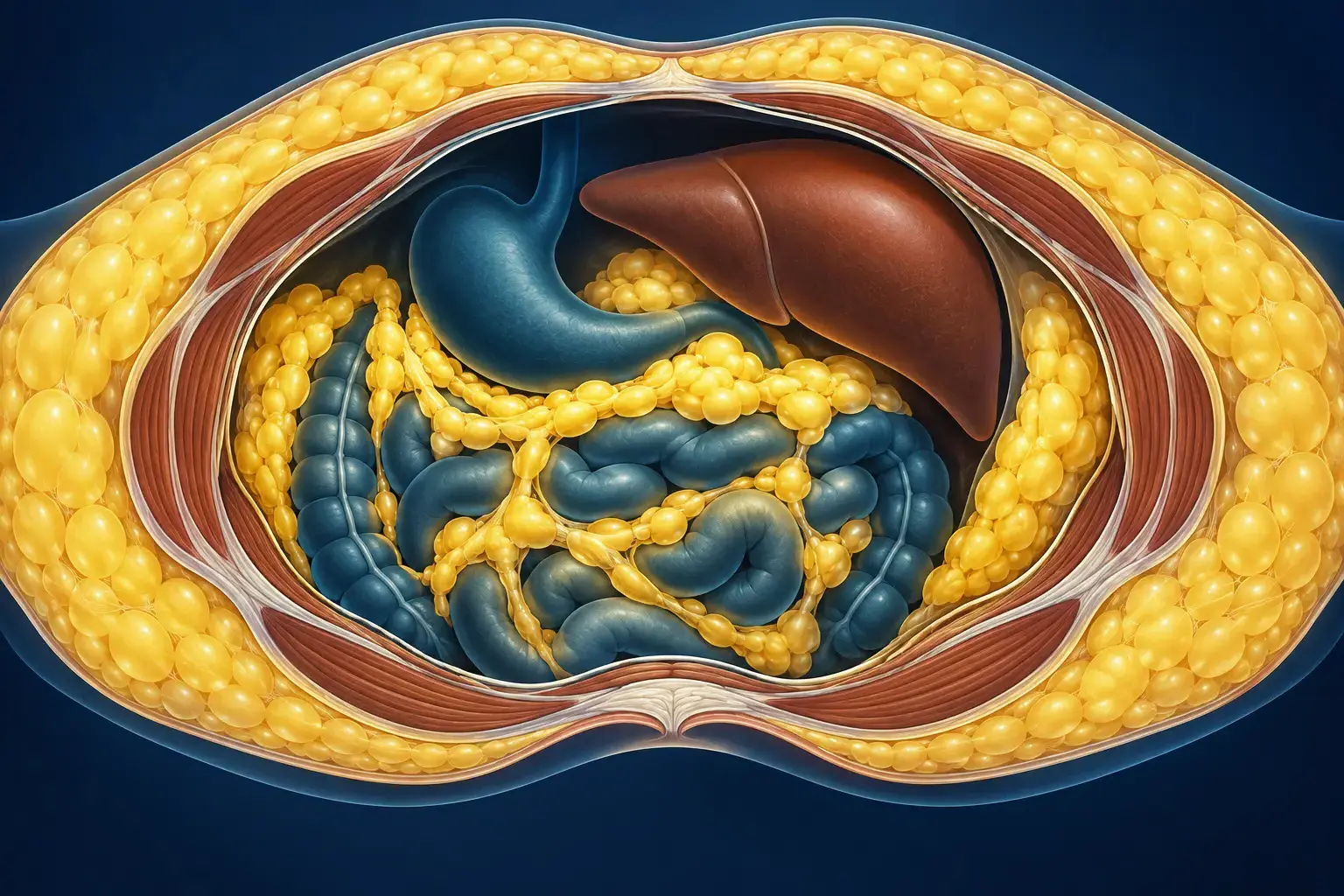
Most visible fat is subcutaneous, stored beneath the skin. Visceral fat sits deeper around abdominal organs. Fat may also accumulate in the liver or muscle when storage and metabolic regulation are disrupted. These locations are not equivalent: visceral and ectopic fat are generally more closely associated with cardiometabolic risk than the same amount stored subcutaneously in some lower-body regions.
Appearance is not a medical scan. Waist circumference can support risk assessment, while imaging estimates internal depots more directly. Neither a mirror nor the place that feels “stubborn” can diagnose visceral fat.
The five strongest influences
Stress, sleep, and the cortisol shortcut
Stress and short sleep can influence appetite, food choice, movement and metabolic health. Cortisol participates in energy regulation, but “stress directly creates belly fat” is too simple. A visible change may reflect several linked behaviors and physiological factors. Persistent unusual redistribution, easy bruising, marked muscle weakness, or major menstrual changes deserves clinical assessment rather than an online cortisol diagnosis.
Why the order of fat loss differs
People notice change in the face, waist, hips or limbs at different times. The last area to change often reflects the starting pattern, not toxins or a blocked pathway. A deficit mobilizes fat across the body; local muscle work does not command nearby cells. Resistance training can build muscle and change shape while overall fat falls, but that is not spot reduction.
Belts, creams, heat, sweating garments and “targeted” capsules cannot override depot biology. Track overall progress and health markers rather than escalating an intervention because one preferred area changes slowly.
Sex, hormones and age
Before menopause, women tend to store more fat on the hips and thighs, while men store more around the abdomen. After menopause, fat distribution in women shifts toward the abdomen. With aging, both sexes tend to gain more visceral fat. Genetics strongly influence individual patterns; twin studies show that fat distribution is highly heritable.
What can change your pattern
You cannot target fat loss to a specific area, but overall weight loss and regular exercise, especially aerobic activity, tend to reduce visceral fat noticeably. Limiting alcohol, sleeping enough and managing chronic stress may also help. Medical conditions such as Cushing syndrome, which causes high cortisol, are rare but should be considered if abdominal fat appears suddenly with other symptoms.
Where a supplement fits
No supplement changes where your body stores fat. Claims about "targeting belly fat" are not supported by evidence.
No supplement can direct fat loss from the abdomen, hips, thighs, or another chosen site. Fat Burn Active is optional and cannot replace nutrition, activity, sleep, hydration, or medical care. Its current official page lists at least 120 mg caffeine per serving from caffeine anhydrous and guarana, additional green-tea caffeine that is not quantified, and bitter-orange extract standardized to 6 mg synephrine. Warmth, stimulation, sweating, or a short-term scale change cannot prove a finished-product fat-loss effect.
Once the practical steps in this guide are working, decide whether an optional supplement adds enough value. Start with the Fat Burn Active review; if the formula and limitations are acceptable, see the current price on the official site. We may receive a commission.
Frequently asked questions
Can I choose where I lose fat?
No. Fat loss happens across the body in a pattern set largely by genetics and hormones.
Does stress cause belly fat?
Chronic stress can affect eating and sleep; very high cortisol from medical conditions is rare.
Is visceral fat harder to lose?
Often the opposite. Visceral fat tends to respond well to weight loss and exercise.
Sources
- NIDDK: Treatment for Overweight and Obesity
- Endotext: Adipose Tissue Distribution
- WHO: Waist Circumference and Waist–Hip Ratio
- NIH ODS: Weight-Loss Supplements
Sources reviewed September 13, 2026. This article is general educational information, not medical advice, diagnosis, or treatment.