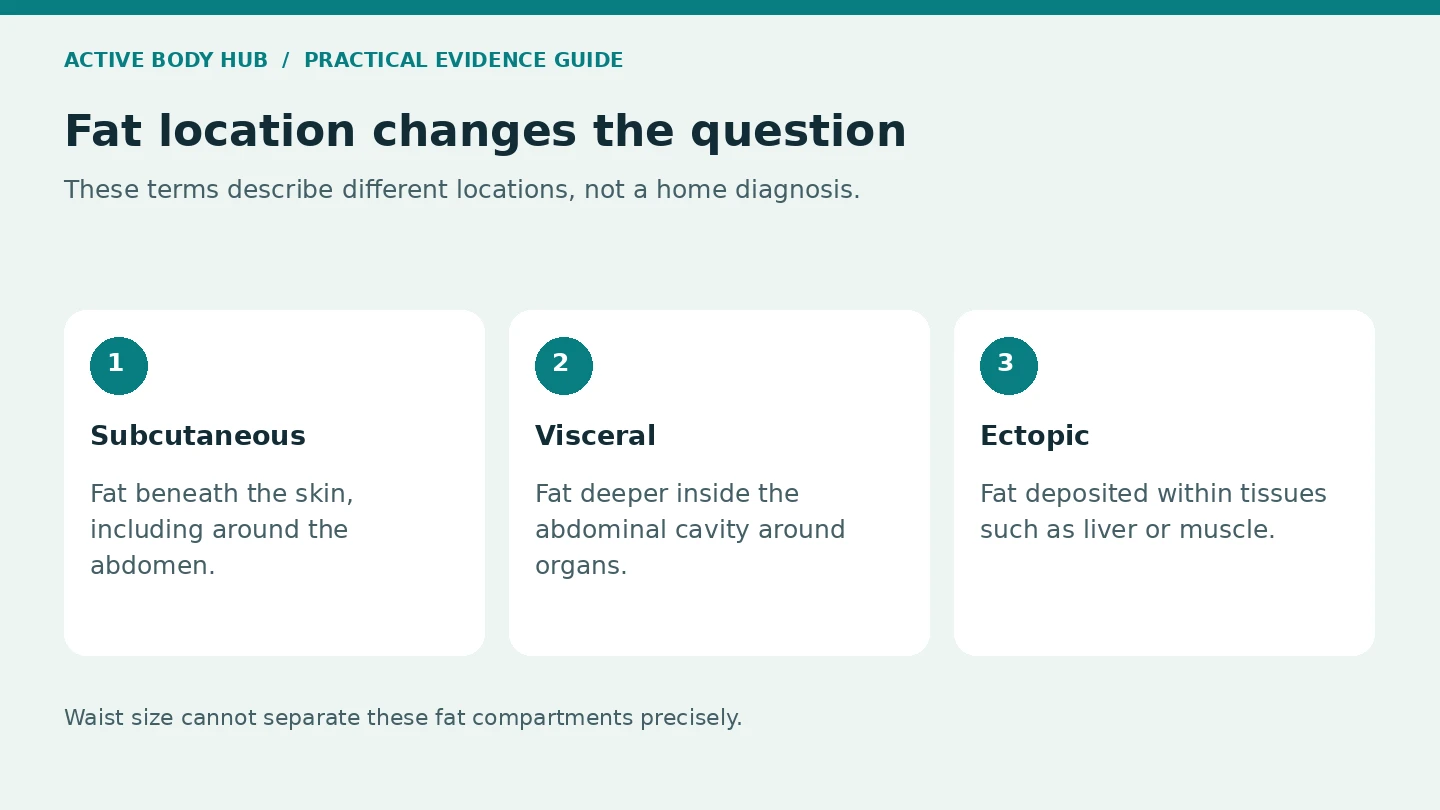
The same scale weight can hide different fat patterns
Two people with the same body weight or BMI can store fat in different places. One may carry more beneath the skin around the hips and thighs; another may carry more deep inside the abdomen. The second pattern can carry greater metabolic risk even when the bathroom scale looks similar.
That is why focusing only on kilograms can create false reassurance—or unnecessary alarm. Total fat mass matters, but its distribution, muscle mass, blood pressure, glucose, blood lipids, fitness, medicines, and family history add essential context. [2]
Why visceral fat receives more medical attention
Visceral adipose tissue is metabolically active and is associated with insulin resistance, abnormal blood lipids, inflammation, fatty liver, type 2 diabetes, and cardiovascular risk. Its drainage and signaling relationship with the liver is one proposed reason it can be more harmful than many subcutaneous depots.
This does not make all subcutaneous fat harmless or all visceral fat immediately dangerous. Risk rises along a continuum and depends on the whole person. Gluteofemoral subcutaneous fat may have a different risk relationship from abdominal subcutaneous fat, illustrating why “fat is fat” is too simplistic. [3]
Some studies examine a calculated visceral adiposity index rather than a direct fat scan. Others study people who already have diabetes, or use animal models to explore mechanisms. An association in those settings cannot predict whether one person will develop diabetes or prove a supplement prevents it. Use research to understand risk, not to diagnose yourself.
How can visceral fat be measured?
| Method | Useful for | Important limit |
|---|---|---|
| Waist tape | Screening central fat distribution | Cannot separate visceral from subcutaneous fat. |
| Waist-to-height ratio | Adding height context to a waist measurement | A screening measure, not a diabetes test. |
| CT or MRI | Quantifying abdominal fat compartments | Not usually needed simply to begin lifestyle changes. |
| Compatible DXA systems | Estimating regional body composition | An estimate, influenced by method and equipment. |
| Smart scale | Following a device-generated trend | Its visceral-fat score is not a direct scan. |
For a consistent tape measurement, stand and place the tape just above the hipbones; read it after breathing out normally. Keep the tape level and avoid compressing the skin. Record the date and technique so you can compare like with like. [1]
NHLBI lists waists above 35 inches for women or 40 inches for men as increased-risk signals in its general adult guidance. These are not universal diagnostic cutoffs: ancestry, sex, pregnancy and individual health affect interpretation. Ask which guidance applies to you rather than treating a fraction of an inch as a diagnosis.
What influences where fat is stored?
Genetics, sex hormones, aging, menopause, energy surplus, alcohol intake, physical activity, sleep, stress, medicines, and some health conditions can influence fat distribution. People cannot choose their inherited pattern, but modifiable behaviors and appropriate medical care can change overall risk.
Can you target visceral or belly fat?
No exercise can selectively remove fat from the area being trained. Abdominal work strengthens muscle but does not guarantee local fat loss. When total fat mass decreases, visceral fat often responds to sustained lifestyle and weight-management interventions, but the exact sequence and rate vary.
Be cautious with products claiming to “melt belly fat,” “target deep fat,” or lower cortisol in a way that guarantees a smaller waist. A plausible ingredient mechanism is not proof of depot-specific fat loss in humans. [4]
A practical plan for reducing abdominal risk
- Track more than weight. Add a consistent waist measurement and review the trend every few weeks.
- Use a sustainable energy deficit when fat loss is appropriate. Avoid extreme plans that cause repeated regain.
- Build an activity base. Combine regular aerobic activity, daily movement, and resistance training appropriate to ability.
- Prioritize food quality. Emphasize adequate protein and fiber, minimally processed foods, and an eating pattern that supports energy control.
- Protect sleep. Address persistent poor sleep, heavy snoring, or daytime sleepiness with a qualified professional.
- Limit harmful alcohol patterns. Alcohol adds energy and can affect liver and metabolic health.
- Check medical markers. Discuss blood pressure, glucose, lipids, liver health, medicines, and personal risk with a clinician.
A four-week review for abdominal health
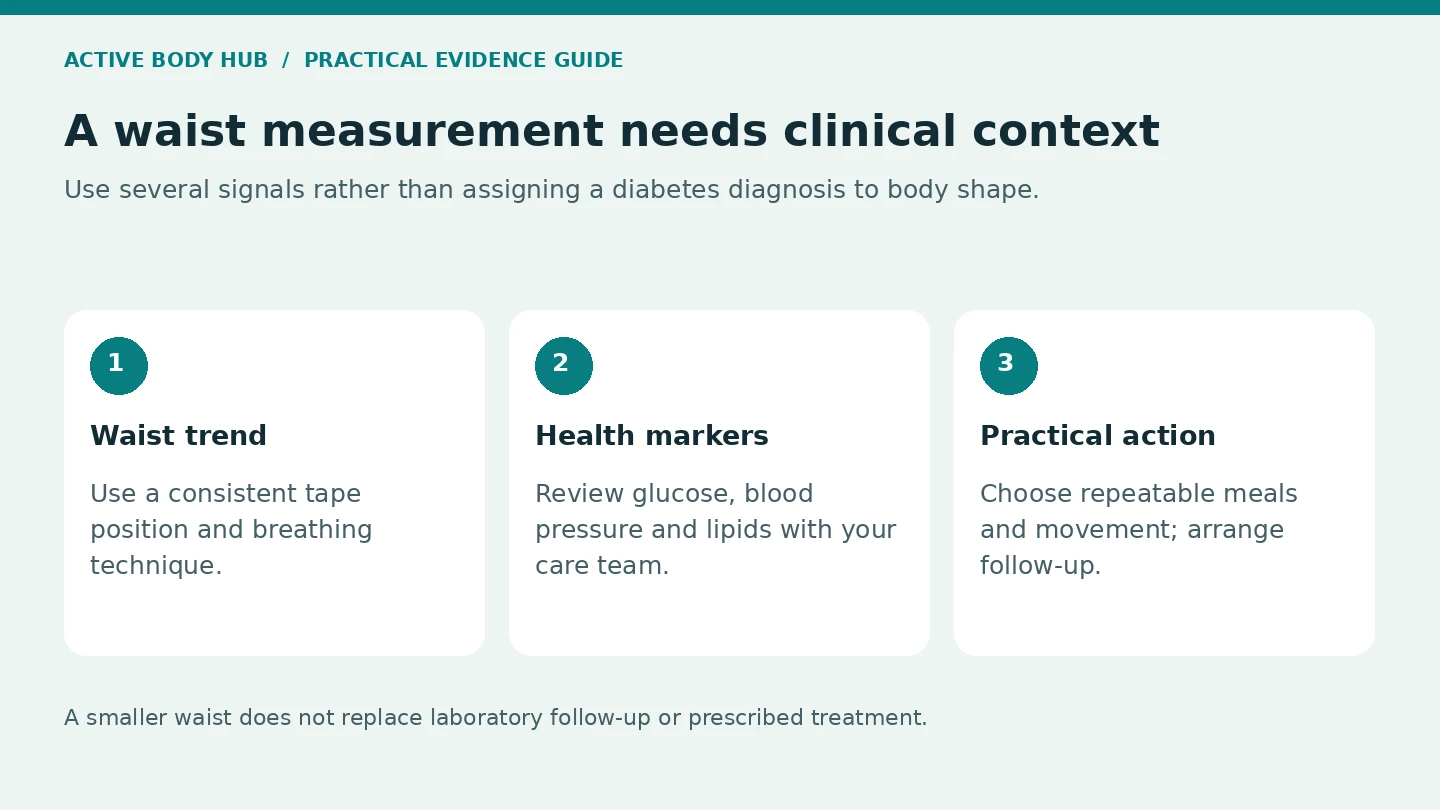
Use the first week to establish your usual waist measurement, meal routine and comfortable activity level. Note any recent illness or treatment change. Do not delay a recommended medical appointment while collecting data.
Next, select one repeatable change: replace a habitual sugary drink, prepare a work lunch, or add a short walk you can manage. These are examples, not a universal prescription. Keep a brief completion record rather than guessing whether the plan happened.
At the review, bring the waist trend alongside any clinician-requested blood pressure, glucose and lipid results. A smaller waist is encouraging context; it does not confirm that glucose is normal or that medication can stop. If the routine is difficult, simplify it before making it stricter.
For a glucose-focused starting point, use our prediabetes plan. If you already have diabetes, use the type 2 diabetes weight-management guide. Arrange food and activity changes around your treatment plan.
Can Fat Burn Active target visceral fat?
The evidence reviewed does not establish that Fat Burn Active selectively removes visceral fat or treats diabetes. An ingredient mechanism is not evidence for that outcome from the finished formula. Do not use a stimulant sensation or a smaller waist after a few days as proof of a product effect. [5]
If you are considering it, read the formula and diabetes safety assessment and our full product review. The review contains affiliate links; we may earn a commission if you buy.
Frequently asked questions
Is a hard belly always visceral fat?
No. Appearance and feel cannot diagnose the amount of visceral fat. Bloating, posture, muscle tone, subcutaneous fat, and medical conditions can affect abdominal shape.
Can a thin person have visceral fat?
Yes. BMI and appearance do not fully describe fat distribution or metabolic health.
Which is easier to lose?
Responses differ, but visceral fat can decrease with sustained weight loss and physical activity. Individual depot changes cannot be predicted precisely.
Sources and editorial notes
- NHLBI: Healthy Weight and Measuring Waist Circumference
- Review: Visceral Adipose Tissue and Type 2 Diabetes (2024)
- Review: Pathophysiology of Visceral Adipose Tissue (2024)
- Cleveland Clinic: Visceral Fat
- NIH ODS: Dietary Supplements for Weight Loss
Sources checked October 25, 2026. Prepared with AI assistance to organize source-based educational explanations and practical planning aids. No clinical review, personal product use or laboratory testing is claimed. Guidance concerns adults; personal symptoms, medicines and health conditions require individualized care.