The abdomen is not one type of fat
Subcutaneous fat lies under the skin; visceral fat surrounds organs inside the abdominal cavity. They differ in location, metabolic behavior, and health relevance. A tape measure reflects the combined outline, not the amount in either compartment.
Regional change is individual. An area called “last” may simply hold more fat initially or produce a smaller visible difference per kilogram lost. Photos are also altered by angle, light, posture, clothing, and time of day.
What can temporarily mask waist change
These factors explain short-term noise, not an indefinite plateau. Persistent symptoms or unexplained abdominal enlargement deserve clinical review.

Use a whole-body plan, not a local punishment
A sustainable calorie deficit, adequate protein, resistance training, aerobic activity, sleep, and a workable food environment can reduce overall fat while protecting function. Abdominal exercises strengthen the trunk but do not command nearby adipocytes to release fuel.
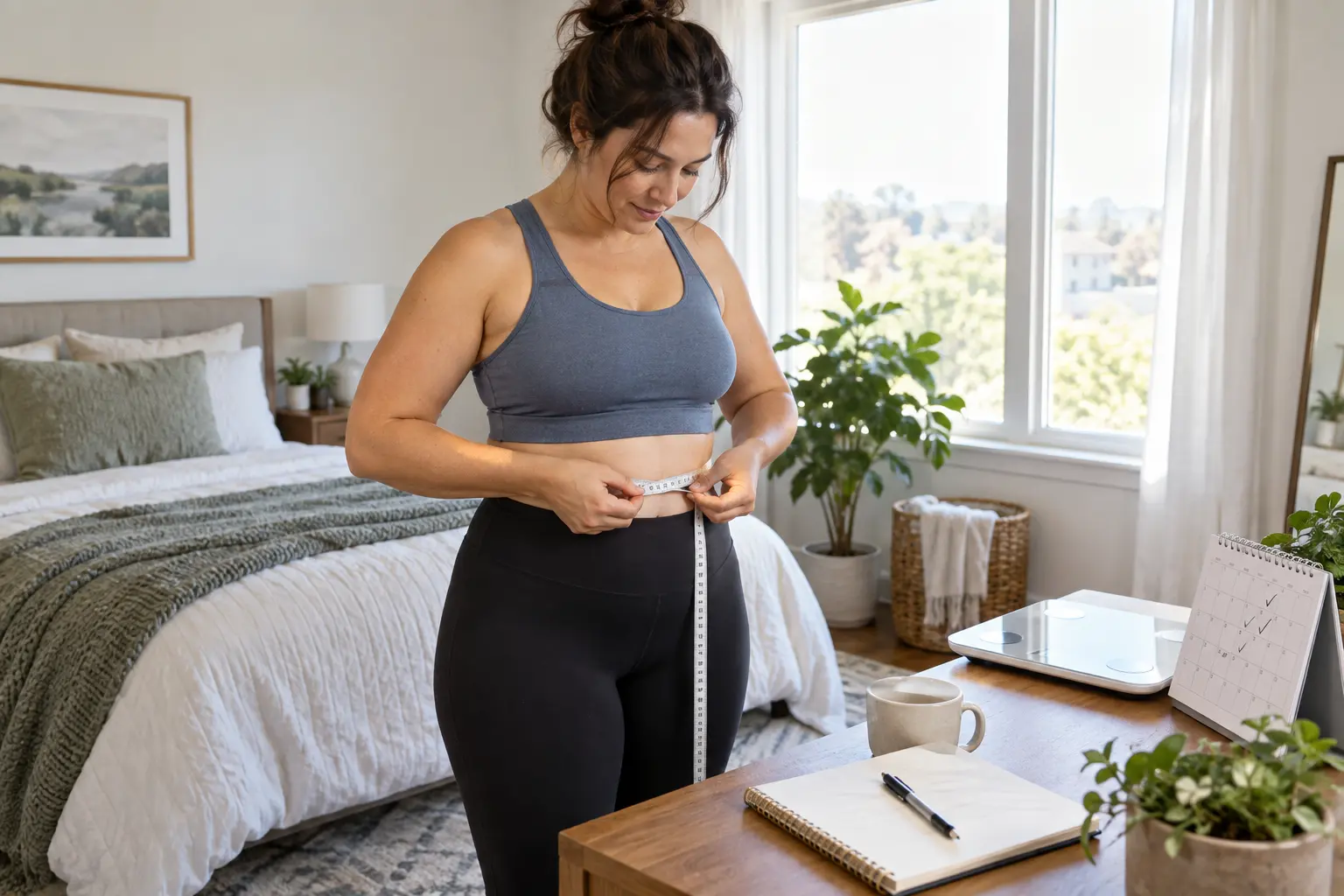
Measure waist at one defined point under similar conditions every two to four weeks. Pair it with seven-day average weight and consistent photos if emotionally appropriate. Review four or more documented weeks before changing the plan.
Example: weight changes before the tape
After six weeks, Noor’s average weight is lower and training is stable, but three waist readings look flat. The records show different tape positions and two measurements after restaurant weekends. Noor standardizes the site and morning conditions instead of cutting calories sharply. The next month shows a modest downward waist trend without dehydration or extra abdominal workouts.
Why waist size matters for health
Fat stored inside the abdomen around the organs (visceral fat) is more closely linked with type 2 diabetes, heart disease and fatty liver than fat elsewhere. Waist measurement is a simple proxy: health organizations often use thresholds of about 94 cm (37 in) for men and 80 cm (31.5 in) for women as signs of increased risk, with lower cut-offs for some ethnic groups. The good news is that visceral fat often responds well to weight loss and regular exercise, even when the tape changes slowly.
Why spot reduction does not work
Studies in which people trained one area, such as doing abdominal exercises or exercising one leg, have generally not found extra fat loss from that area. Fat is released from stores throughout the body according to individual patterns. Core exercises strengthen muscles but do not burn the fat on top of them.
Where a supplement fits
No supplement targets belly fat specifically. Claims about "targeting stubborn fat" are not supported by evidence for any finished product.
Treat Fat Burn Active as an optional addition, not a substitute for the steps in this guide. Review its listed ingredients and limitations in our product analysis. If the evidence, warnings, and cost fit your decision, check the current price and formula on the official site. We may earn a commission.
Frequently asked questions
Is belly fat always the last fat lost?
No. The order differs between people.
Do ab exercises burn belly fat?
They strengthen muscle but cannot select the nearby fat depot.
Can waist change while weight does not?
Yes, but confirm with repeated standardized measurements.
When should abdominal change be checked?
Rapid unexplained enlargement, pain, swelling, or persistent digestive symptoms need qualified care.
Sources
- Endotext: Adipose Tissue Distribution
- WHO: Waist Circumference and Waist–Hip Ratio
- NIDDK: Health Risks of Overweight
- Regional Fat Loss Review
- NIH ODS: Weight-Loss Supplements
Sources reviewed September 17, 2026. This article is general educational information, not medical advice, diagnosis, or treatment.