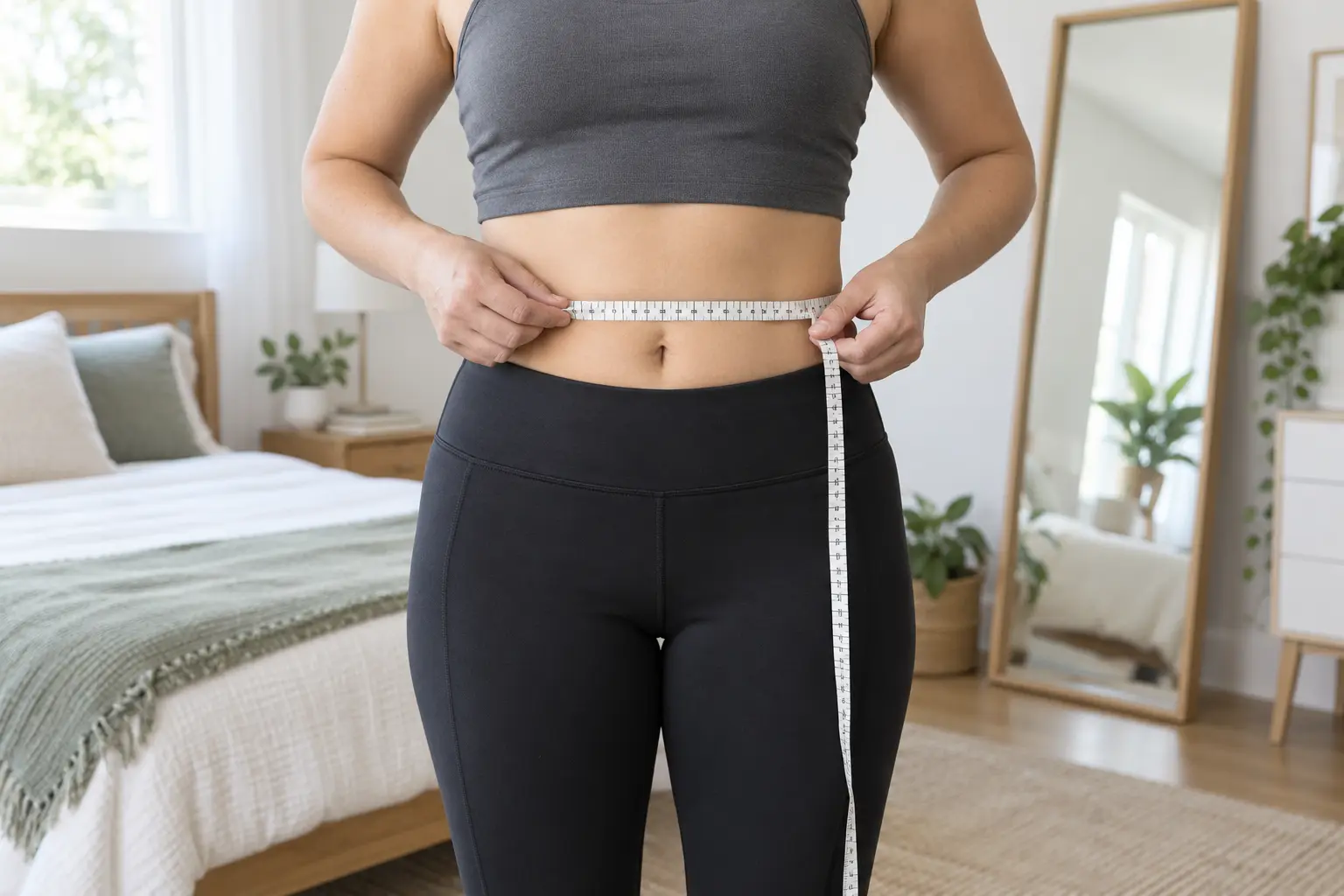
A six-step protocol
- Prepare. Use a flexible non-stretch tape and measure under similar conditions, preferably before a meal and not immediately after exercise.
- Choose the landmark. A common WHO protocol uses the midpoint between the lowest palpable rib and the top of the iliac crest.
- Position. Stand with feet together, weight evenly distributed, arms relaxed, and abdomen neither drawn in nor pushed out.
- Level the tape. Wrap it horizontally around the body against the skin without twisting.
- Use normal tension and breath. Make contact without compressing tissue and read after a normal exhalation.
- Repeat. Remove and replace the tape; if results differ unexpectedly, check the landmark and level before recording.
Do not mix waist landmarks
Research and clinical protocols do not all define the waist identically. Some use the midpoint between the lower rib and iliac crest, some the top of the iliac crest, and others the narrowest point. The resulting numbers may differ even when each technique is performed correctly.
Select the protocol relevant to your clinician or reference standard. For personal progress tracking, write the landmark in the log and keep it unchanged. Comparing a midpoint measurement this month with a narrowest-point measurement next month creates a false trend.
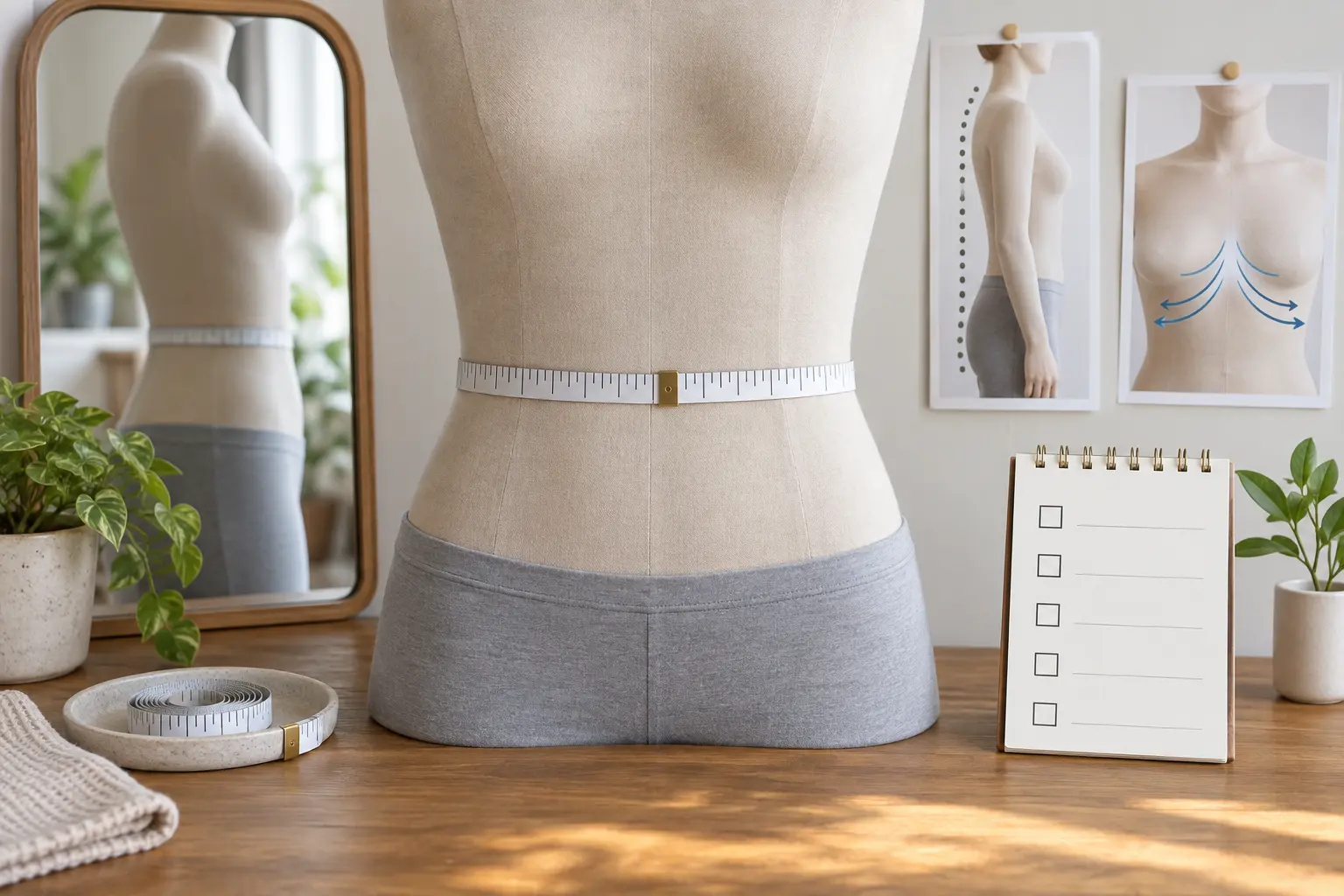
Fix the six common errors
Example: a false two-week gain
A person records a larger waist after two weeks and assumes fat gain. The earlier measurement used the narrowest point in the morning; the new one was at the navel after dinner with the tape angled downward. The values do not form a valid comparison.
They choose the midpoint protocol, photograph the landmark for private reference, use the same morning schedule, and ask the same helper to take two readings. The next comparison is interpretable. The invalid pair is kept in the log but marked as a method change, not rewritten as progress or failure.
Create a measurement card
Write down the tape type, landmark, clothing, time window, posture, breathing point, and whether you or a helper measures. Store the tape without stretching or kinking it. Add a reminder that bloating and bowel changes can affect circumference. This small card lets you reproduce the method months later and helps a clinician understand what the number represents.
What waist measurements mean
Many guidelines use about 94 cm (37 in) for men and 80 cm (31.5 in) for women as thresholds for increased health risk, with higher thresholds of 102 cm and 88 cm indicating substantially increased risk. Lower cut-offs are used for some ethnic groups. Waist-to-height ratio below 0.5 is another simple target.
How often to measure
Every two to four weeks is enough; waist changes slowly. Measure at the same time of day, ideally in the morning before eating.
Where Fat Burn Active fits—and where it does not
Fat Burn Active cannot improve measurement technique. Establish a reliable waist baseline before evaluating any change that happens while using a product.
Fat Burn Active is optional and is not required for fat loss. It cannot identify water retention, clear constipation, validate a tape measurement, or turn a body-fat estimate into a direct measurement. A short-term change after taking any product does not establish that body fat changed.
Once the practical steps in this guide are working, decide whether an optional supplement adds enough value. Start with the Fat Burn Active review; if the formula and limitations are acceptable, see the current price on the official site. We may receive a commission.
Frequently asked questions
Should I measure at the navel?
Only if that is the chosen protocol. Many formal methods use another anatomical landmark; consistency is essential.
Should I hold my breath?
No. Breathe normally and read at the end of a normal exhalation without pulling in the abdomen.
What if two readings differ?
Remove and replace the tape, check landmark, level, and tension, then repeat before recording.
Sources
- WHO: Waist Circumference and Waist–Hip Ratio report
- NHLBI: Assessing Your Weight and Health Risk
- CDC NHANES Anthropometry Procedures Manual
- NIH workshop report on waist circumference
Sources reviewed September 13, 2026. This article is general educational information, not medical advice, diagnosis, or treatment.