What is happening in sore muscle
Unaccustomed eccentric work—such as lowering weights, descending hills or returning after a break—commonly produces soreness that peaks after the session rather than during it. Mechanical stress initiates repair, immune activity and changes around the exercised tissue. Those processes can contribute to transient fluid retention.
This is not water turning into fat, and it is not proof of new muscle. The scale measures total mass only. Glycogen replenishment, sodium, hydration and digestive contents may be changing at the same time.
A practical normal-versus-concerning screen
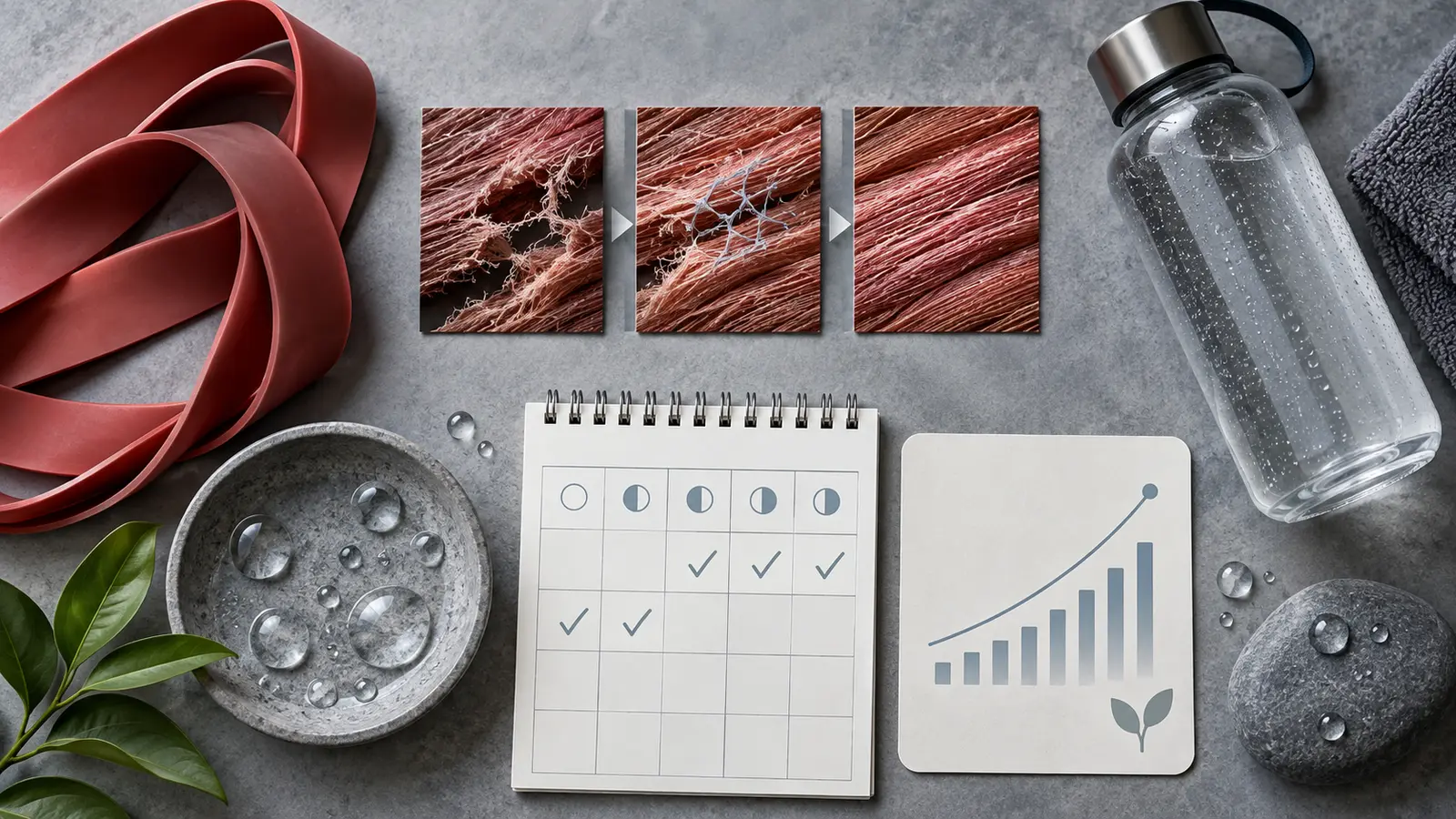
Recover without trying to drain the scale
- Continue ordinary hydration rather than forcing excessive water.
- Eat regular meals with adequate protein and carbohydrate.
- Use gentle movement if comfortable.
- Sleep and leave recovery between hard sessions.
- Resume progression when function is returning.
- Avoid diuretics, laxatives, punishing cardio or severe carbohydrate restriction.
Anti-inflammatory medicines are not a routine weight-loss tool and may carry gastrointestinal, kidney or cardiovascular risks.
Read the scale after the noisy window
Mark unusually hard sessions on the same chart as morning weight. Compare the current seven-day average with the previous one, then review waist and training performance over several weeks. A temporary spike that resolves alongside soreness needs no calorie correction.
If the average continues rising after training, hydration and bowel patterns stabilize, audit portions, drinks, reward eating and reduced movement. Soreness can explain short-term noise; it should not become a permanent explanation that blocks honest review.
How long it usually lasts
Delayed-onset muscle soreness typically starts 12–24 hours after unaccustomed exercise, peaks around 24–72 hours and fades within about five to seven days. Scale weight often follows a similar pattern, rising by a few hundred grams to over a kilogram and then returning to trend. Repeating the same type of exercise usually produces much less soreness the next time, a protective effect called the repeated-bout effect.
Signs that need urgent attention
Rarely, extreme exercise causes rhabdomyolysis, a breakdown of muscle that can damage the kidneys. Seek urgent care for severe muscle pain out of proportion to the workout, swelling, weakness, or dark tea- or cola-colored urine. The risk is higher with very hard first sessions, heat, dehydration and some medicines or stimulants.
Where a supplement fits
Stimulant supplements can raise the risk of overdoing a first hard session in the heat. Build training gradually rather than relying on extra energy from a capsule.
A stimulant does not accelerate muscle repair or make severe soreness safer, and dehydration is not fat loss. Fat Burn Active is optional and cannot repair an eating environment, replace sleep or treat emotional eating. Its current official page lists at least 120 mg caffeine per serving from caffeine anhydrous and guarana, additional unquantified caffeine from green-tea extract, and bitter-orange extract standardized to 6 mg synephrine. Feeling more alert or less hungry for a short time is not proof of meaningful fat loss.
Treat Fat Burn Active as an optional addition, not a substitute for the steps in this guide. Review its listed ingredients and limitations in our product analysis. If the evidence, warnings, and cost fit your decision, check the current price and formula on the official site. We may earn a commission.
Frequently asked questions
Does soreness mean the workout worked?
No. Soreness reflects unfamiliar exercise, not how much fat or muscle you gained or lost.
Should I exercise while sore?
Light activity is usually fine and may ease stiffness; avoid hard work on very sore muscles.
Should I eat less because the scale went up?
No. The increase is mostly water and will settle within a week.
Sources
- Exercise-induced muscle damage review
- Delayed-onset muscle soreness review
- CDC: Rhabdomyolysis warning signs
- NIDDK: Weight-management treatment
Sources reviewed September 13, 2026. This article is general educational information, not medical advice, diagnosis, or treatment.