
The five most common explanations
Use time—not panic—to narrow the cause
A change within 24 to 72 hours is dominated by fluid and digestive variability. Soreness and glycogen changes can overlap for longer when several new sessions occur each week. Actual muscle gain is gradual, and meaningful fat gain requires a sustained energy surplus.
If weekly averages stabilize or fall while waist is stable or smaller and performance improves, the early rise was probably not a failed plan. If averages climb for several weeks and waist also increases, review intake, activity compensation and portions. Compare equivalent weeks: a weigh-in after a restaurant meal and hard leg session is not fairly matched with a rested, lower-sodium morning.
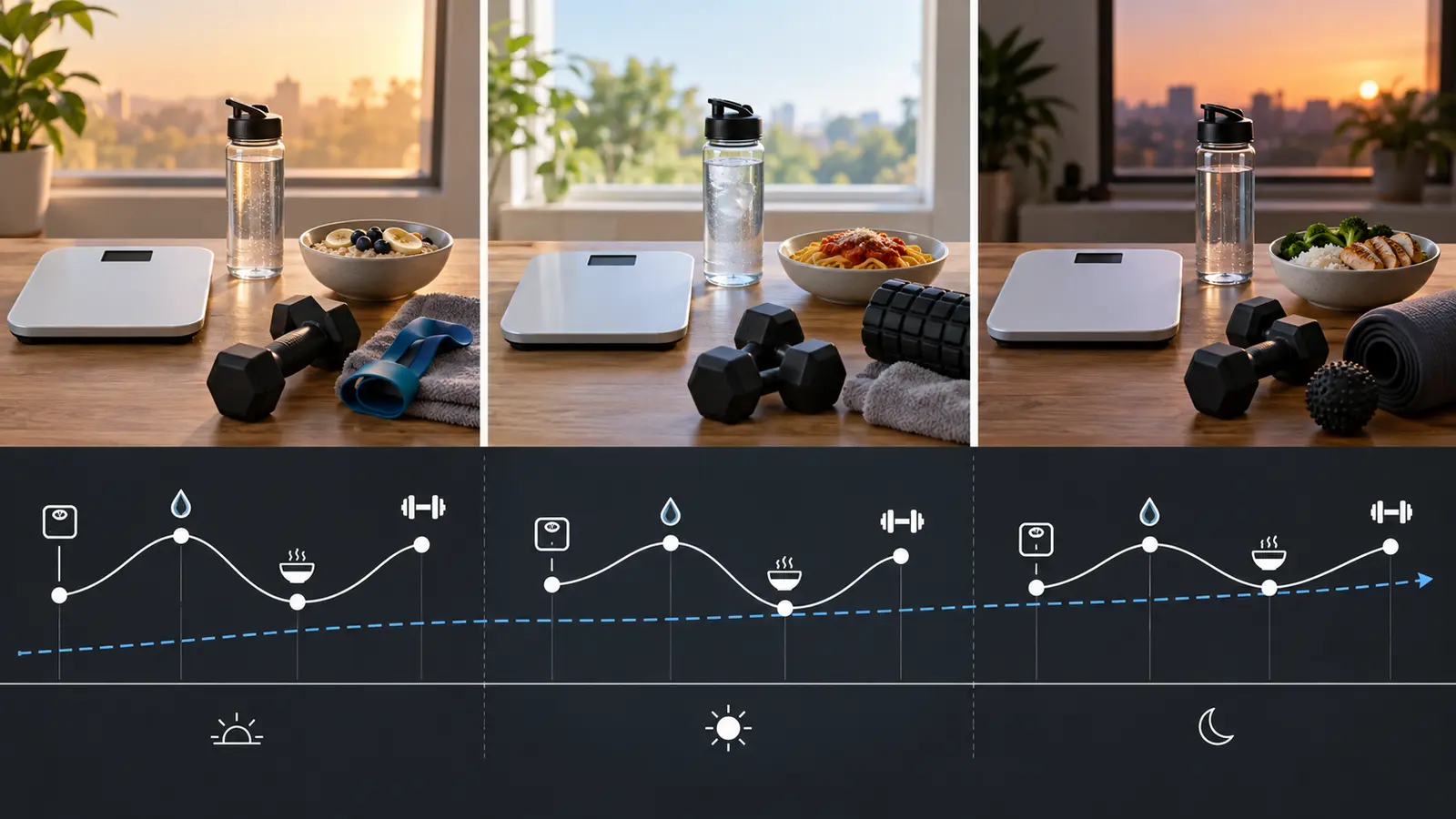
Use a clean measurement protocol
- Weigh at a similar morning time after using the bathroom.
- Use the same scale on a hard surface.
- Calculate a seven-day average.
- Measure waist every two to four weeks.
- Note hard sessions, soreness, menstrual-cycle timing, travel and salty meals.
- Schedule one review date instead of reacting daily.
Keep clothing and scale placement consistent so measurement noise does not become a false explanation.
Know when weight gain is not routine workout noise
Rapid swelling, one-sided leg swelling, chest pain, severe breathlessness, fainting, very dark urine, extreme muscle pain or reduced urine output requires prompt medical assessment. These are not normal signs to push through.
For ordinary fluctuations, keep hydration and meals consistent and progress training gradually. Avoid diuretics, laxatives, dehydration or extra workouts intended to force the scale down.
How much weight training can add temporarily
New or unaccustomed exercise causes small amounts of muscle damage, and the repair process brings fluid into the muscles. Muscles also store more glycogen as they adapt, and each gram of glycogen holds roughly three grams of water. Together these can add around 0.5–1.5 kg in the first weeks of a new program, even while fat is being lost.
Watch for increased appetite
Some people eat more after starting exercise, sometimes more than the session burned. Keep meals structured, have a protein-rich snack after workouts if needed and watch whether portions creep up. A three-to-four-week weight trend combined with waist measurements will show whether the program is working.
Where a supplement fits
A fat burner will not prevent normal post-exercise water retention. Give the new routine a few weeks before judging it.
A stimulant or diuretic-like strategy should not be used to chase temporary workout-related scale changes. Fat Burn Active is optional and cannot repair an eating environment, replace sleep or treat emotional eating. Its current official page lists at least 120 mg caffeine per serving from caffeine anhydrous and guarana, additional unquantified caffeine from green-tea extract, and bitter-orange extract standardized to 6 mg synephrine. Feeling more alert or less hungry for a short time is not proof of meaningful fat loss.
Once the practical steps in this guide are working, decide whether an optional supplement adds enough value. Start with the Fat Burn Active review; if the formula and limitations are acceptable, see the current price on the official site. We may receive a commission.
Frequently asked questions
How long does the workout weight gain last?
Usually one to three weeks while your body adapts to the new training.
Am I gaining muscle?
Some, especially if you are new to strength training, but most early gain is water.
Should I eat less to compensate?
No. Keep your plan stable and judge the trend after three to four weeks.
Sources
- Exercise, glycogen and water review
- Exercise-induced muscle damage review
- Cleveland Clinic: Weight gain after exercise
- NIDDK: Weight-management treatment
Sources reviewed September 13, 2026. This article is general educational information, not medical advice, diagnosis, or treatment.