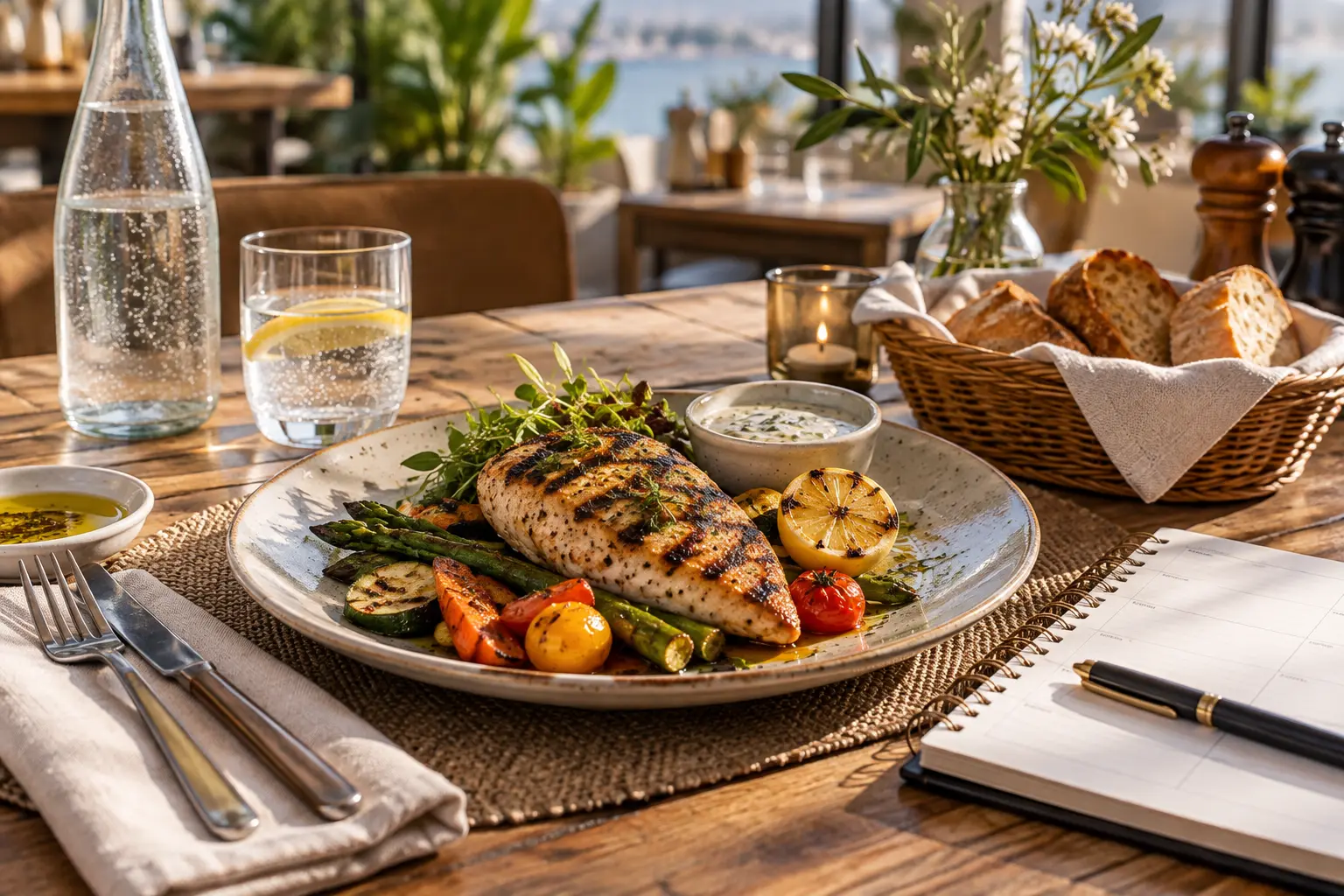
Think in weekly totals
A person could create a modest deficit Monday through Friday and consume much of it during one restaurant evening through bread, oil, an entrée, alcohol and dessert. The lesson is not that restaurants are forbidden. It is that small weekday margins are easy to overestimate and one meal can contain several normally separate eating occasions.
Weekly arithmetic also works in the other direction: one richer meal does not require starving the next day. A consistent plan can absorb occasional variation.
Where restaurant uncertainty comes from
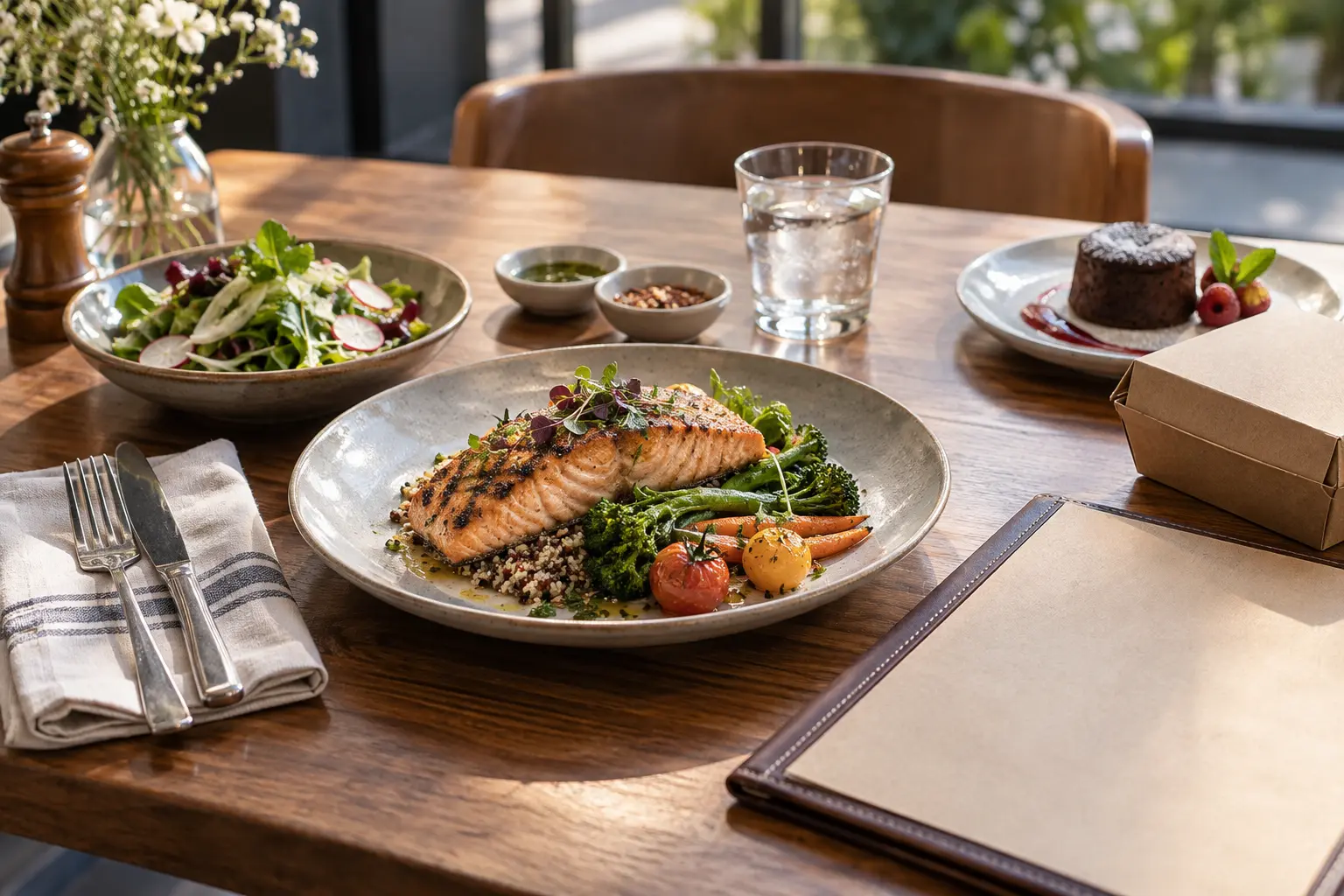
Use a decision order before hunger peaks
Review the menu in advance when possible. Choose the main protein or plant protein, then vegetables and a satisfying carbohydrate. Ask for sauce on the side when it helps—not because sauce is morally bad. Decide whether bread, alcohol, appetizer or dessert matters most instead of accepting every extra automatically.
Split a very large portion before eating or take leftovers home safely. Eat slowly enough to notice comfort. Menu calorie numbers are useful estimates, not laboratory measurements.
Expect water, not instant fat conclusions
Restaurant sodium, carbohydrate, later timing and food volume can raise next-morning weight. That increase is not an equal mass of fat. Resume ordinary hydration and meals, then watch the weekly average settle. Fasting and punishment exercise can trigger a restrict-overeat cycle.
If eating out occurs several times weekly, make it part of the base plan rather than treating every visit as exceptional. Repeat two or three satisfying orders and compare trends.
How many calories restaurant meals contain
Studies of restaurant meals have found that many main dishes contain over 1,000 calories, and a starter, drinks and dessert can push a meal well past 2,000. Calorie labels on menus at large US chains help, but independent restaurants rarely list them, and estimates are often low.
Strategies that work
- Look at the menu in advance and choose before arriving hungry.
- Pick a dish based on grilled or roasted protein with vegetables.
- Ask for sauces and dressings on the side.
- Share a starter or dessert.
- Stop when comfortably full and take leftovers home.
Where a supplement fits
No supplement offsets a large restaurant meal. Planning the order makes a far bigger difference.
Taking a stimulant before a restaurant meal is not a reliable way to cancel uncertain portions or alcohol calories. Fat Burn Active is optional; it cannot create a weekly deficit when food and drink intake exceed expenditure. Its current official page lists at least 120 mg caffeine per serving from caffeine anhydrous and guarana, additional green-tea caffeine that is not quantified, and bitter-orange extract standardized to 6 mg synephrine. Alertness, warmth, reduced appetite or sweating does not prove meaningful finished-product fat loss.
Treat Fat Burn Active as an optional addition, not a substitute for the steps in this guide. Review its listed ingredients and limitations in our product analysis. If the evidence, warnings, and cost fit your decision, check the current price and formula on the official site. We may earn a commission.
Frequently asked questions
Must I count every restaurant calorie?
No. Choosing a balanced main dish and planning extras is usually enough.
Can one restaurant meal stop fat loss?
Rarely. Frequent large meals across the week are what matter.
How long should I wait to judge the scale?
A few days; salty restaurant food often adds water weight temporarily.
Sources
Sources reviewed September 13, 2026. This article is general educational information, not medical advice, diagnosis, or treatment.