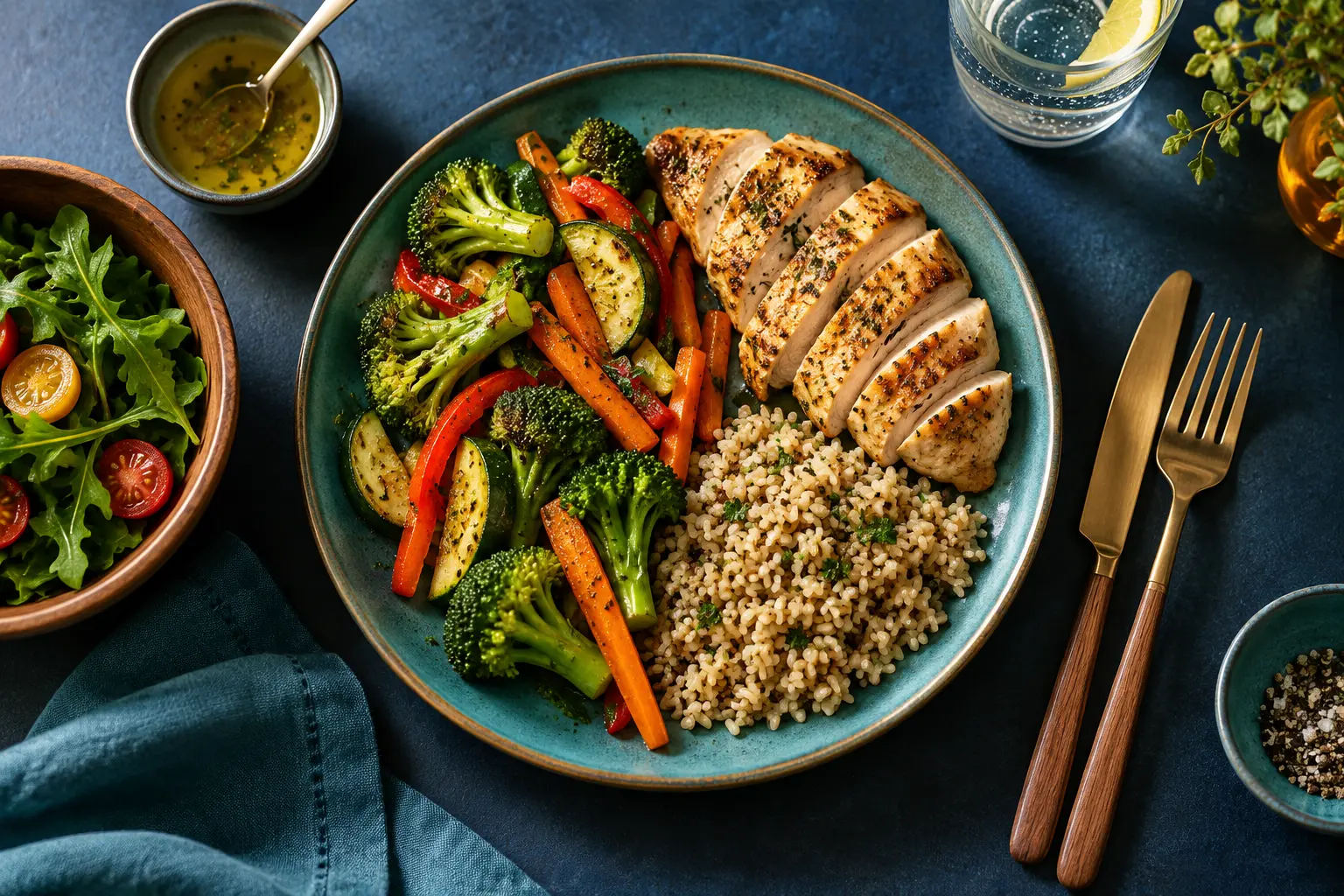
Why “just eat less” is incomplete advice
Large packages, oversized plates, restaurant servings, distracted eating, and unmeasured oils influence intake before hunger has a chance to speak. People then blame themselves for responding predictably to the environment.
Making every food smaller also removes the high-volume items that could have supported fullness. The result is a tiny plate with the same energy density and more hunger.
Serving size is not your required portion
A serving size on a label is a reference used for nutrition information. Your portion is the amount you choose to eat. Needs vary with body size, activity, meal pattern, health, and goals. The label helps calculation; it does not prescribe the correct amount for every person.
Our under-400 breakfast guide demonstrates how label serving sizes and extras change the arithmetic of one meal.
Build the plate before measuring everything
Start with a visible protein source and substantial vegetables or fruit. Add a carbohydrate portion appropriate to activity and preference, then include dietary fat intentionally. This structure leaves room for adjustment without turning the meal into a mathematics exercise.
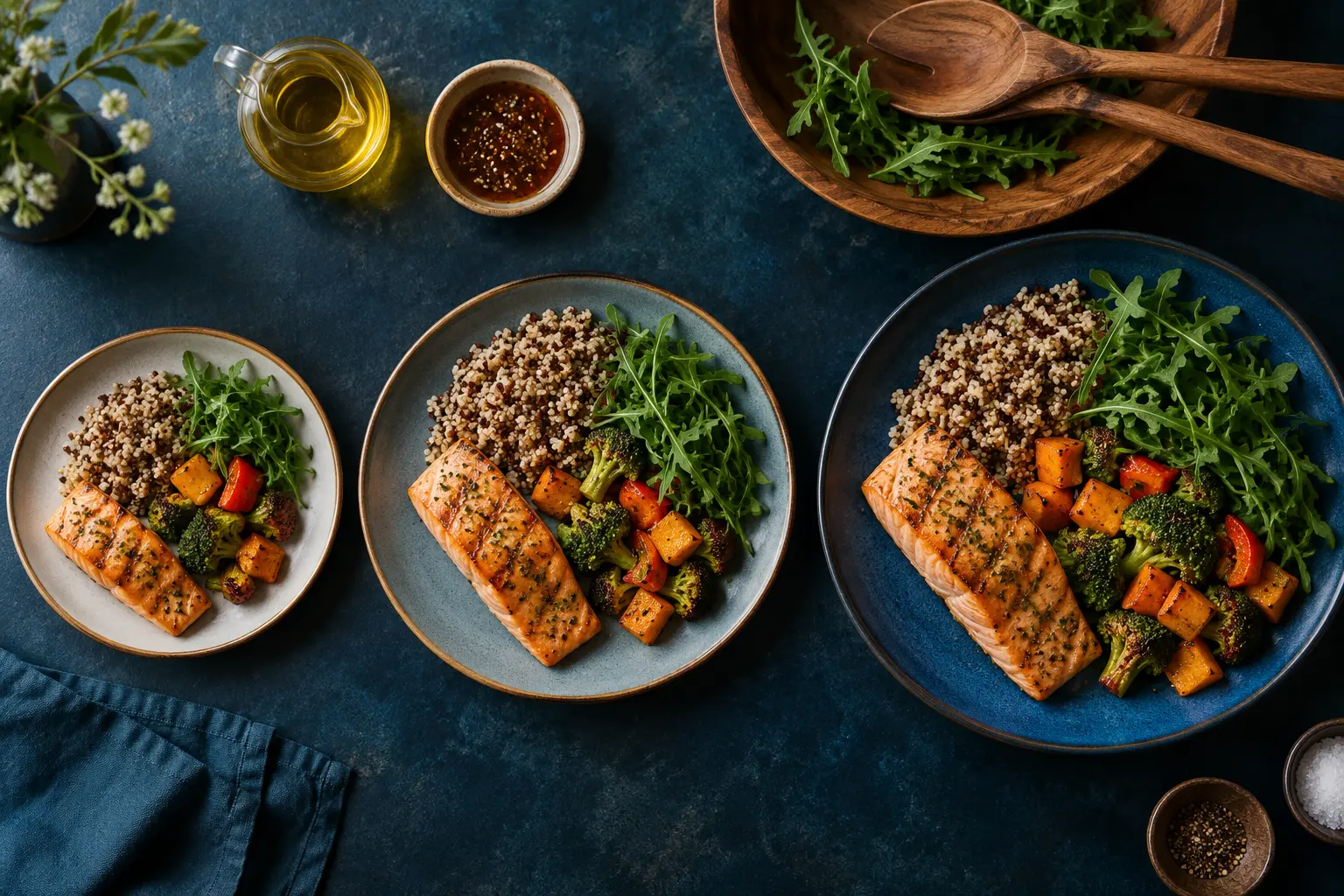
Environmental portion cues
Five low-friction portion controls
- Plate food before sitting down.
- Put snacks in a bowl rather than eating from the package.
- Measure oils, dressings, nut butter, and calorie-dense sauces temporarily.
- Wait several minutes before deciding on seconds.
- Increase vegetables, fruit, soup, or lean protein when the meal feels too small.
Restaurant portions
Choose in advance whether to share, box part of the meal, order an appetizer portion, or simply eat until comfortably satisfied. None is mandatory. Avoid arriving extremely hungry after “saving calories” all day, which can make a large serving harder to navigate.
When portion control needs professional support
Rigid weighing, fear of unmeasured food, compensatory restriction, binge episodes, or distress around eating can signal that more tracking is harmful. A qualified clinician or dietitian can build structure without intensifying disordered eating.
Run a seven-day portion audit without shrinking every meal
Keep normal meal times and first identify the portions most likely to change the weekly energy total: cooking oils, dressings, spreads, cheese, nuts, desserts, alcohol, sweet drinks, and repeated servings. Measure only those items for one week while keeping vegetables, fruit, and a clear protein source visible. The aim is calibration, not permanent surveillance.
Interpret the result
Use weekly weight averages, waist measurements, energy, and adherence to judge the experiment. A single restaurant meal or scale reading is too noisy to prove that the method worked or failed.
Calibrate the foods that matter most
For one week, measure only foods whose portions are hard to see and energy density is high: oil, dressing, nut butter, nuts, cheese, creamy sauces, cereal, and snack foods. Continue serving vegetables and other low-density foods normally. Compare the measured amount with your previous estimate, then choose a repeatable household cue—a spoon, ramekin, bowl, or package division. Temporary precision teaches a visual skill; it does not have to become permanent tracking.
Where Fat Burn Active fits
Portion awareness changes an input you can observe; a supplement does not make an unmeasured serving disappear. Fat Burn Active is optional: it cannot replace an eating pattern, activity, sleep, medical care, or the practical system described above. Research on an individual ingredient is not proof that the finished formula produces the same outcome at the amount sold.
A supplement is not required to benefit from this guide. If your foundations are already in place, use the independent Fat Burn Active review to judge whether the formula has a useful optional role. If it fits your expectations and stimulant tolerance, check the current price on the official site. We may receive a commission.
Frequently asked questions
Do I need a food scale?
No. It can calibrate selected foods, but plate structure and repeatable portions can work without permanent weighing.
Should I use smaller plates?
It may help some people, but meal composition and hunger still matter.
Can I have seconds?
Yes. Pause, assess hunger, and choose more of the foods that best support fullness.
Sources
- Portion size and energy intake review
- NIDDK healthy eating
- Dietary Guidelines for Americans
- NIDDK: Food portions—choosing just enough
Evidence reviewed September 8, 2026. Educational information only; not medical advice.