
Why hunger becomes the real bottleneck
A calculated target may look reasonable but feel punishing when it removes too much food, relies on small energy-dense portions, or leaves long gaps. Dieting can also increase appetite while a lighter body requires less energy. Poor sleep, stress, hard training and highly palatable food cues amplify the problem. Hunger is not proof of “fat burning”; it is a signal to inspect the plan.
A larger theoretical deficit can produce a smaller real weekly deficit when it triggers evening overeating or weekend rebound. Sustainability is therefore part of the energy equation, not a soft extra.
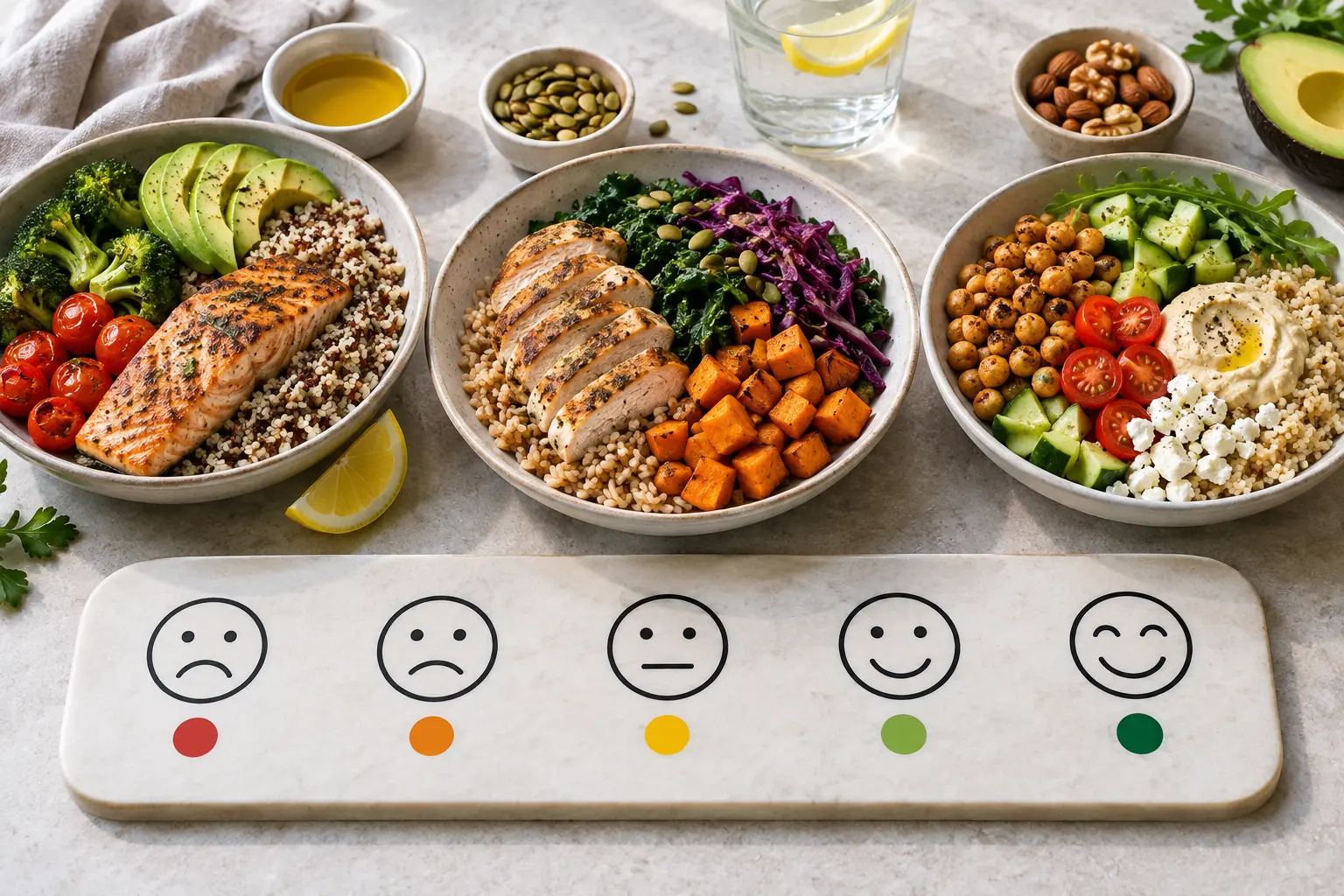
Build a higher-satiety plate
There is no magic order, but meals that combine these components usually offer more food and nutrition than a tiny snack-style plate with the same calories.
The high-protein lunch guide offers a concrete test when afternoon snacking is the sticking point.
Cut low-satiety calories first
Audit specialty coffee, sweetened drinks, alcohol, cooking oil, creamy sauces and distracted bites. Choose one automatic item to reduce or replace while preserving foods that make meals satisfying. Do not remove every enjoyable food. A planned dessert or restaurant meal can fit when its portion is visible within the week.
Calorie density is a tool, not a purity rule. Avocado, nuts and olive oil can support a healthy diet but still need portions compatible with the target. Conversely, potatoes, bread and fruit are not automatically fattening.
Move calories to the hunger window
If breakfast is easy to skip but 4 p.m. hunger leads to uncontrolled snacking, moving food toward lunch and afternoon may help. If evening hunger follows a very small dinner, make dinner more substantial rather than relying on willpower. Meal timing matters mainly through adherence, preference, training and medical needs—not because one clock time turns calories into fat.
Rate hunger before and after three recurring meals and note how long satisfaction lasts. Change protein, volume or timing in one meal and repeat. This turns vague hunger into a solvable design problem.
Choosing the size of the deficit
A deficit of about 300–500 calories a day usually produces steady loss while keeping hunger manageable. Larger deficits increase hunger, fatigue and the risk of overeating. If hunger is constant, the deficit is probably too large for you right now.
Where a supplement fits
Hunger management comes from the plate and the size of the deficit, not a supplement.
An appetite sensation from a stimulant should not be used to tolerate an excessively restrictive plan. Fat Burn Active is optional; it cannot create a weekly deficit when food and drink intake exceed expenditure. Its current official page lists at least 120 mg caffeine per serving from caffeine anhydrous and guarana, additional green-tea caffeine that is not quantified, and bitter-orange extract standardized to 6 mg synephrine. Alertness, warmth, reduced appetite or sweating does not prove meaningful finished-product fat loss.
Once the practical steps in this guide are working, decide whether an optional supplement adds enough value. Start with the Fat Burn Active review; if the formula and limitations are acceptable, see the current price on the official site. We may receive a commission.
Frequently asked questions
Is some hunger normal on a diet?
Mild hunger before meals is normal; constant hunger is a sign to adjust.
Does protein really help?
Yes. It is the most filling macronutrient for most people.
How long should I try a change?
Give it two weeks before judging hunger and three to four weeks for weight.
Sources
- CDC: Healthy Eating for a Healthy Weight
- Mayo Clinic: Feel Full on Fewer Calories
- NIDDK: Treatment for Overweight and Obesity
- NIH ODS: Weight-Loss Supplements
Sources reviewed September 13, 2026. This article is general educational information, not medical advice, diagnosis, or treatment.