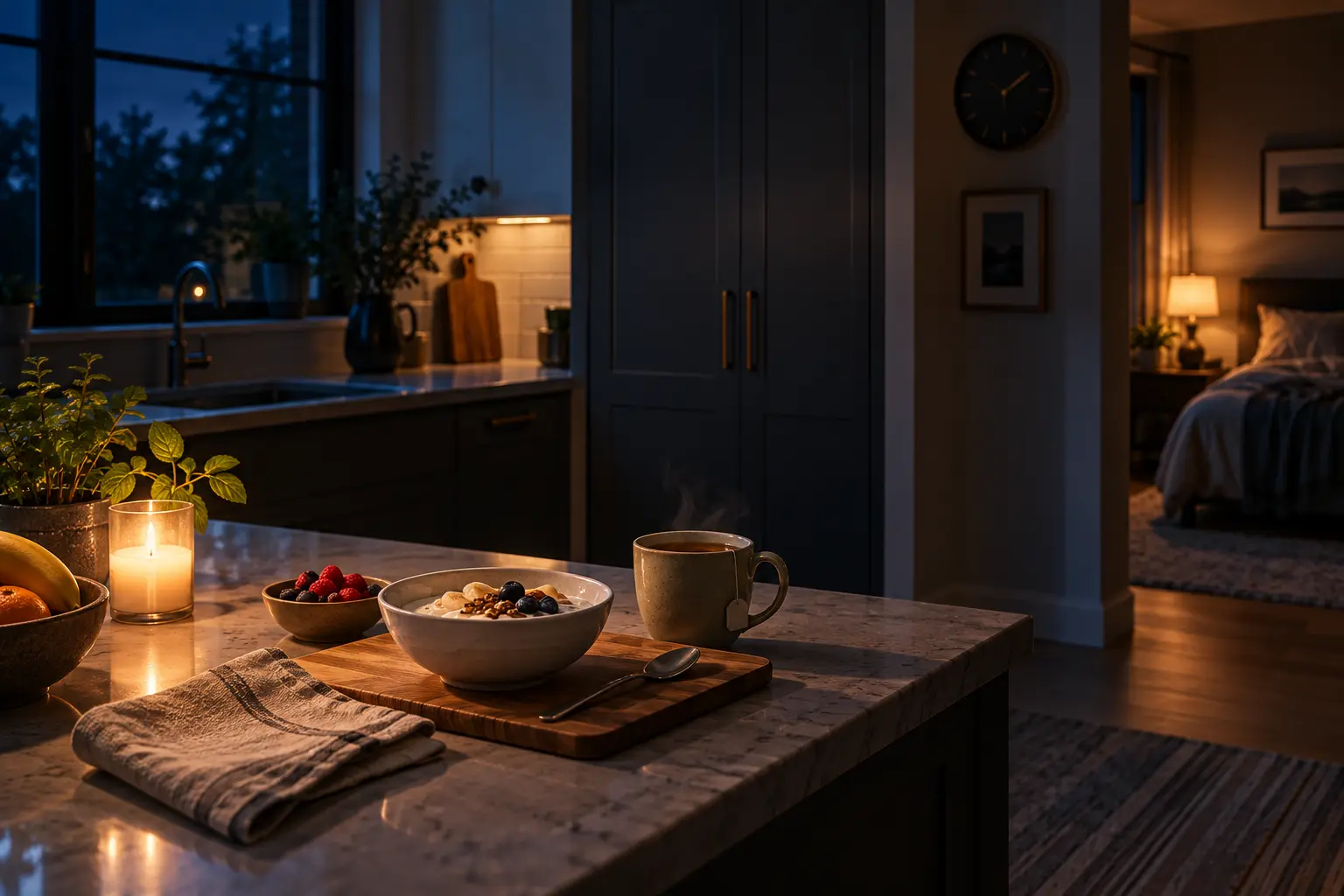
Why evening willpower keeps losing
Restriction feels easy while work provides structure. At home, fatigue rises, food is available, screens begin, and the brain expects reward. A small dinner leaves physical hunger, while a stressful day adds emotional urgency.
Each night is treated as a fresh failure, so breakfast becomes smaller the next morning. The cycle resets.
Find the dominant cause
Repair the daytime pattern
Use regular meals containing protein, fiber, and adequate energy. If dinner is late, add a planned afternoon snack. Do not “save” most calories for the evening if that repeatedly produces loss of control.
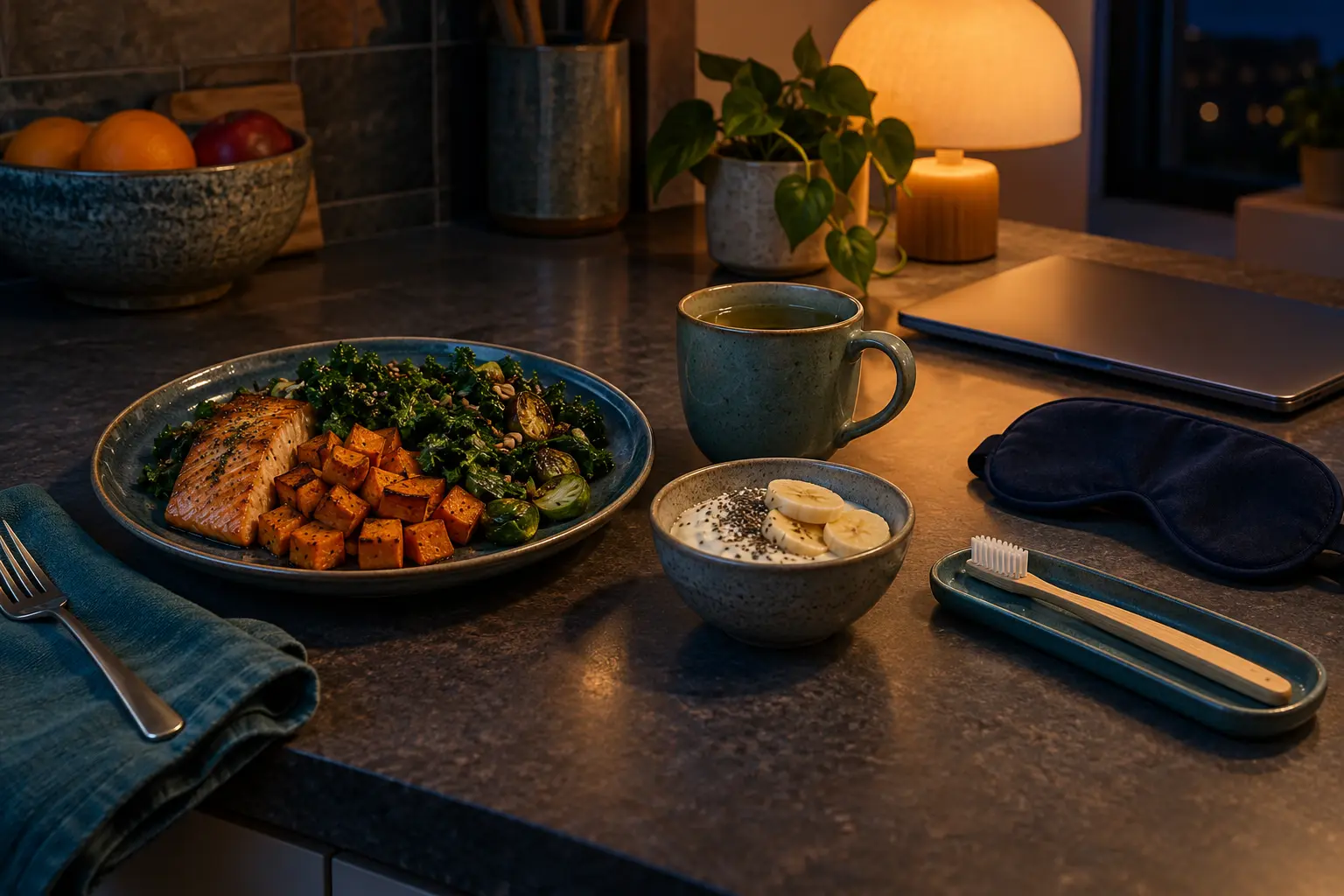
Build a dinner that ends the search
Include protein, vegetables or fruit, a satisfying carbohydrate, deliberate fat, and flavor. A technically low-calorie plate that feels incomplete may send you through several snacks afterward.
The kitchen-closing routine
- Decide whether a planned evening snack is needed.
- Plate it and eat sitting down.
- Store food and clear visible packages.
- Make tea, brush teeth, or change location.
- Begin a sleep-supporting activity away from the kitchen.
Short sleep extends the risk window
Late bedtime increases time available for eating and can worsen next-day appetite and decision-making. Move the wind-down cue earlier and review caffeine, alcohol, screens, and sleep-disorder symptoms.
When it may be more than a habit
Night eating syndrome and binge-eating disorder require qualified assessment. Waking to eat repeatedly, consuming a large share of intake at night, loss of control, distress, or compensatory behavior should not be treated with stricter dieting alone.
Appetite suppressants do not repair the routine
A stimulant may delay hunger and worsen sleep, making the next evening harder. Review Fat Burn Active through our safety-focused analysis rather than using it as a nighttime solution.
A planned evening snack
If you are genuinely hungry in the evening, plan a snack rather than resisting until you give in. Choose something with protein or fiber, such as yogurt, fruit or a small bowl of cereal with milk, served in a bowl rather than eaten from the package.
Run an evening timeline audit
Write the timeline from the last daytime meal until sleep: hunger, commute, dinner preparation, dinner composition, screen use, alcohol, snacks, and bedtime. Mark the first moment the evening became difficult. The solution may be an afternoon snack, earlier dinner preparation, a more complete carbohydrate portion, moving food away from the sofa, or starting the bedtime routine sooner. Fix the earliest reliable point rather than fighting the final trip to the kitchen.
Design a planned evening snack
When genuine hunger is predictable, choose a snack before the evening begins. Combine protein with fruit, vegetables, or a whole-grain food, and add a measured enjoyable element if it makes the snack complete. Set the portion on a plate, sit down, and allow yourself to eat it without negotiation. A planned snack is not failure; it can prevent repeated cupboard visits that provide more calories and less satisfaction.
Before you change the strategy
Frequently asked questions
Is eating after 8 p.m. fattening?
Not by itself. Total intake matters more, but late snacking often adds calories.
Should I ban evening snacks?
No. A planned snack is usually better than an unplanned binge.
What if I wake up to eat?
Regular night waking to eat can be a sign of night eating syndrome; talk to a doctor.
Once the practical steps in this guide are working, decide whether an optional supplement adds enough value. Start with the Fat Burn Active review; if the formula and limitations are acceptable, see the current price on the official site. We may receive a commission.
Sources
- Night eating syndrome review
- NIMH eating disorders
- Sleep and weight review
- NIMH: eating disorders and care
Evidence reviewed September 8, 2026. Educational information only; not medical advice.