What changes when the belt rises
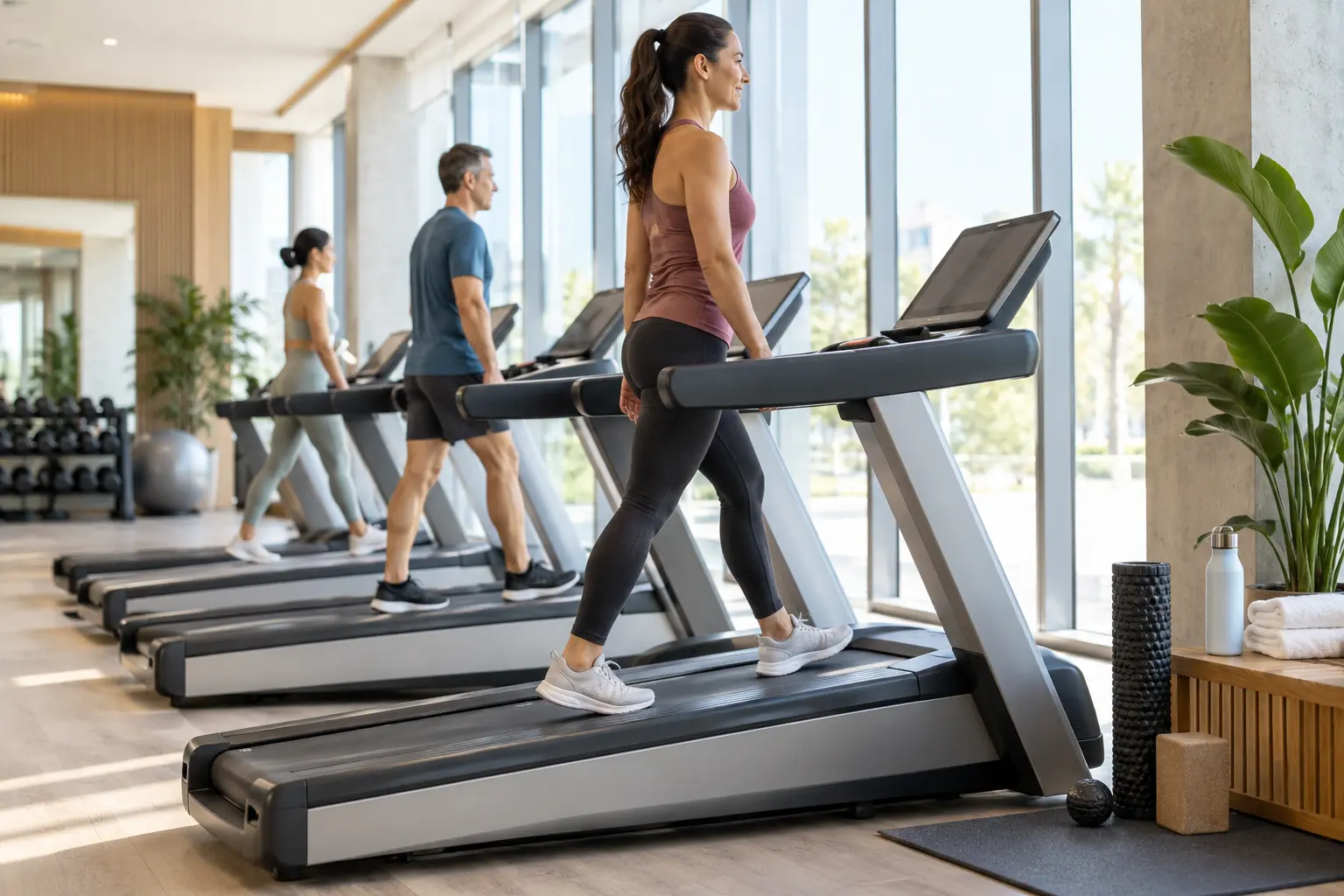
Uphill movement increases vertical work, oxygen consumption, and muscle activation compared with level walking at the same speed. Holding speed constant while increasing grade therefore raises intensity. This is not a metabolic loophole; it is simply harder work.
The proportion of energy coming from fat can be higher at some submaximal intensities, while total expenditure may differ. Long-term fat loss depends on the sustained energy gap, not maximizing fat oxidation during each minute.
Why the 12-3-30 formula is not a starting prescription
A fixed 12% grade, 3 mph pace, and 30-minute duration may be manageable for an experienced user and excessive for a beginner. Treadmills also vary, and holding the rails changes mechanics and reduces the actual demand. A viral formula cannot account for body size, fitness, balance, pain, or medicines.
Use the lowest grade that noticeably raises breathing without forcing you to hang from the console. If posture collapses or steps become uncontrolled, reduce grade or speed.
A six-session incline progression
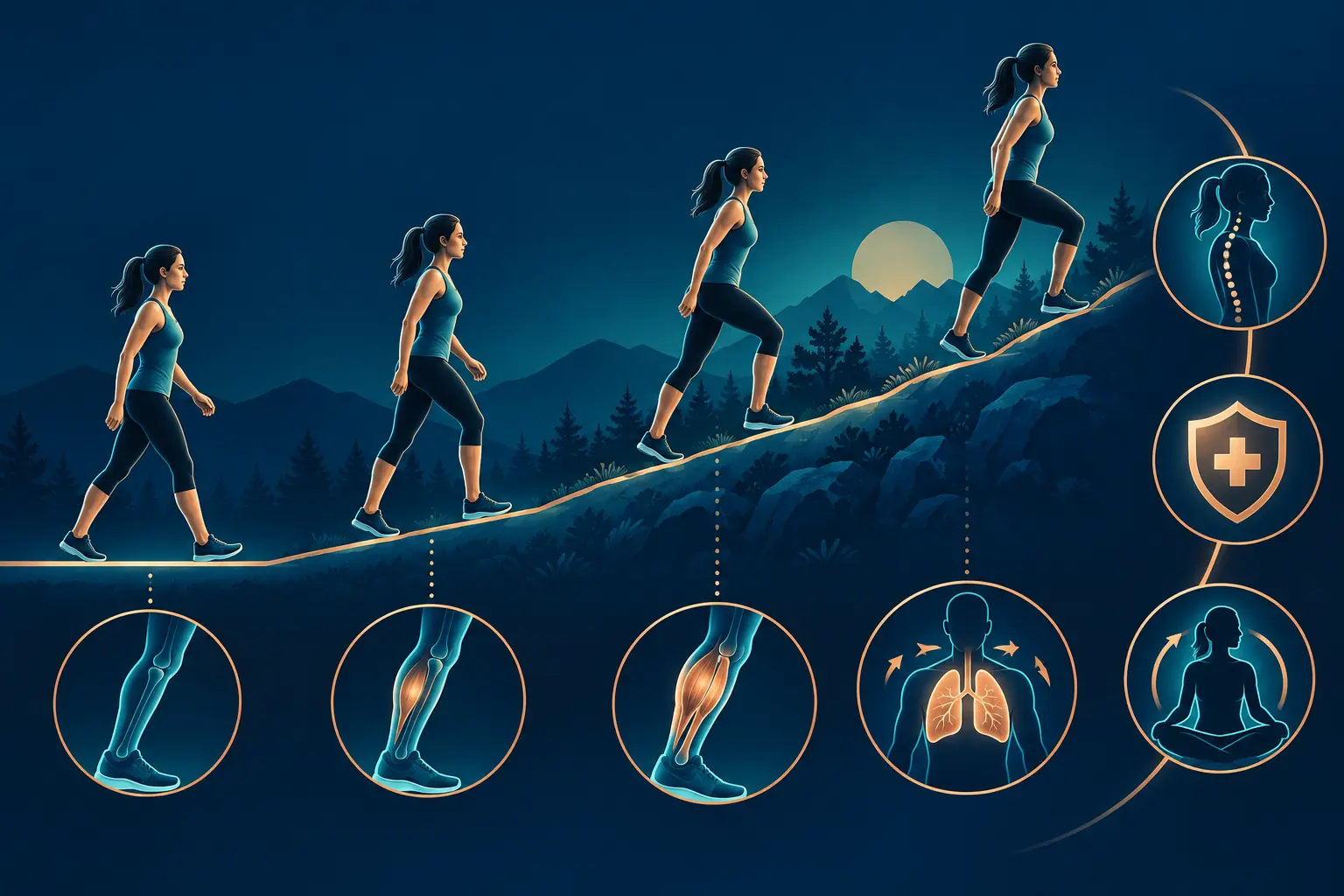
- Establish twenty comfortable minutes on level ground.
- Add three one-minute intervals at a gentle grade.
- Repeat the same session before progressing.
- Add one interval while keeping grade stable.
- Lengthen intervals before choosing a steeper setting.
- Retest recovery and keep at least one easy walking day.
Outdoor hills count, but descents add braking forces. Route surface, visibility, weather, and the return journey belong in the plan.
Calves, rails, and compensatory fatigue
Incline work can fatigue calves and the Achilles tendon quickly. Sudden high volume may affect the next day's gait or training. It can also raise hunger or reduce later movement, narrowing the expected energy effect.
Rail support may be appropriate for safety or rehabilitation when advised, but it makes machine calorie estimates even less reliable. If balance requires continuous gripping, choose a safer grade, pace, or mode.
A final choice check
Incline is one way to raise intensity, not a required skill. Brisk flat walking, cycling, or another mode can create an equivalent aerobic challenge with a different load pattern. Choose the option that preserves confident movement and predictable recovery.
How much incline adds
Walking uphill raises energy use considerably. A 10–15% incline at a moderate pace can roughly double the energy cost compared with walking on the flat, bringing it close to light jogging without the impact. That makes incline walking a useful way to increase intensity for people who cannot or do not want to run.
Doing it safely
Start with a low incline of 2–5% and short intervals, and hold the handrails only lightly for balance. Leaning back on the rails reduces the effort and can strain the shoulders. Calf and Achilles soreness are common at first; increase incline gradually over several weeks.
Where a supplement fits
Incline walking increases calorie use in a measurable way; supplements do not. Progress gradually instead.
A supplement is not required to benefit from this guide. If your foundations are already in place, use the independent Fat Burn Active review to judge whether the formula has a useful optional role. If it fits your expectations and stimulant tolerance, check the current price on the official site. We may receive a commission.
Frequently asked questions
Is incline walking better than running?
It can use similar energy with less impact, making it a good alternative for many people.
What about the 12-3-30 workout?
A 12% incline at 3 mph for 30 minutes is demanding; build up to it gradually.
Should I hold the rails?
Only lightly for balance. Holding tightly reduces the workload.
Sources
- Metabolic Cost of Incline Walking Study
- Compendium of Physical Activities
- CDC: Physical Activity Intensity
- US Physical Activity Guidelines
Sources reviewed September 15, 2026. This article is general educational information, not medical advice, diagnosis, or treatment.