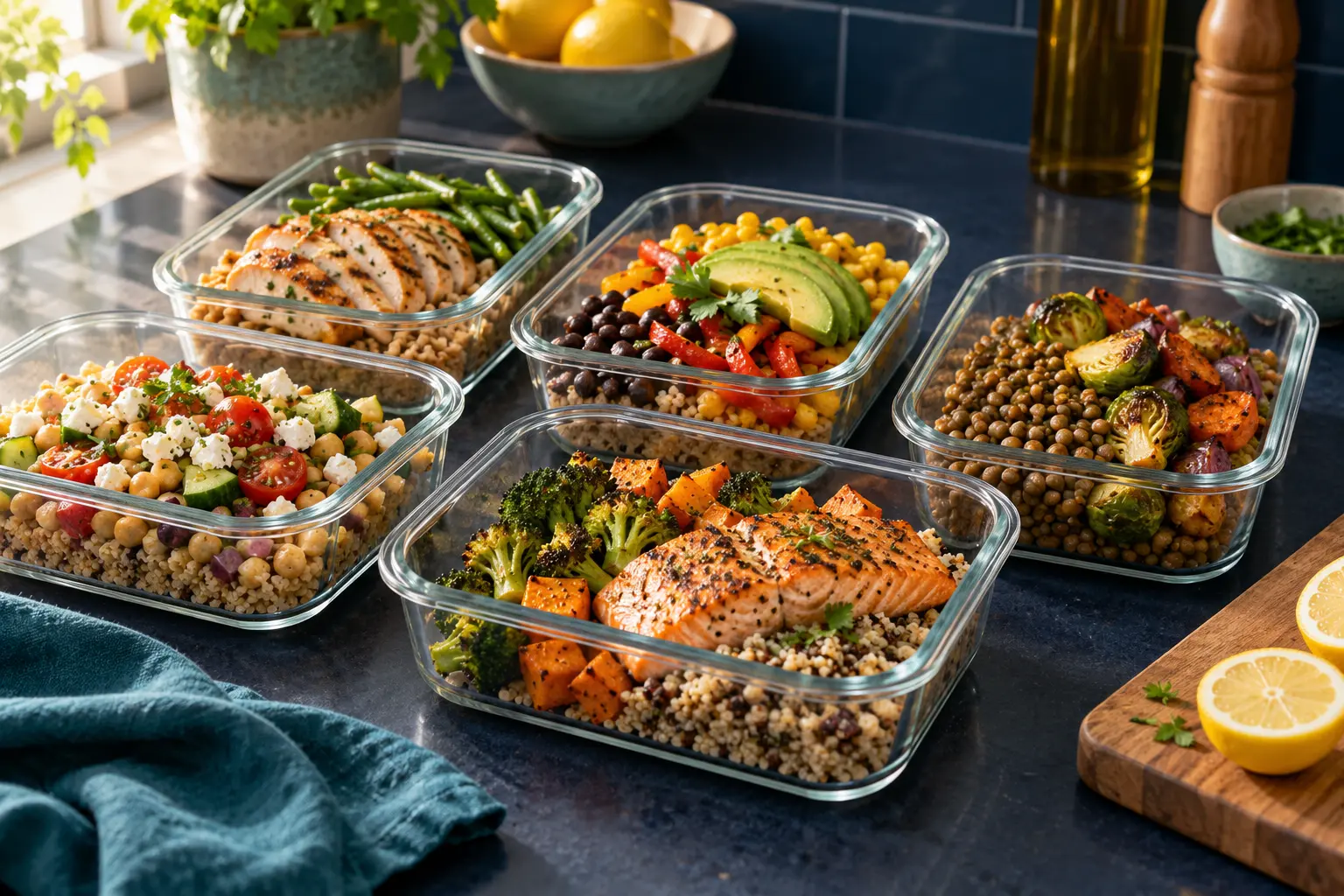
Prep the bottleneck, not your fantasy week
Review the last seven days and find the two meals most often replaced by takeout, grazing or nothing. Those are the first prep targets. If breakfast is already consistent, do not create five breakfast jars for social media. If Wednesday dinner collapses, prepare a freezer meal or components that assemble in five minutes.
Meal planning is associated with better diet quality and lower odds of obesity in observational research, but that does not prove planning itself causes weight loss. The defensible benefit is reduced friction and more predictable portions.
Use the 2-2-2 component system
- Prepare two protein options, such as chicken and beans or tofu and eggs.
- Prepare two produce options, such as roasted vegetables and washed salad or frozen vegetables.
- Prepare two carbohydrate bases, such as potatoes and rice or oats and whole-grain bread.
- Add two fast flavor options in measured portions.
- Combine components differently rather than repeating one complete meal.
This creates choice while keeping shopping and cooking manageable. Quantities should reflect household size, calorie needs and safe storage time.
For a workweek-specific storage schedule and lunch rotation, use the five-day meal-prep system.
If you want a ready week of meal combinations, use the seven-day high-protein menu as a flexible shopping and preparation example.
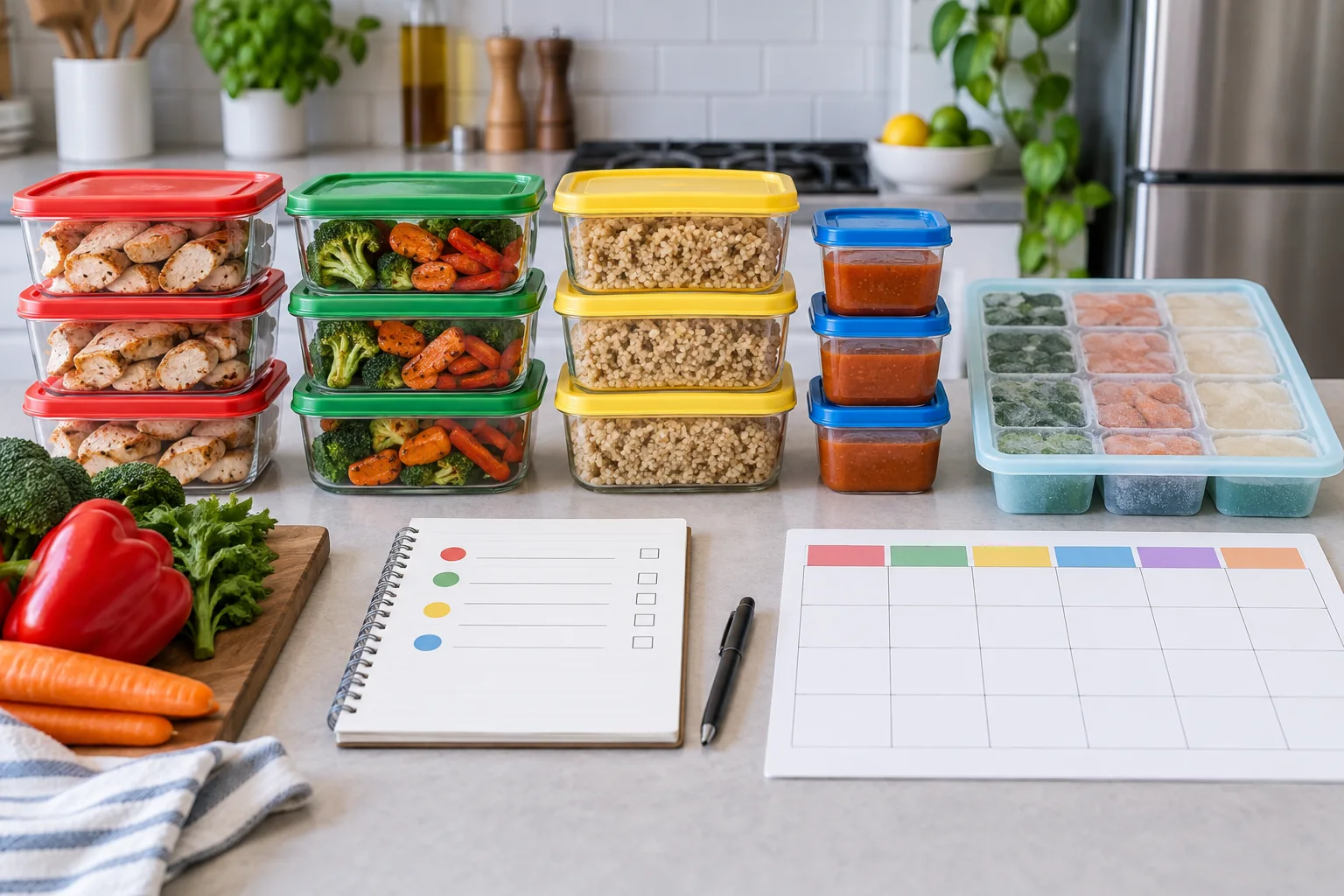
Build a three-level fallback plan
A fallback is part of the system, not evidence that prep failed. Convenience foods can be useful when selected for portion, protein, produce and personal health needs.
Store food safely and prep selectively
Cool cooked foods promptly, refrigerate or freeze within safe time limits, use clean containers and reheat appropriately. Follow current government food-safety guidance for specific foods and temperatures. When uncertain, freeze extra portions instead of stretching refrigerator storage.
Prep high-value steps: washing produce, cooking a protein, portioning sauces or writing the plan. Leave textures that deteriorate quickly for the day of eating. This reduces waste and prevents a rigid menu from becoming takeout plus discarded food.
Easy components to prepare
- A tray of roasted vegetables.
- A batch of grains such as rice, quinoa or barley.
- Cooked chicken, tofu, lentils or hard-boiled eggs.
- A simple sauce or dressing.
- Washed fruit and cut vegetables for snacks.
These combine into different meals during the week, which prevents boredom.
Why it helps
Studies have linked regular meal planning and home cooking with better diet quality and lower body weight. Having ready food reduces reliance on takeaways and vending machines, which are often higher in calories.
Where a supplement fits
Prepared meals do far more for a calorie deficit than any supplement.
A supplement cannot compensate for a food environment with no workable meals; establish the fallback system first. Fat Burn Active is optional and cannot repair an eating environment, replace sleep or treat emotional eating. Its current official page lists at least 120 mg caffeine per serving from caffeine anhydrous and guarana, additional unquantified caffeine from green-tea extract, and bitter-orange extract standardized to 6 mg synephrine. Feeling more alert or less hungry for a short time is not proof of meaningful fat loss.
Treat Fat Burn Active as an optional addition, not a substitute for the steps in this guide. Review its listed ingredients and limitations in our product analysis. If the evidence, warnings, and cost fit your decision, check the current price and formula on the official site. We may earn a commission.
Frequently asked questions
How long does cooked food keep in the fridge?
Most cooked meals keep safely for three to four days; freeze portions for later in the week.
Do I need to prep every meal?
No. Start with the meal you most often struggle with, usually lunch.
How do I avoid getting bored?
Prepare components rather than full meals and combine them differently.
Sources
- Meal planning and diet quality study
- USDA meal-prep food safety
- USDA MyPlate
- NIDDK: Weight-management treatment
Sources reviewed September 13, 2026. This article is general educational information, not medical advice, diagnosis, or treatment.