Motivation and environment interact
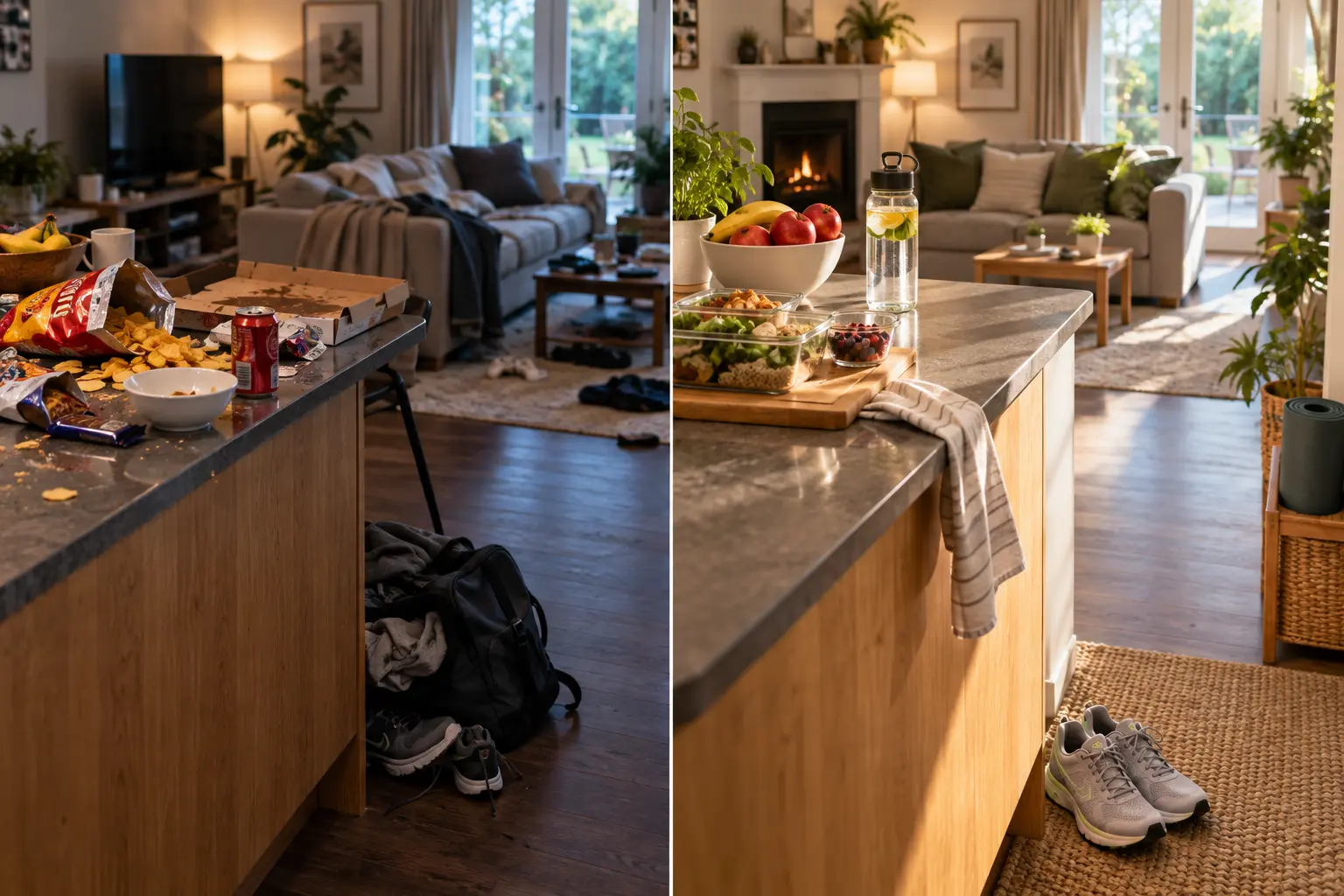
Motivation helps a person value an outcome and begin. Environment determines how often that intention meets cues, cost, distance, preparation, social approval, and decision fatigue. Strong motivation may overcome friction briefly; repetition becomes more likely when the setting supports it.
Environment is not destiny, and people still choose. A plan is simply more honest when it counts how many difficult choices it demands.
Audit six parts of the setting
Change defaults without creating a perfect home
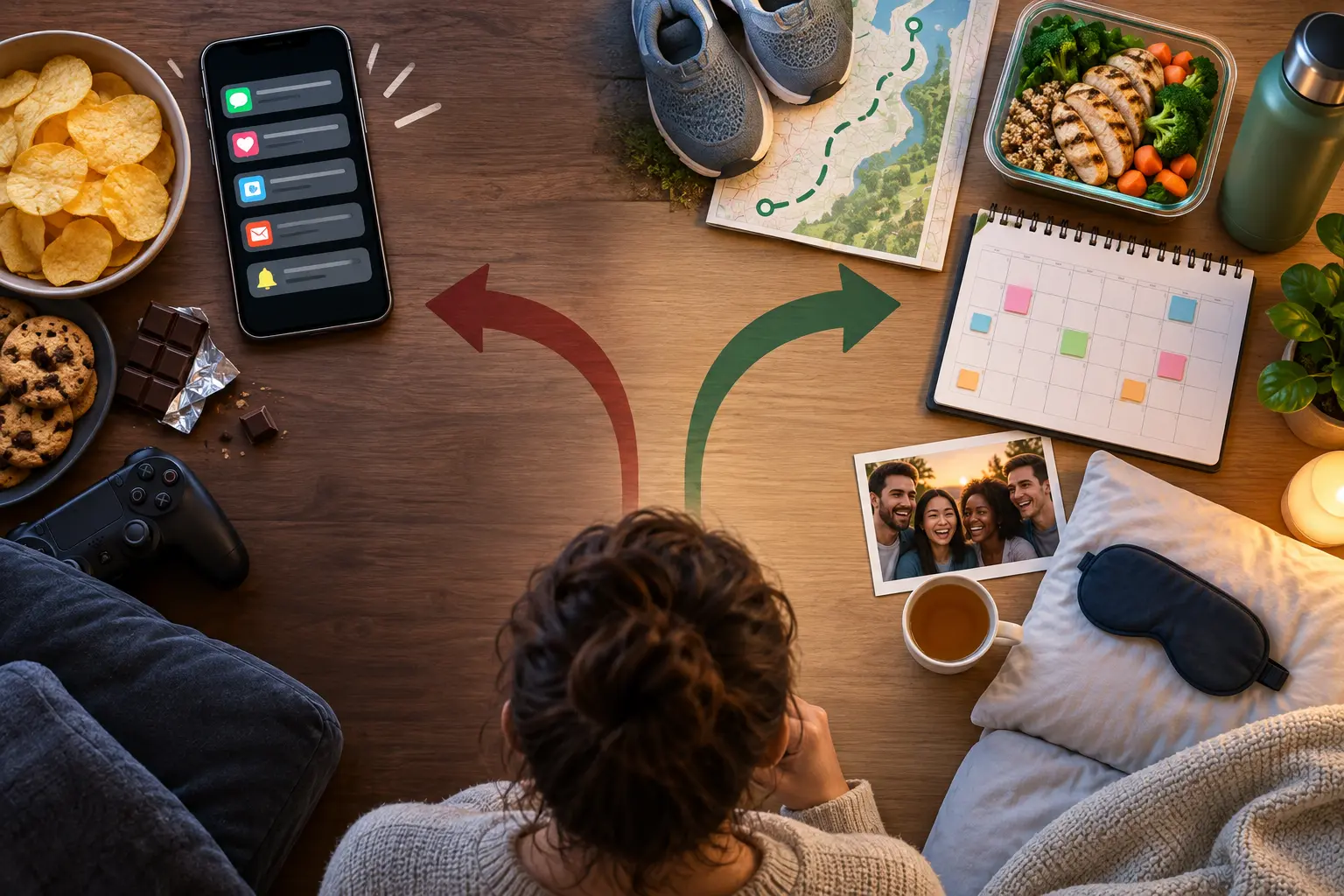
Put breakfast at eye level, portion frequent snacks, keep water and walking gear accessible, save two default meals, remove delivery notifications, and charge the phone away from bed. At work, identify lunch, a walking route, and a backup snack before the rushed day.
Add friction carefully. Create a pause that restores choice rather than shame: move food out of immediate sight or log out of an app instead of declaring prohibition.
Run a two-week environment experiment
- Choose one repeated problem.
- Record cue, location, hunger, emotion, and options for three days.
- Change one variable: visibility, portion, access, timing, or digital cue.
- Keep meals and goals otherwise stable.
- Measure behavior, not only weight.
- Keep, revise, or remove the change.
If behavior does not change, look upstream at meals, sleep, stress, alcohol, medicine, or an aggressive deficit.
Example: the 9 p.m. snack
Oleh eats from a family-size bag while watching television. Dinner is small and delivery offers appear at 8:45. He strengthens dinner, portions snacks in the kitchen, and disables notifications. A snack remains allowed, but the choice now has a portion and a pause. Motivation chose the experiment; environment makes repetition easier.
What studies show about food environments
Controlled studies show that people eat more when food is more visible, closer, served in larger portions or offered in more variety. In a well-known NIH trial, participants ate around 500 calories a day more on an ultra-processed diet than on an unprocessed diet matched for nutrients offered, without intending to. These effects work largely outside conscious choice, which is why changing the setting often succeeds where willpower fails.
Small changes with large effects
- Keep fruit and ready-to-eat vegetables at eye level and snacks in opaque containers or out of sight.
- Serve meals on plates in the kitchen instead of placing serving dishes on the table.
- Pre-portion snacks rather than eating from the package.
- Turn off food delivery notifications.
- Put walking shoes and a water bottle by the door.
Where Fat Burn Active fits—and where it does not
Fat Burn Active may alter alertness or appetite briefly, but it does not redesign food access, phone cues, schedules, family norms, or sleep. Evaluate repeat exposures before paying for a temporary internal signal.
Fat Burn Active is an optional stimulant-containing supplement, not a correction for social pressure, overeating, a setback, low motivation, or an unsupportive environment. The current official page recommends two capsules with water, preferably before a meal or training, says not to use the product on an empty stomach, and cautions against other caffeine sources or similar-effect ingredients.
The disclosed formula provides at least 120 mg of known caffeine from caffeine anhydrous and standardized guarana; caffeine from green-tea extract is not quantified. Poor sleep, anxiety, palpitations, nausea, or reliance on stimulation can make behavior change harder. Never increase the serving or use capsules to repay food.
Treat Fat Burn Active as an optional addition, not a substitute for the steps in this guide. Review its listed ingredients and limitations in our product analysis. If the evidence, warnings, and cost fit your decision, check the current price and formula on the official site. We may earn a commission.
Frequently asked questions
Does environment remove personal choice?
No. It changes effort and probability.
Must tempting foods disappear?
No. Placement and portioning can create a pause.
What if family will not change?
Focus on your storage, portions, schedule, and boundaries.
Can motivation improve?
Yes, but the plan should still survive fluctuations.
Sources
- NIDDK: Changing Your Habits
- CDC: Steps for Losing Weight
- Motivation and long-term weight control
- NIH randomized ultra-processed diet trial
- Weight-loss maintenance review
Sources reviewed September 17, 2026. This article is general educational information, not medical advice, diagnosis, or treatment.