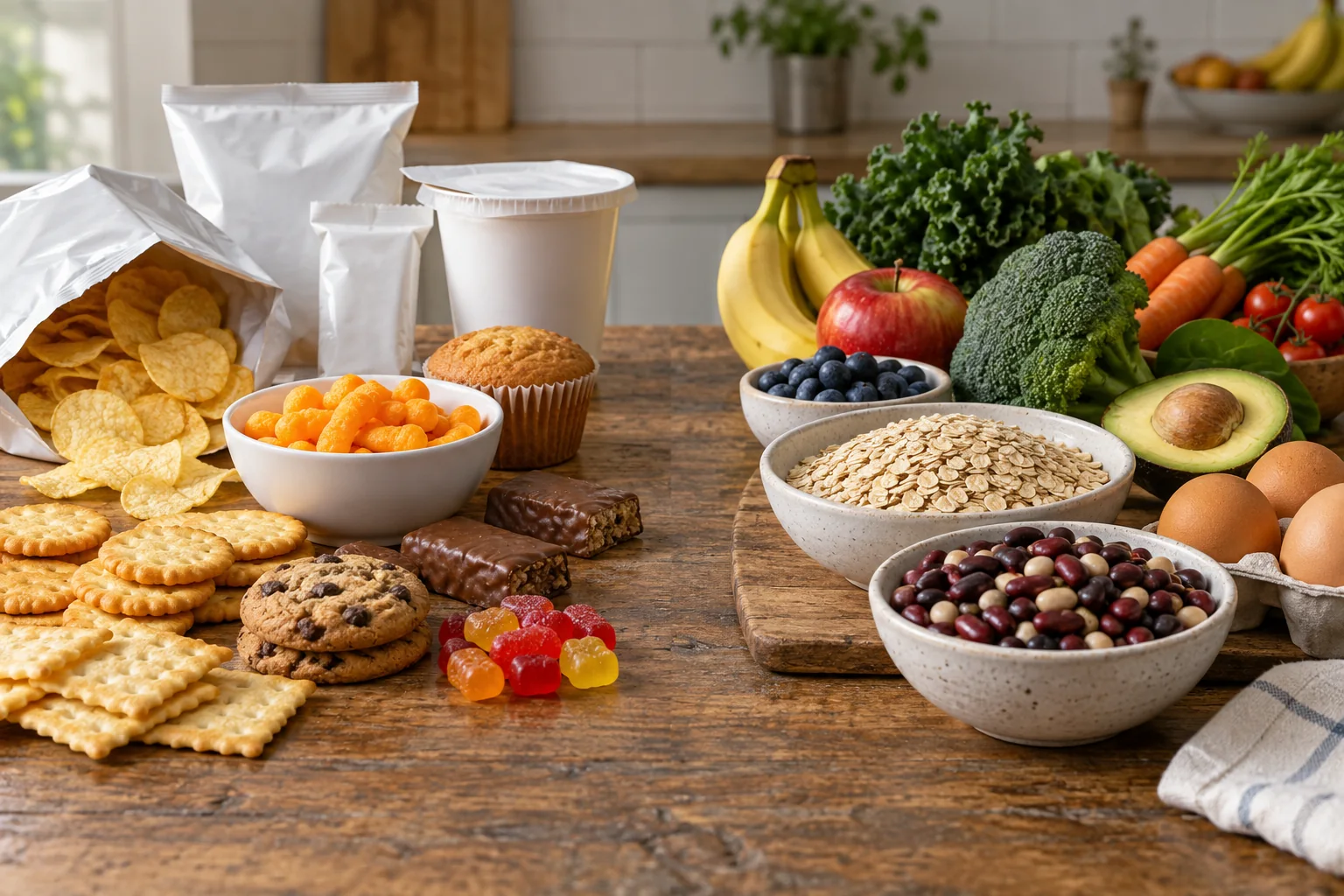
What the controlled feeding trial found
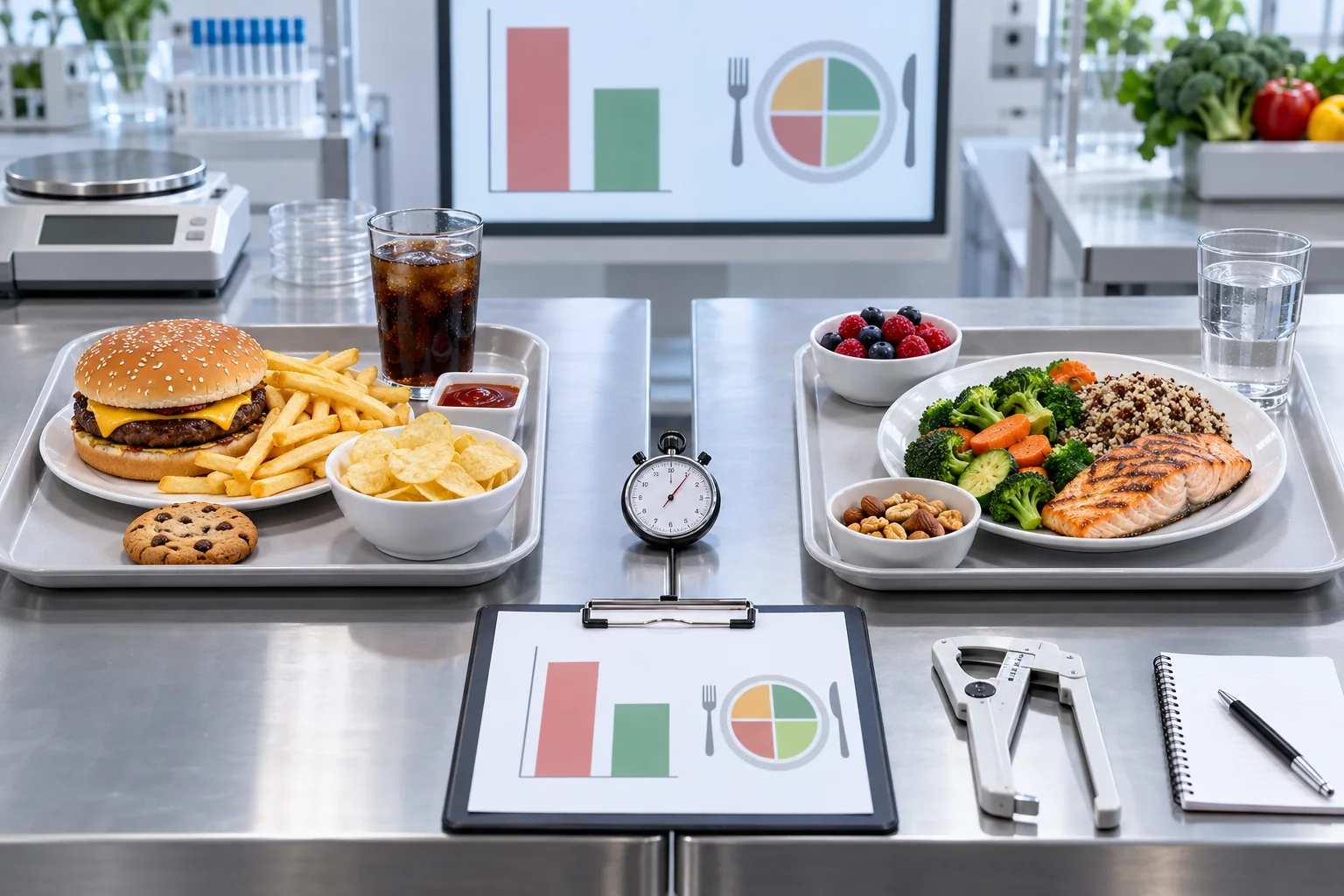
In the NIH inpatient crossover trial, twenty adults received ultra-processed and unprocessed diets for two weeks each and could eat as much as they wanted. Presented diets were matched on several listed nutrients, yet participants ate roughly 500 more calories per day and gained weight during the ultra-processed phase while losing weight during the unprocessed phase.
The trial demonstrates a causal difference between the two diet conditions, not the isolated effect of one ingredient or all foods classified as ultra-processed. Eating rate, energy density, texture, protein distribution and beverage form may have contributed. The study was short and conducted in a controlled setting.
Look beyond the category label
Use targeted replacements, not a purity test
List the three ultra-processed items that contribute most often to overeating. Replace only one with an option that serves the same function. A planned sandwich may replace a drive-through meal; yogurt and fruit may replace a vending-machine snack; a smaller bag may replace an open family-size package.
Keep useful processed foods such as frozen vegetables, canned beans, whole-grain bread or appropriate fortified products when they improve access and nutrition. Classification systems differ, and health value cannot be inferred from packaging alone.
Run an eating-rate and environment test
- Plate the food instead of eating from the package.
- Add a protein or produce side before removing the favorite item.
- Sit away from work and screens for the first ten minutes.
- Pause before returning for more.
- Compare satisfaction, not only stomach fullness.
- Repeat in the actual high-risk setting for one week.
If the same food remains hard to stop, change package size, storage or frequency. You do not need to prove superior willpower against a deliberately frictionless product.
What makes them easy to overeat
Many ultra-processed foods are energy dense, low in fiber and protein, soft and quick to eat, and combine fat, sugar and salt in ways that are very palatable. In the NIH feeding study, people ate faster on the ultra-processed diet, which may have reduced the time for fullness signals to work.
Practical shopping changes
- Fill the basket mainly with whole and minimally processed foods: vegetables, fruit, eggs, meat, fish, beans, oats and plain dairy.
- Keep a few convenient processed foods that help, such as canned beans, frozen vegetables and whole-grain bread.
- Buy snack foods in single portions or not at all.
- Read labels for fiber, protein and added sugar.
Where a supplement fits
No supplement offsets a diet built mainly on ultra-processed snacks. Changing what is in the kitchen has more effect.
A supplement cannot neutralize an eating pattern designed around fast, convenient, energy-dense foods. Fat Burn Active is optional and cannot repair an eating environment, replace sleep or treat emotional eating. Its current official page lists at least 120 mg caffeine per serving from caffeine anhydrous and guarana, additional unquantified caffeine from green-tea extract, and bitter-orange extract standardized to 6 mg synephrine. Feeling more alert or less hungry for a short time is not proof of meaningful fat loss.
Once the practical steps in this guide are working, decide whether an optional supplement adds enough value. Start with the Fat Burn Active review; if the formula and limitations are acceptable, see the current price on the official site. We may receive a commission.
Frequently asked questions
Are all processed foods bad?
No. Frozen vegetables, canned beans and plain yogurt are processed but very useful.
Why do I keep overeating chips?
They are designed to be very palatable and quick to eat; portion them out or keep them out of the house.
Do I need to cut them completely?
No. Reducing them and building meals around whole foods is enough for most people.
Sources
- NIH controlled trial of ultra-processed diets
- NIH summary of the controlled feeding trial
- NOVA classification overview
- NIDDK: Weight-management treatment
Sources reviewed September 13, 2026. This article is general educational information, not medical advice, diagnosis, or treatment.