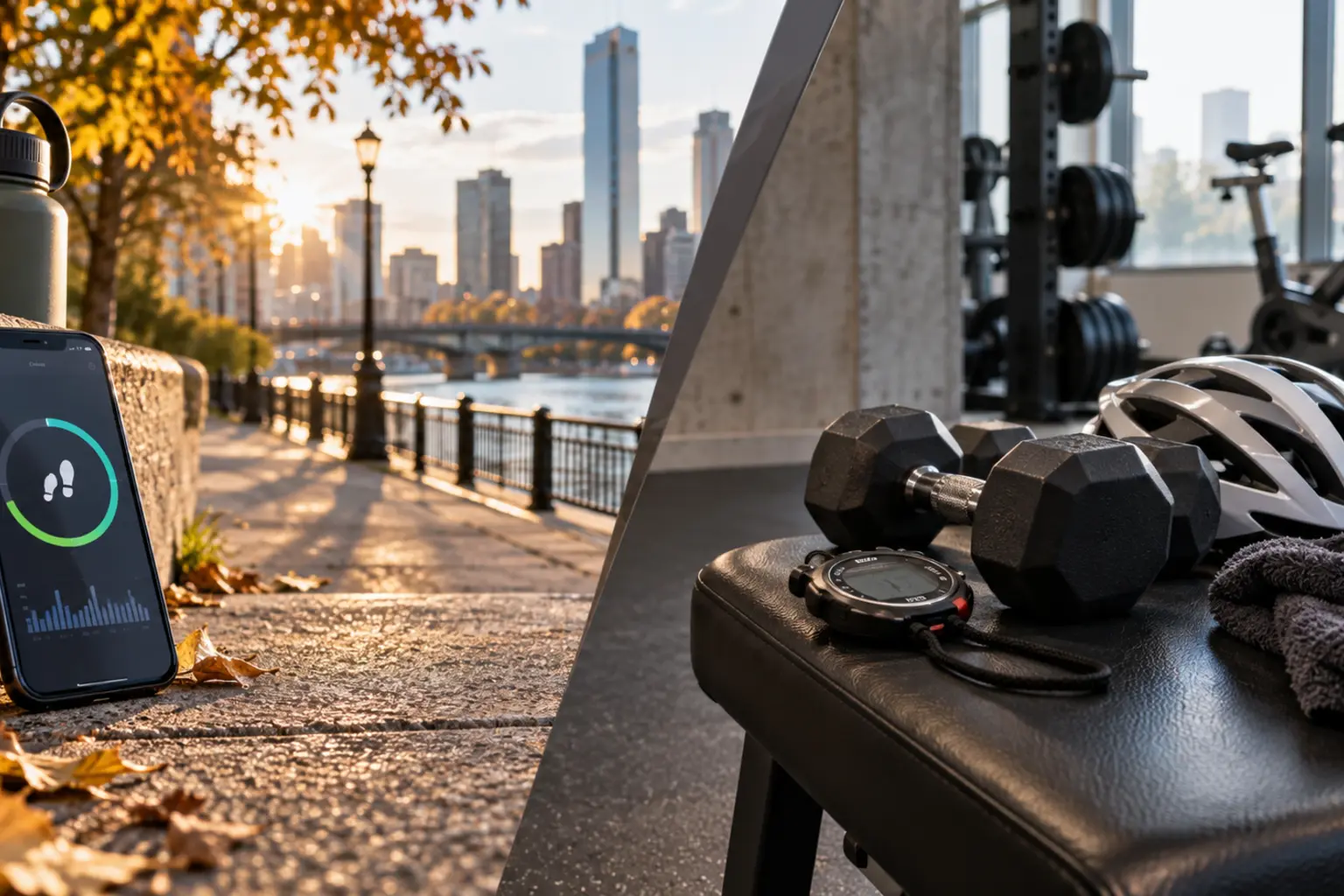
What each metric actually captures
Match the metric to the goal
For interrupting a sedentary day, steps or walking breaks are useful. For cardiorespiratory fitness, time plus intensity and progression are more informative. For strength and muscle retention, record exercises, sets, repetitions and load. For weight loss, none of these proves a calorie deficit because food intake and compensatory behavior still matter.
Health guidelines describe aerobic and muscle-strengthening activity rather than a universal step prescription. Steps can help people implement the guidance, but a high total does not demonstrate that strength work occurred.
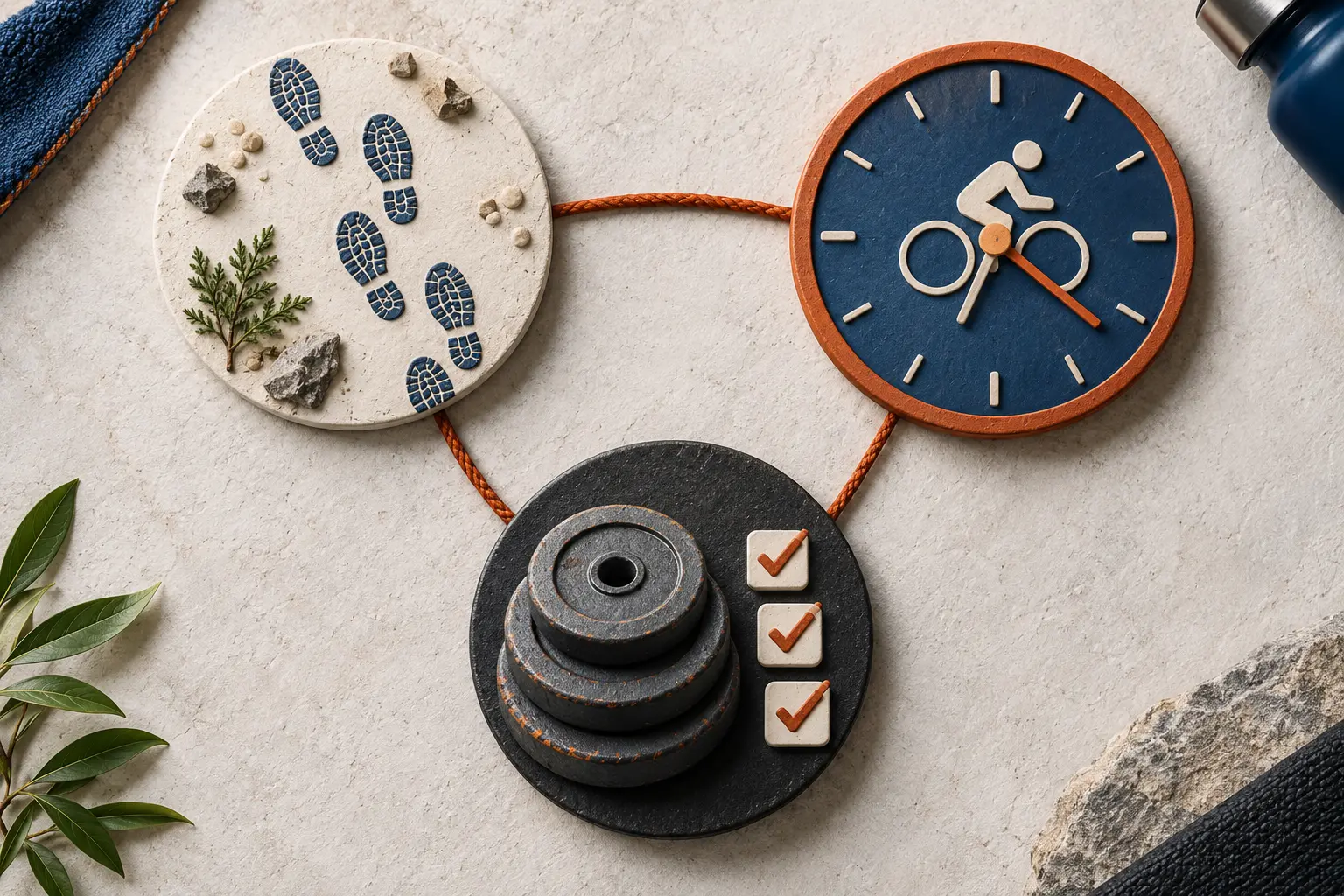
Three people with the same number can have different weeks
A delivery worker may record many low-to-moderate steps but no progressive strength work. A cyclist may complete substantial aerobic training with a modest step total. A gym trainee may record sixty workout minutes that include rest between sets and then sit for the remaining day. Each profile has strengths and gaps.
Do not compare device totals across people as though they are scores. Devices, stride algorithms, dominant-hand movement and activity modes differ. Compare your own repeated method against the outcome it was selected to change.
Build a two-number activity dashboard
- Measure a seven-day step baseline with one device.
- Record planned aerobic and strength sessions separately.
- Identify whether low total movement or missing training is the larger gap.
- Add one attainable walking block or one planned session.
- Hold the change for two to four weeks.
- Review fitness, recovery, weekly-average weight and waist.
A two-number dashboard prevents a workout from hiding an otherwise motionless day and prevents high steps from hiding the absence of training.
Reasonable targets for each
Adults are advised to get at least 150 minutes of moderate activity a week plus muscle-strengthening work on two days. For steps, studies link benefits with roughly 7,000–10,000 steps a day for many adults, with lower thresholds for older people. A practical combination is a daily step floor of around your current average plus 1,000–2,000, along with two to four planned workouts a week.
Where a supplement fits
Neither steps nor workouts need a supplement. Consistent activity across the week is what counts.
Fat Burn Active does not replace steps, aerobic adaptations or resistance training; feeling stimulated is not a substitute for activity data. Fat Burn Active is optional and cannot repair an eating environment, replace sleep or treat emotional eating. Its current official page lists at least 120 mg caffeine per serving from caffeine anhydrous and guarana, additional unquantified caffeine from green-tea extract, and bitter-orange extract standardized to 6 mg synephrine. Feeling more alert or less hungry for a short time is not proof of meaningful fat loss.
A supplement is not required to benefit from this guide. If your foundations are already in place, use the independent Fat Burn Active review to judge whether the formula has a useful optional role. If it fits your expectations and stimulant tolerance, check the current price on the official site. We may receive a commission.
Frequently asked questions
Is 10,000 steps a day necessary?
No. Benefits start at lower counts, and increasing from your current level is what matters.
Do workouts replace steps?
No. A workout does not cancel the effects of sitting for the rest of the day.
Which should I track?
Track the one that matches the habit you are changing; consider both for a full picture.
Sources
- US Physical Activity Guidelines
- CDC physical activity basics
- Daily steps and health outcomes meta-analysis
- 2024 Adult Compendium of Physical Activities
Sources reviewed September 13, 2026. This article is general educational information, not medical advice, diagnosis, or treatment.