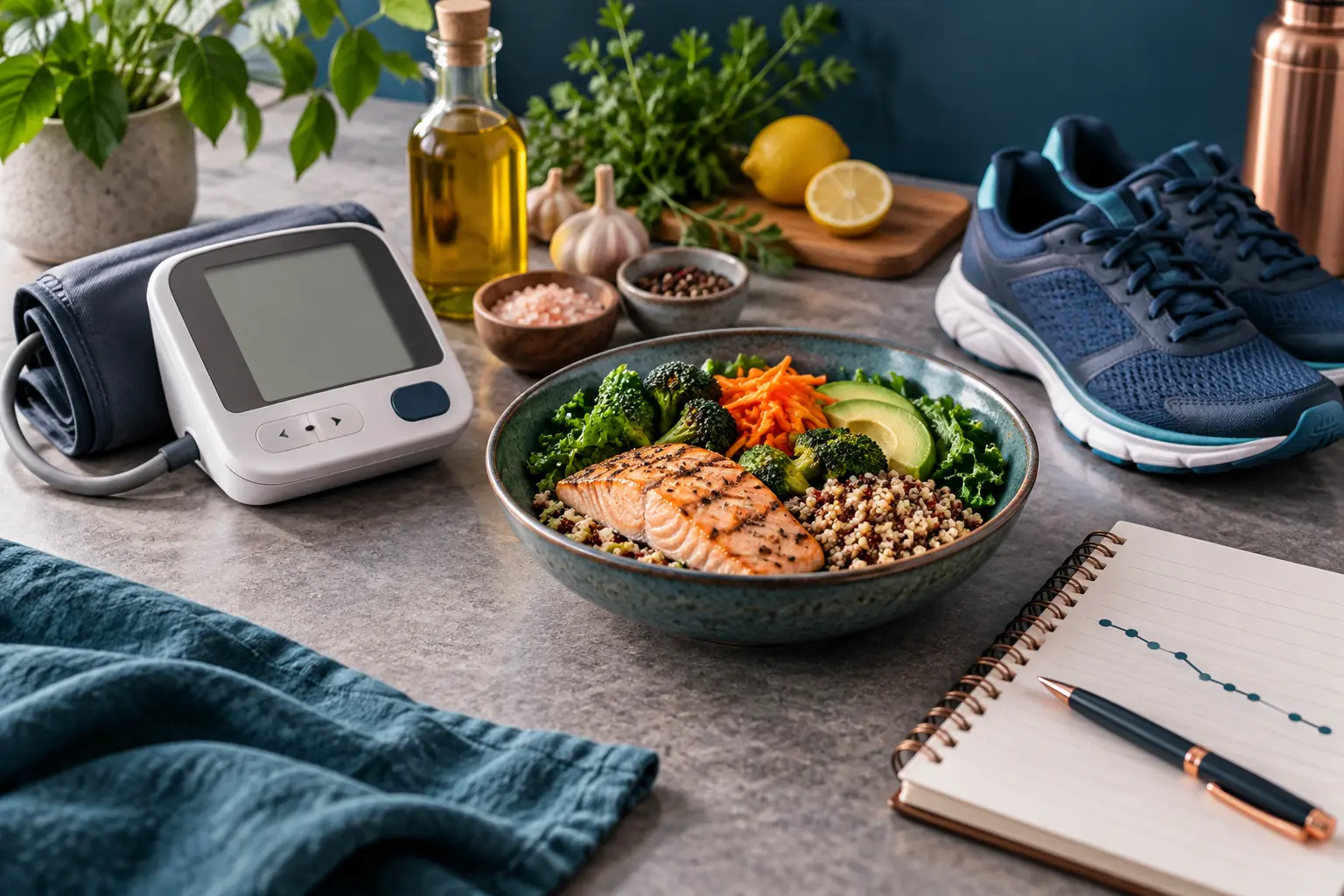
A silent condition needs visible data
A clinic reading can be affected by stress, pain, caffeine, talking, recent activity, or cuff fit. Conversely, feeling well does not prove pressure is controlled. Confirm diagnosis and goals with a clinician, then use a validated upper-arm device and standardized technique when home monitoring is recommended.
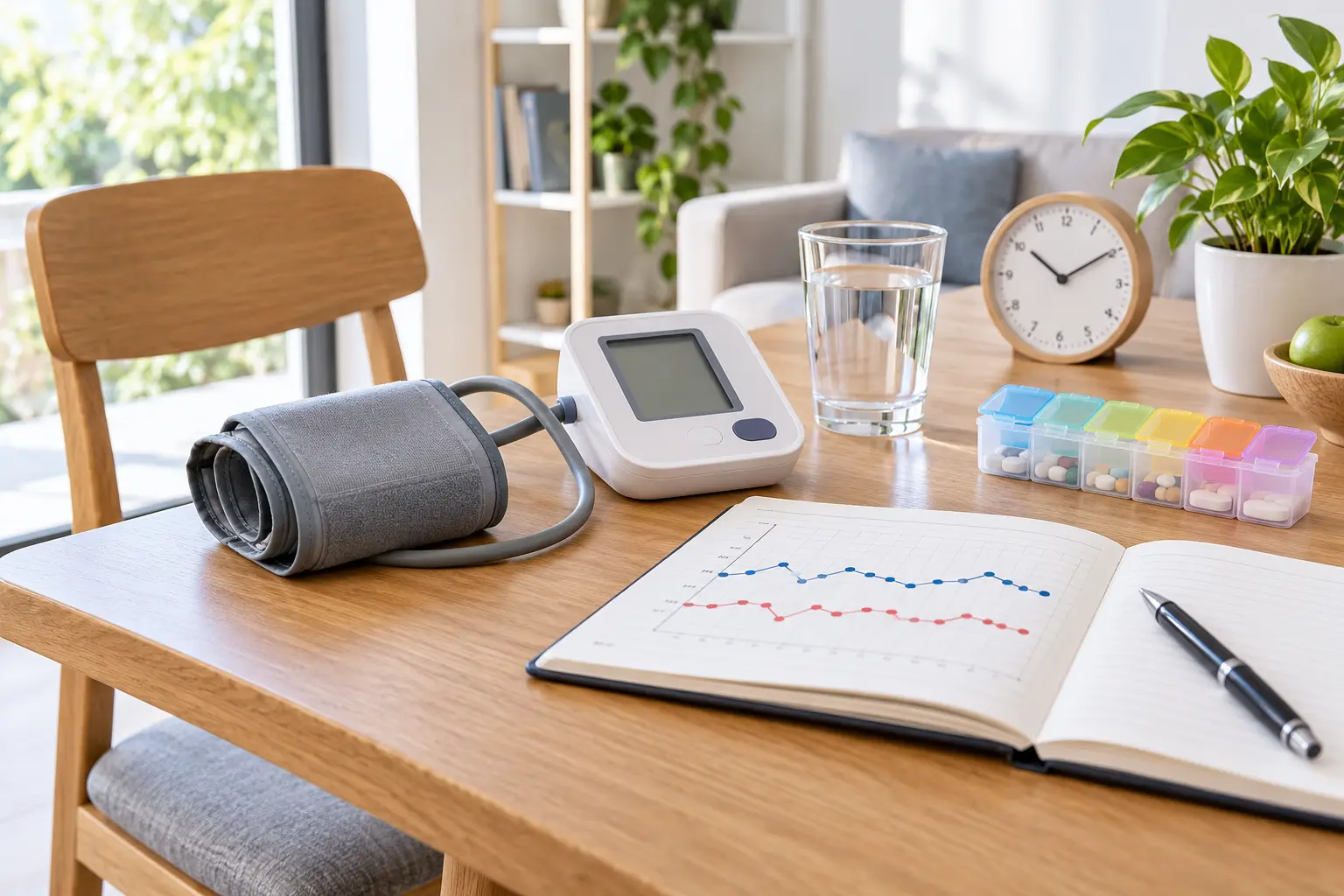
Measure blood pressure correctly
Avoid exercise, smoking, and caffeine shortly beforehand; empty the bladder, sit quietly with back supported and feet flat, support the arm at heart level, use the correct cuff size, and do not talk. Follow the schedule provided and record readings rather than reacting to one number.
Use complementary levers
Build meals around vegetables, fruit, legumes, whole grains, nuts, appropriate dairy or alternatives, and lean protein while reducing heavily salted packaged food. Progress toward aerobic movement and resistance training according to ability. Sleep apnea, alcohol, pain, and medicine adherence can matter as much as the salt shaker.
Weight loss can change treatment needs
As weight, diet, alcohol, and activity change, pressure may fall. Dizziness, faintness, or unusually low readings require timely advice; do not independently skip doses. Severe pressure with chest pain, shortness of breath, neurological symptoms, or confusion needs urgent care.
How much weight loss lowers blood pressure
Studies suggest that systolic blood pressure falls by roughly 1 mmHg for each kilogram of weight lost, although responses vary. Combining weight loss with the DASH eating pattern, reduced sodium and regular aerobic exercise produces larger reductions, sometimes similar to a single blood pressure medicine.
The DASH eating pattern
DASH emphasizes vegetables, fruit, whole grains, low-fat dairy, fish, poultry, beans and nuts, and limits sodium, red and processed meat, sweets and sugary drinks. The standard plan aims for no more than 2,300 mg of sodium a day, with a lower goal of 1,500 mg offering further benefit for many people.
Blood pressure categories
Under the 2017 American College of Cardiology and American Heart Association guideline, normal blood pressure is below 120/80 mmHg. Elevated is 120–129 systolic with diastolic below 80. Stage 1 hypertension is 130–139 systolic or 80–89 diastolic, and stage 2 is 140/90 or higher. A reading above 180/120 with symptoms such as chest pain, breathlessness or confusion needs emergency care.
Other lifestyle levers
- Limit alcohol to no more than one drink a day for women and two for men, or less.
- Eat potassium-rich foods such as vegetables, fruit, beans and yogurt, unless your doctor advises otherwise because of kidney disease or medicines.
- Aim for at least 150 minutes of moderate aerobic activity a week.
- Treat sleep apnea if present.
- Stop smoking.
Frequently asked questions
How quickly can pressure improve?
Some lifestyle effects appear before large weight loss, while response varies.
Must I eliminate salt?
No; the useful target is an individualized sodium pattern and overall diet.
Are stimulants safe with hypertension?
They may raise pressure or heart rate and require professional review.
Sources
- American Heart Association high blood pressure
- NHLBI DASH plan
- CDC measuring blood pressure
- AHA: weight and blood pressure
Evidence reviewed September 8, 2026. Educational information only; not medical advice.