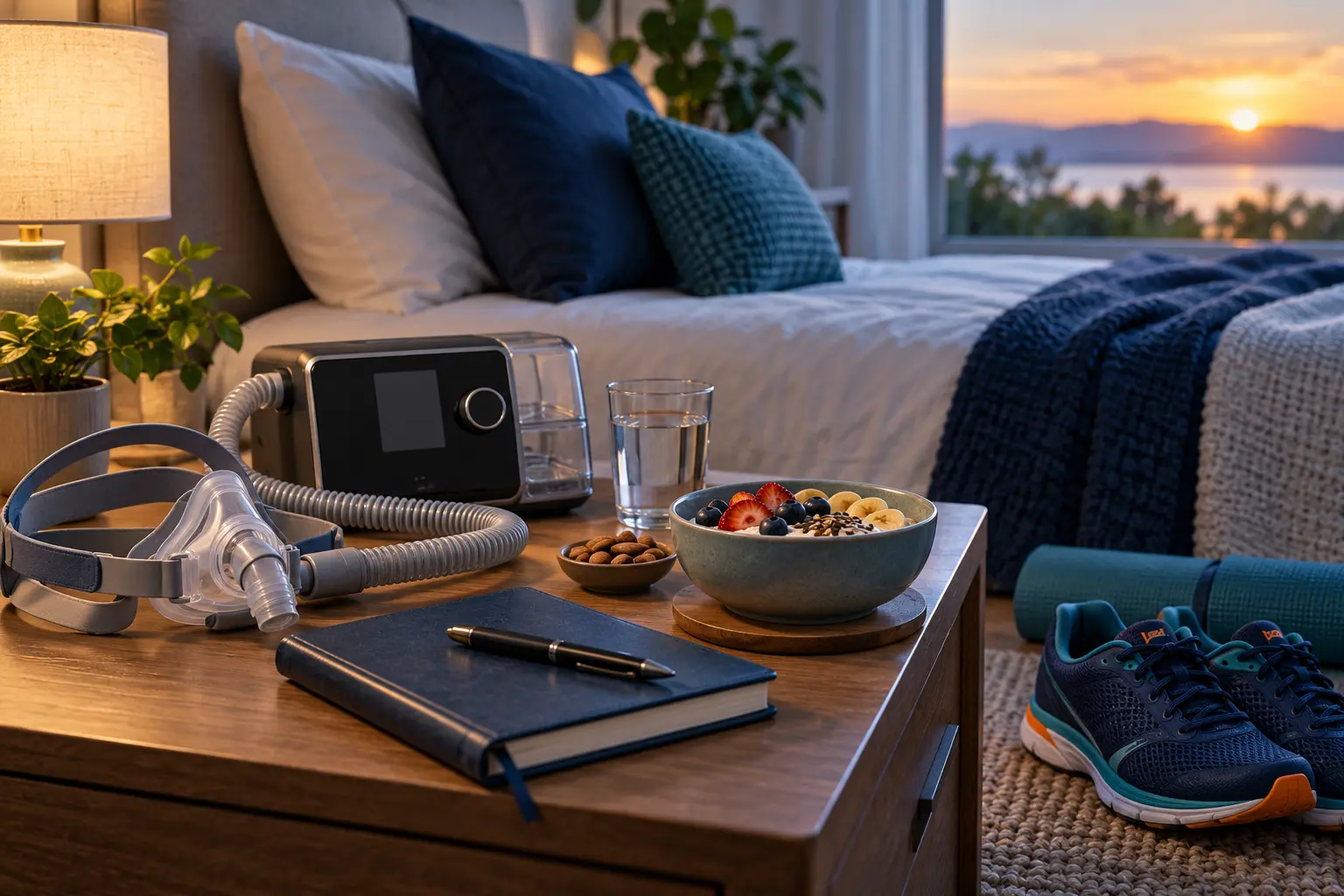
The two-way cycle
Excess tissue around the upper airway can increase collapse during sleep, while fragmented sleep can worsen fatigue, appetite regulation, glucose control, mood, and motivation to move. Anatomy, age, alcohol, sleeping position, nasal obstruction, and other factors also matter, so people of many body sizes can have sleep apnea.
Snoring is a clue, not a diagnosis
Evaluation may include a sleep history, validated screening, and a home or laboratory sleep study selected by a clinician. A smartwatch or overnight oximeter can miss events and cannot fully replace diagnostic testing. Urgent review matters when sleepiness affects driving or safety, breathing pauses are witnessed, or cardiovascular risk is high.
Treatment should not wait for a target weight
Positive airway pressure, oral appliances, positional strategies, surgery, or other options may be recommended according to the type and severity of disease. Use and fit problems with CPAP deserve troubleshooting rather than abandonment. Treatment can improve breathing and daytime function, but it does not guarantee spontaneous weight loss.
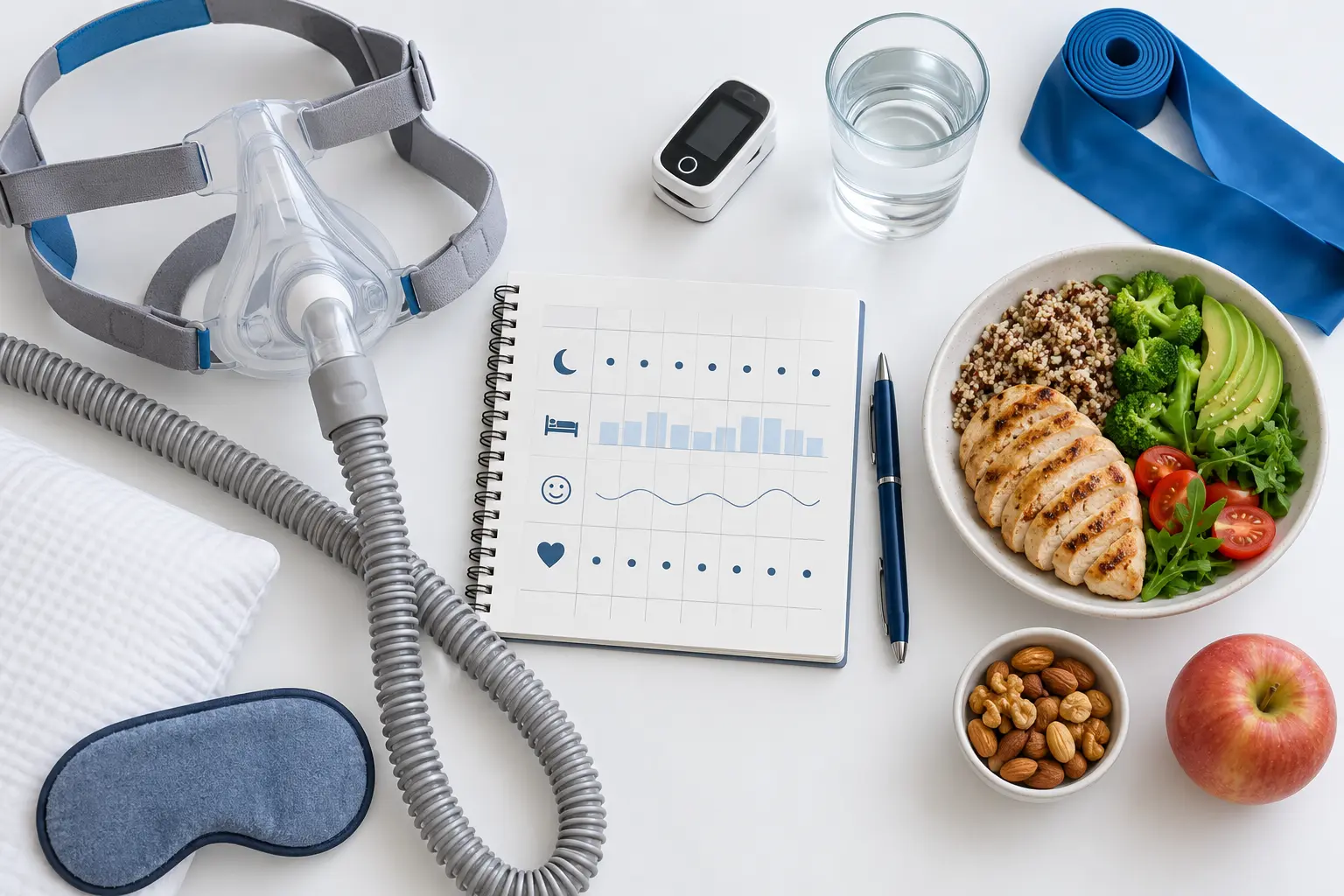
Build a plan that respects fatigue
Start with regular meals that reduce late-night grazing, a walking baseline that is safe during waking hours, and two manageable strength sessions when appropriate. Keep alcohol away from bedtime and review sedating medicines with the prescriber. As alertness improves, progress activity gradually rather than compensating with punishing workouts.
How weight loss helps
Weight loss of around 10% can substantially reduce the severity of obstructive sleep apnea for many people, and some people no longer need treatment. In 2024, the US FDA approved tirzepatide for moderate-to-severe obstructive sleep apnea in adults with obesity. Treatment such as CPAP should continue until a doctor confirms it can be changed.
Habits that can reduce symptoms
Avoiding alcohol and sedating medicines in the evening, sleeping on your side rather than your back, treating nasal congestion and keeping regular sleep hours can reduce snoring and apnea episodes for some people. These measures support treatment but do not replace it when apnea is moderate or severe.
Why untreated apnea makes weight loss harder
Repeated breathing pauses fragment sleep and leave people tired during the day. Daytime sleepiness reduces activity, and short, poor-quality sleep is linked with higher appetite and cravings. Treating apnea often improves energy and makes it easier to stick to eating and exercise plans.
Frequently asked questions
Can weight loss cure sleep apnea?
It may reduce severity, but anatomy and other factors can remain; reassessment is needed before changing treatment.
Does CPAP cause weight loss?
No. CPAP treats airway obstruction; weight response varies.
Should I stop CPAP after losing weight?
Only after clinical reassessment confirms a change is appropriate.
Sources
Evidence reviewed September 8, 2026. Educational information only; not medical advice.