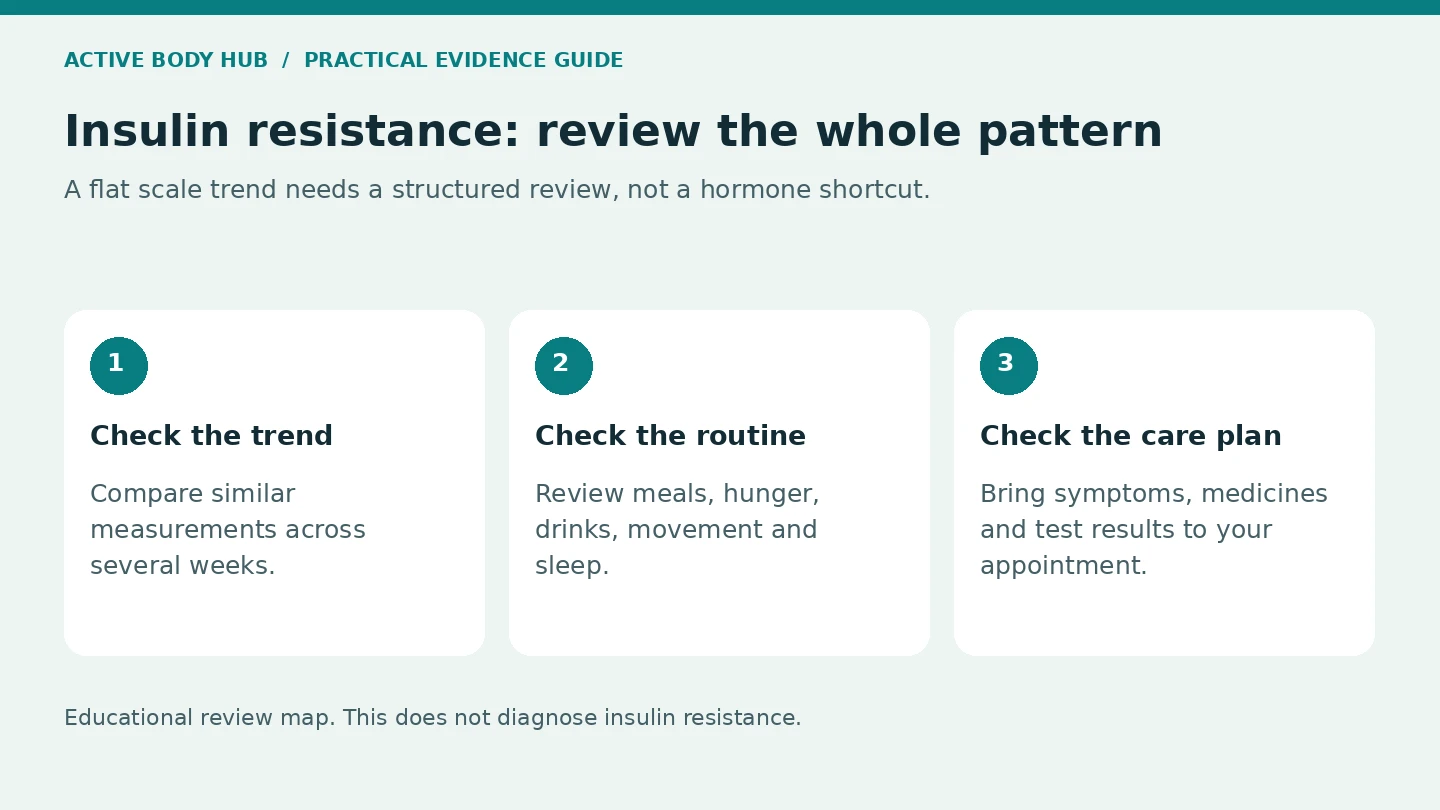
The two-way connection
Higher visceral fat and lower activity can contribute to insulin resistance, while genetics, age, sleep, pregnancy history, and some conditions or medicines also affect risk. Insulin resistance itself often has no obvious symptoms. Prediabetes is identified with validated glucose testing, not by body shape, cravings, skin appearance alone, or a home insulin “hack.”
When weight loss is appropriate, a modest sustained reduction may improve health risk; the target and treatment depend on the person. Muscle contraction increases glucose uptake, so walking and resistance or aerobic exercise can improve metabolic health even when the scale changes slowly. [1]
Build the plan around glucose and adherence
With glucose-lowering treatment, review meal and activity changes with your care team. [4]
A stalled scale needs a more specific question
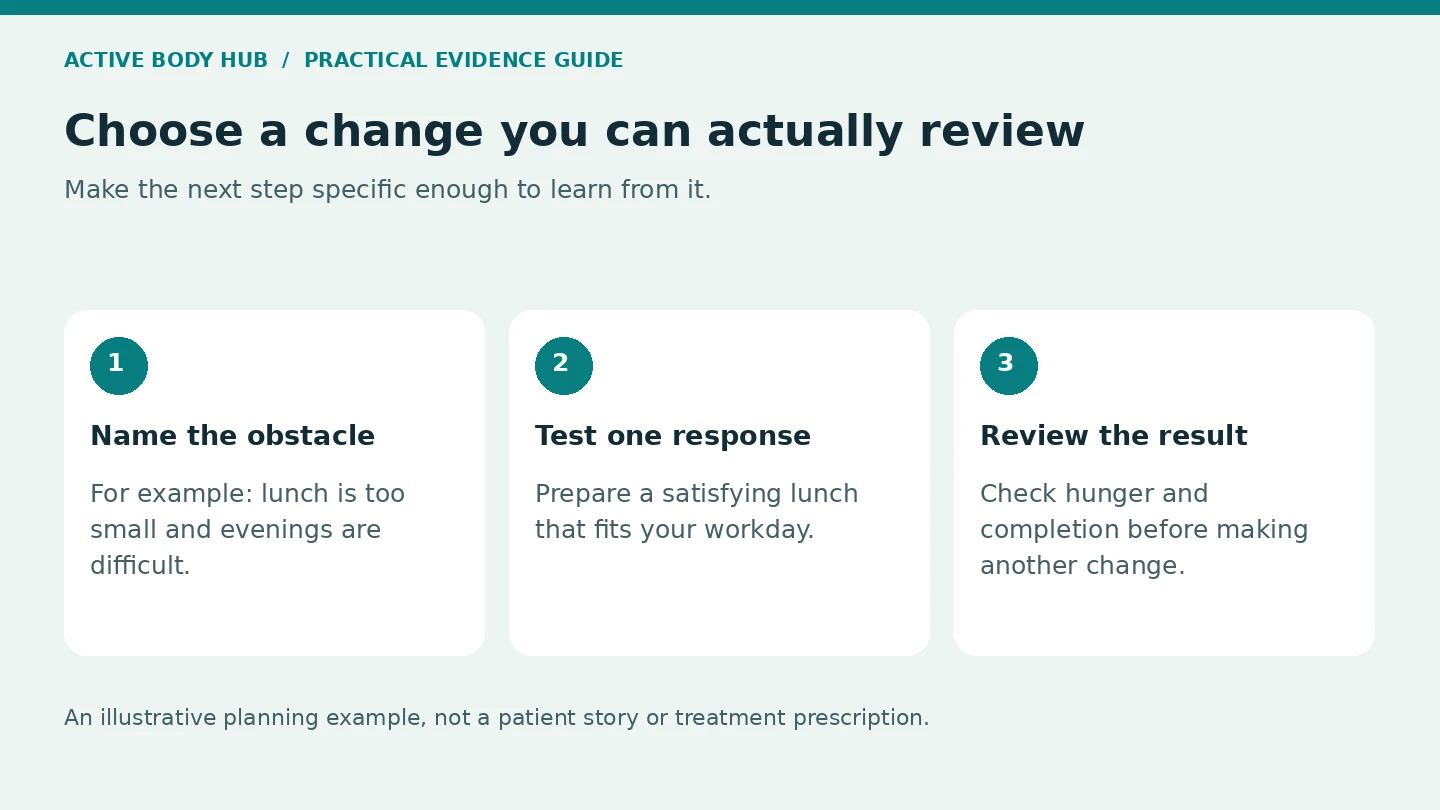
Suppose your weight average is unchanged, lunch is small, and evenings bring strong hunger. That pattern does not establish a hormone diagnosis. Before cutting another meal, check whether a more satisfying lunch makes the evening easier. Keep the change simple enough to repeat on workdays. This is an illustrative planning example, not a patient result.
Signs and tests
Insulin resistance often has no symptoms. Clues include a large waist, high triglycerides, low HDL, high blood pressure, dark velvety skin patches (acanthosis nigricans) and prediabetes on blood tests. A doctor can check fasting glucose, HbA1c and lipids.
Why exercise helps
Exercise increases glucose uptake by muscles for hours afterwards, independent of weight loss. Both aerobic and resistance training improve insulin sensitivity, and walking after meals lowers post-meal glucose.
Match the obstacle to the next step
| What you notice | What to review | A reasonable next step |
|---|---|---|
| Strong evening hunger | Meal gaps, portions and satisfaction | Prepare one reliable lunch rather than skipping it. |
| Large daily weight swings | Measurement timing, constipation, travel or swelling | Compare similar measurements and report unexplained symptoms. |
| Less movement than before | Pain, fatigue, schedule and sitting time | Choose a small activity slot that fits your ability. |
| A change after medicine starts | Timing, appetite, symptoms and treatment purpose | Ask the prescriber; do not stop the medicine yourself. |
The table organizes questions; it does not identify the medical cause. If the plan is consistently difficult despite support, ask about dietitian input, structured weight care or a medication review. Bring your current food pattern and medicine list so the conversation goes beyond “try harder.” [3]
Where Fat Burn Active fits
Fat Burn Active is not an established treatment for insulin resistance, prediabetes or diabetes. A sensation of warmth or alertness is not proof of improved glucose control. Review any supplement with a clinician or pharmacist, particularly when medicines or cardiovascular risks are involved.
Check the formula and diabetes safety questions before reading the full product review. The review contains affiliate links.
Frequently asked questions
Does insulin resistance prevent fat loss?
No. It can complicate appetite and health, but it does not make fat loss physiologically impossible.
Must carbohydrates be eliminated?
No. Type, portion, total pattern, activity, treatment, and individual response all matter.
Can a supplement diagnose or reverse it?
No. Use validated testing and an evidence-based treatment plan with qualified care.
Sources and editorial notes
- NIDDK: Insulin Resistance and Prediabetes
- MD Anderson: Diet and Activity With Insulin Resistance
- Cleveland Clinic: Insulin Resistance
- NIDDK: Low Blood Glucose
- NIDDK: Changing Your Habits for Better Health
Sources checked October 25, 2026. Prepared with AI assistance to organize source-based educational explanations and practical planning aids. No clinical review, personal product use or laboratory testing is claimed. Guidance concerns adults; personal symptoms, medicines and health conditions require individualized care.