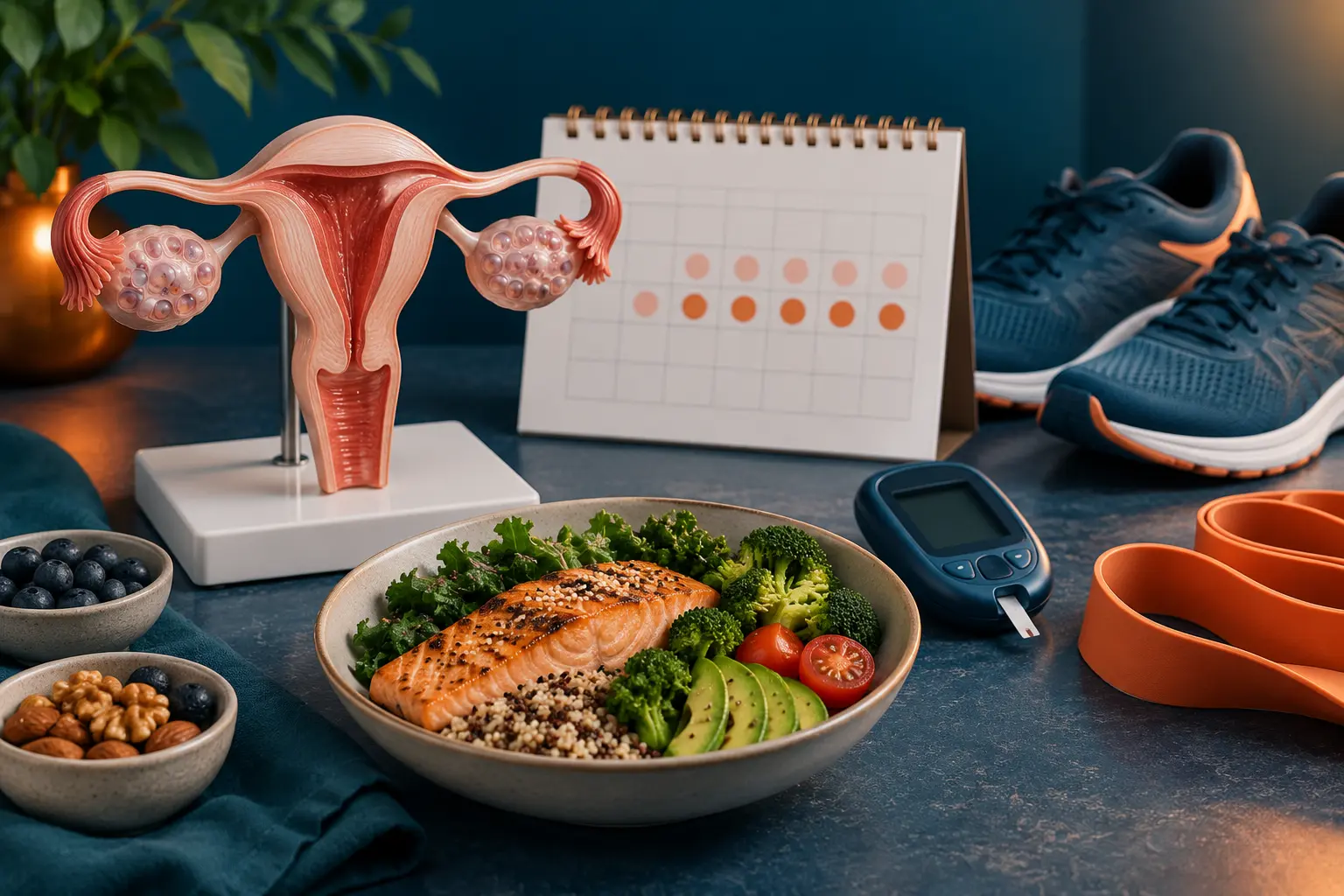
PCOS is more than a weight problem
Diagnosis considers ovulatory dysfunction, clinical or biochemical androgen excess, and polycystic ovarian morphology while excluding other causes. Irregular cycles, acne, excess hair growth, scalp hair changes, fertility concerns, sleep apnea risk, and emotional distress may need their own management. A person does not need to have every feature.
Insulin resistance is common but not universal. Weight stigma can delay care and promote disordered eating. A useful consultation includes blood pressure and metabolic screening as appropriate, plus discussion of cycles, contraception or fertility, sleep, mood, and eating patterns.
Choose options by goal and evidence

Example: goals before kilograms
Aisha seeks help for irregular cycles, acne, fatigue, and weight concerns. Her clinician confirms PCOS after excluding alternatives and screens metabolic risk. They prioritize cycle protection, sleep assessment, regular satisfying meals, and progressive exercise. Weight is monitored only with consent. This plan treats the condition’s multiple dimensions instead of making one number the price of receiving care.
Lifestyle changes with the best evidence
The international PCOS guideline recommends healthy eating and regular physical activity for everyone with PCOS, regardless of weight. No single diet has proven superior; the best approach is one that a person can maintain. In people with higher weight, a loss of around 5% of body weight can improve cycle regularity, insulin resistance and other metabolic markers. Resistance and aerobic exercise both help insulin sensitivity.
Medical treatments a doctor may discuss
- Combined hormonal contraceptives for cycle regulation and symptoms of androgen excess.
- Metformin, which can help insulin resistance and modestly support weight management in some people.
- Anti-obesity medicines, including GLP-1 receptor agonists, for those who meet criteria.
- Fertility treatments when pregnancy is the goal.
These need individual assessment; supplements are not substitutes for them.
Mental health and eating
Depression, anxiety and disordered eating are more common in people with PCOS. Weight stigma and repeated dieting can make these worse. Goals such as more regular cycles, better energy and improved blood sugar are valid measures of progress even when the scale moves slowly.
Where a supplement fits
Stimulant fat burners have not been studied in PCOS, and some people with PCOS are sensitive to caffeine-related anxiety and sleep problems. Discuss any supplement with your doctor.
For PCOS, Metabolism, and Weight Management, health assessment comes before a supplement purchase. If Fat Burn Active is being considered, start with who should avoid the formula, then use the independent review to decide whether any further step is reasonable.
Frequently asked questions
Is weight loss required to treat PCOS?
No. Care should address symptoms, health risks, fertility goals, and quality of life at any weight.
Is there a best PCOS diet?
No single composition is universally superior. Sustainability, nutrition, and individual response guide choice.
Do PCOS supplements replace medication?
No. Evidence and product quality vary; discuss any supplement with the care team.
Sources
- NICHD: Polycystic Ovary Syndrome
- ACOG: Polycystic Ovary Syndrome
- 2023 International Evidence-based PCOS Guideline
- Endocrine Society: PCOS Clinical Practice Guideline
- NIH ODS: Weight-Loss Supplements
Sources reviewed September 17, 2026. This article is general educational information, not medical advice, diagnosis, or treatment.