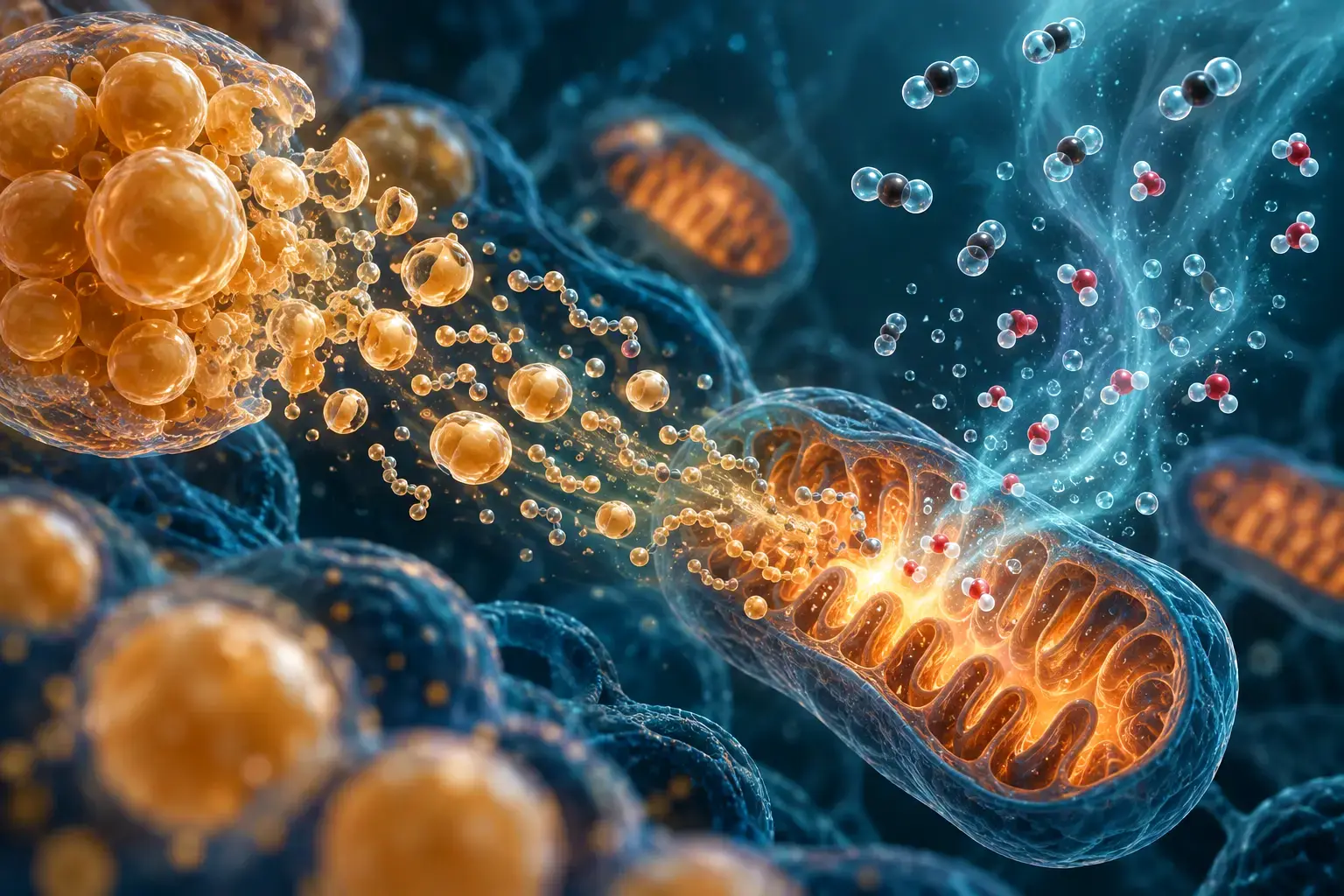
Follow the carbon ledger
Body fat is stored mainly as triglyceride, built from carbon, hydrogen and oxygen. Conservation of mass means its atoms cannot vanish. Oxidation produces carbon dioxide, water and usable energy captured in molecules such as ATP, with some energy released as heat.
A BMJ mass-balance calculation shows that oxidizing 10 kg of human fat produces about 8.4 kg of carbon dioxide and 1.6 kg of water, while requiring inhaled oxygen. This is chemical accounting, not a rate prediction or advice to breathe more.
From fat cell to final products
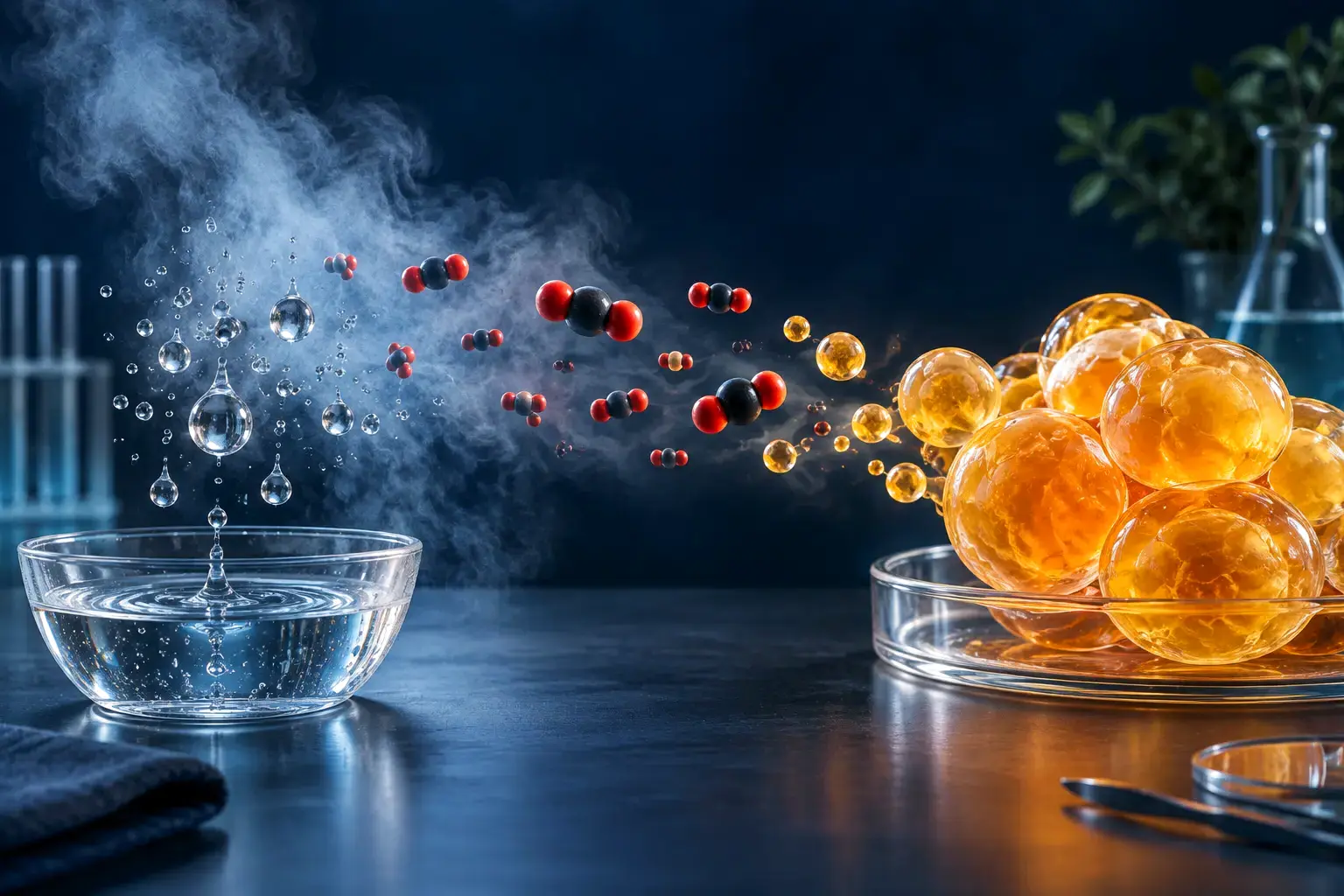
Why breathing and sweating are not hacks
Hyperventilating does not command adipocytes to provide carbon; it can disturb blood gases and cause dizziness. Exercise increases breathing because tissues need oxygen and produce carbon dioxide, but body-fat change depends on total fuel use and energy balance over time.
Sweating regulates temperature. A lower post-workout weight is mainly water and reverses with drinking. Saunas and sweat suits do not prove extra triglyceride oxidation.
Do fat cells leave the body?
Most adult adipocytes shrink as the lipid droplet gets smaller; intact cells are not exhaled. Fat does not become muscle. Resistance training may preserve or build muscle while a separate deficit reduces fat.
Released fatty acids can be re-stored if not ultimately oxidized. Mobilization and an acute increase in “fat burning” are not the same as net loss. Audit claims by asking whether research measured heat, fatty-acid release, acute oxidation, body weight, or actual fat mass—and whether it tested the sold formula.
Why fat loss is slow
Body fat stores a lot of energy, roughly 7,700 calories per kilogram of fat tissue. A daily deficit of 500 calories therefore produces in the region of half a kilogram of fat loss a week. Faster scale changes almost always include water and glycogen.
Where a supplement fits
No supplement makes fat leave the body faster. Fat is used when energy intake stays below expenditure over time.
A thermogenic or oxidation mechanism is not finished-product evidence of meaningful long-term fat loss. Fat Burn Active is optional and cannot replace nutrition, activity, sleep, hydration, or medical care. Its current official page lists at least 120 mg caffeine per serving from caffeine anhydrous and guarana, additional green-tea caffeine that is not quantified, and bitter-orange extract standardized to 6 mg synephrine. Warmth, stimulation, sweating, or a short-term scale change cannot prove a finished-product fat-loss effect.
A supplement is not required to benefit from this guide. If your foundations are already in place, use the independent Fat Burn Active review to judge whether the formula has a useful optional role. If it fits your expectations and stimulant tolerance, check the current price on the official site. We may receive a commission.
Frequently asked questions
Where does fat go when you lose weight?
Mostly out through the lungs as carbon dioxide, with the rest as water.
Does sweating show fat leaving?
No. Sweat is water and salt from cooling, not a measure of fat loss.
Do fat cells disappear?
Mostly they shrink. Their number stays fairly stable in adults.
Sources
- BMJ: When somebody loses weight, where does the fat go?
- PubMed record for the mass-balance paper
- NIDDK: Body Weight Planner
- NIH ODS: Weight-Loss Supplements
Sources reviewed September 13, 2026. This article is general educational information, not medical advice, diagnosis, or treatment.