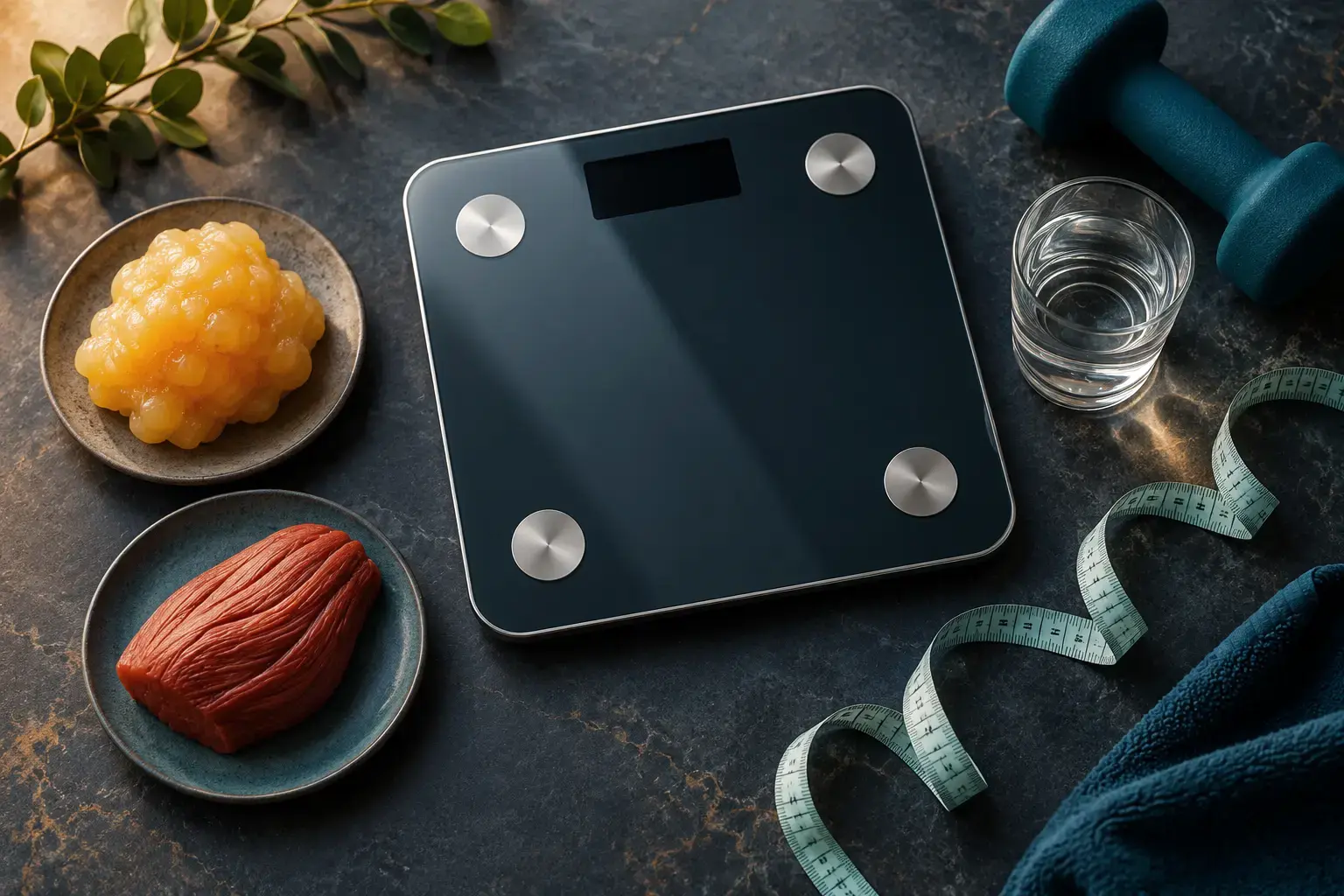
What changes inside an adipocyte
An adipocyte stores energy mainly as triglyceride in a large lipid droplet. With sustained surplus, the droplet expands and the cell enlarges. During negative energy balance, triglyceride is broken down, fatty acids and glycerol are released, and tissues can use them. The cell becomes smaller but usually remains available to store energy again.
Fat tissue is not passive packaging. It contains vessels, immune cells and connective tissue and releases signaling molecules. Smaller average cell size and better tissue function can matter even if the number of cells barely changes.
What adult cell-turnover research means
A landmark study used atmospheric carbon-14 incorporated into DNA to estimate adipocyte age. It found adult fat-cell number to be tightly regulated, including after marked weight loss, while roughly 10% of cells renewed annually. This supports shrinkage as the central adult weight-loss response.
The result does not say no adipocyte can ever die or form. Severe obesity, aging, disease, surgery and tissue remodeling complicate the biology. The defensible conclusion is narrower: ordinary dieting should not be marketed as erasing a chosen population of cells.

Why smaller cells may refill
After weight loss, energy needs fall because a smaller body costs less to maintain and move. Appetite may increase, and daily movement can decline. Remaining adipocytes can enlarge again if intake exceeds expenditure. That is physiology interacting with environment, not evidence that maintenance is impossible.
Long-term meal structure, resistance training, movement, sleep, self-monitoring and appropriate medical treatment can support maintenance. The objective is sustainable balance—not keeping cells “empty” through constant hunger.
Do cosmetic procedures remove cells?
Liposuction physically removes adipose tissue from treated regions, and some cosmetic procedures damage localized cells. These are contouring interventions, not general obesity treatment, and do not stop remaining cells or other depots from enlarging. Risks and expectations require a qualified clinician.
Exercise cannot transform an adipocyte into a muscle cell. Fat and muscle are separate tissues: fat mass can fall while resistance training preserves or builds muscle.
Why this matters for maintenance
Smaller fat cells send signals that may encourage regain, which is one reason maintenance needs ongoing habits. Regular activity, consistent eating patterns and continued monitoring help counter this.
Where a supplement fits
No supplement destroys or removes fat cells. Fat loss shrinks cells through a sustained energy deficit.
A thermogenic or fat-oxidation claim is not evidence that a product destroys adipocytes. Fat Burn Active is optional and cannot replace nutrition, activity, sleep, hydration, or medical care. Its current official page lists at least 120 mg caffeine per serving from caffeine anhydrous and guarana, additional green-tea caffeine that is not quantified, and bitter-orange extract standardized to 6 mg synephrine. Warmth, stimulation, sweating, or a short-term scale change cannot prove a finished-product fat-loss effect.
Once the practical steps in this guide are working, decide whether an optional supplement adds enough value. Start with the Fat Burn Active review; if the formula and limitations are acceptable, see the current price on the official site. We may receive a commission.
Frequently asked questions
Do fat cells disappear when I lose weight?
No. They mainly shrink.
Does liposuction remove fat cells?
Yes, it removes cells from treated areas, but it is not a weight-loss treatment.
Why is it easy to regain weight?
Smaller fat cells and other adaptations can increase appetite, so maintenance needs ongoing habits.
Sources
- Spalding et al.: Dynamics of fat cell turnover
- Endotext: Adipose Tissue
- NIDDK: Treatment for Overweight and Obesity
- NIH ODS: Weight-Loss Supplements
Sources reviewed September 13, 2026. This article is general educational information, not medical advice, diagnosis, or treatment.