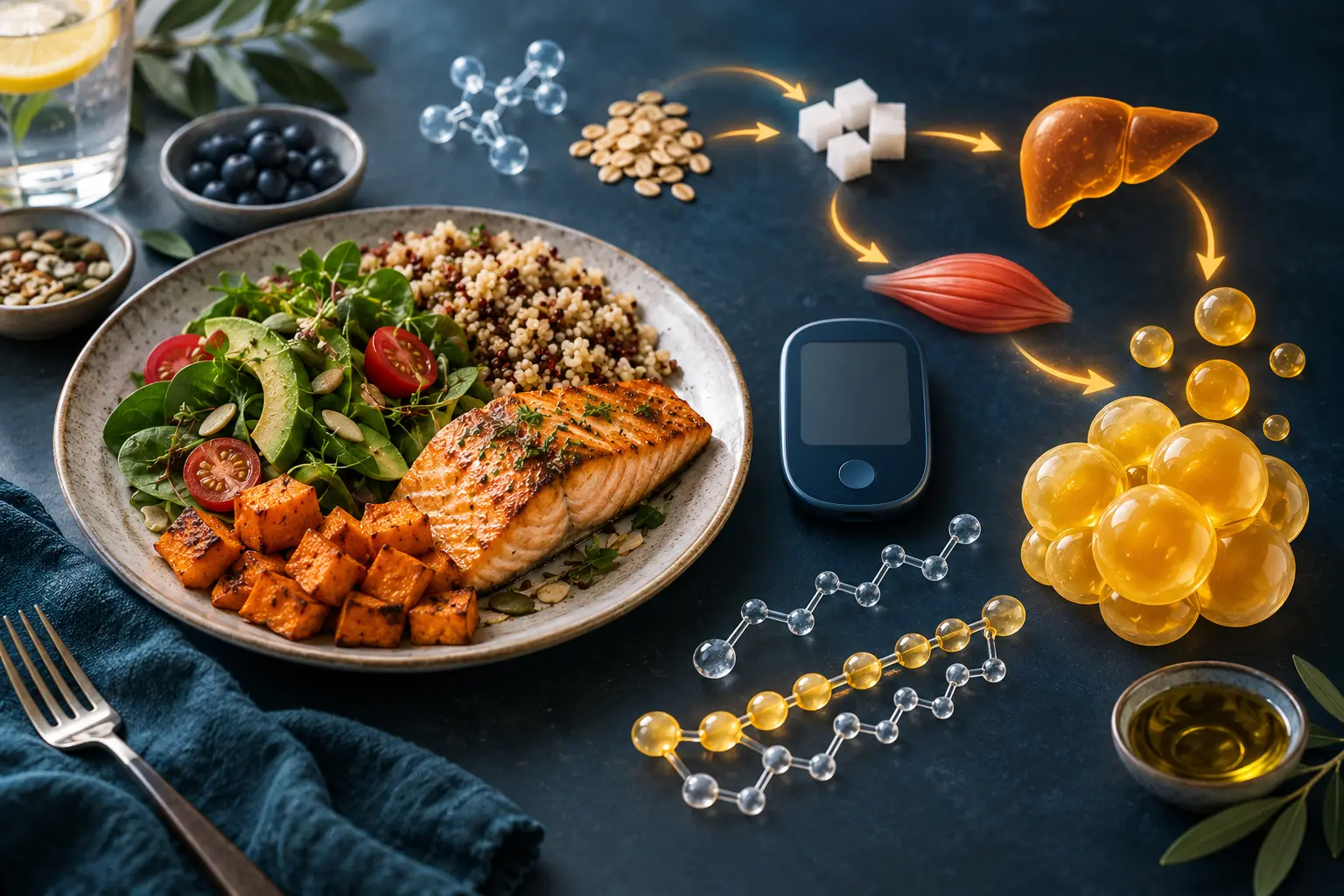
The journey starts with digestion
Dietary triglycerides are too large to travel directly from a meal into the bloodstream. Digestion breaks them into components that can be absorbed by intestinal cells. Inside those cells, fatty acids are reassembled into triglycerides and packaged into lipoprotein particles called chylomicrons.
Chylomicrons enter circulation and deliver triglyceride-derived fatty acids to tissues. Lipoprotein lipase helps release those fatty acids. Muscle can oxidize them for energy, while adipose tissue can reassemble and store them as triglycerides for later use. Chylomicron remnants are cleared by the liver.
What insulin changes after a meal
Insulin rises in response to carbohydrate and, to different degrees, mixed meals. In the fed state it supports nutrient storage and suppresses the release of fatty acids from adipose tissue. This is not a metabolic mistake: alternating storage after meals with release between meals is part of normal energy management.
The error is to treat any temporary insulin rise as permanent fat gain. Hormone levels, fuel use, and storage flows change across the day. Long-term body-fat change reflects the net result after intake and expenditure are considered together.
Do carbohydrate and protein become body fat?
Carbohydrate is commonly used for immediate energy or stored as glycogen in liver and muscle. When total intake is high, carbohydrate also reduces how much fat is oxidized, which can indirectly make dietary-fat storage more likely. Converting large amounts of carbohydrate into new fatty acids—de novo lipogenesis—can occur, but the practical pathway depends on the overall dietary and energy context.
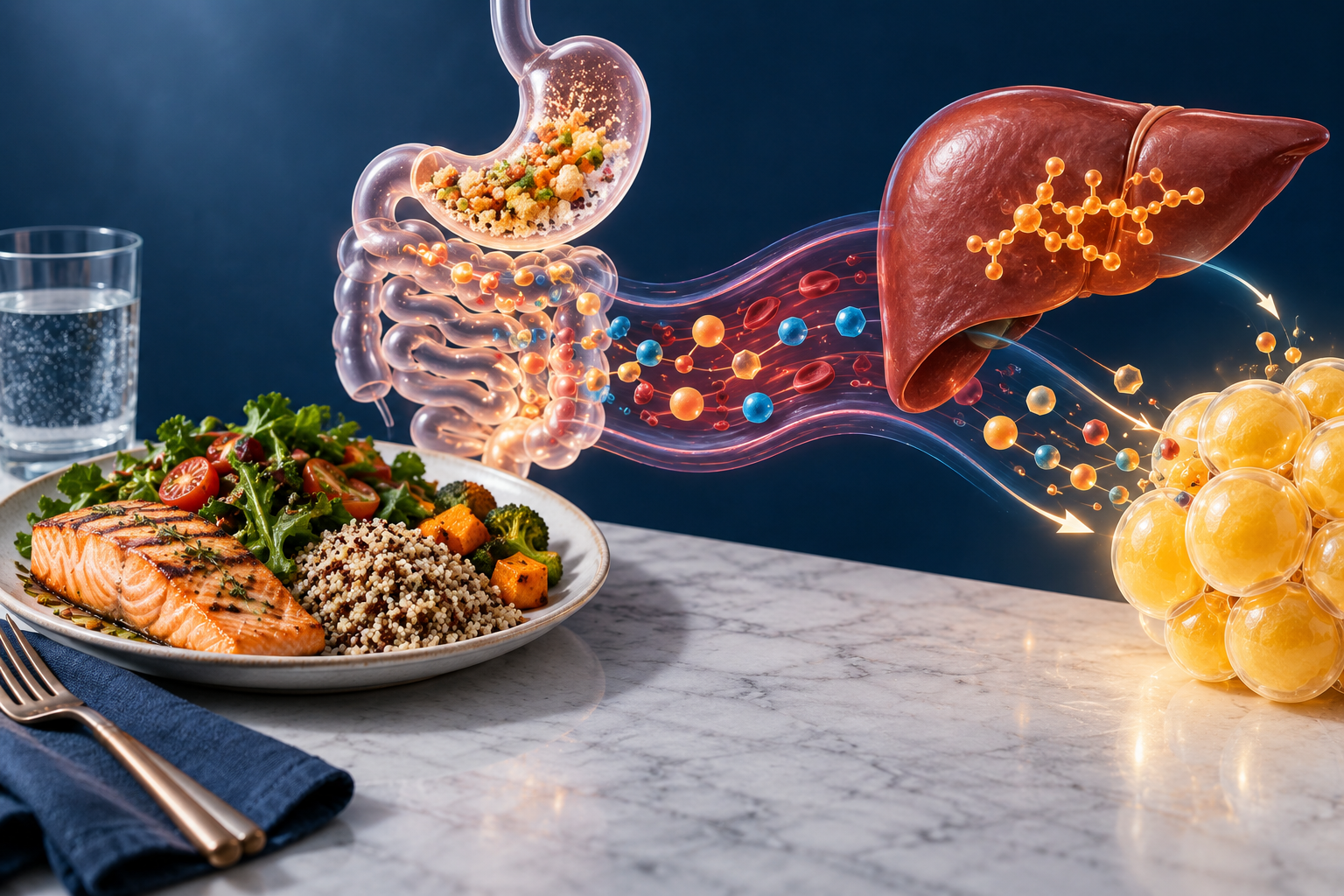
Why one meal does not decide fat gain
After a large meal, scale weight can rise from the physical mass of food and drink, sodium-related water retention, and restored glycogen with accompanying water. These changes can happen before any meaningful conclusion about fat mass is possible.
Can a fat burner stop post-meal fat storage?
No supplement should be assumed to cancel the energy from a meal. Ingredients marketed for thermogenesis, fat oxidation, appetite, or nutrient absorption act—if they act at all—through different mechanisms, usually with limited or uncertain effects. An acute change in fat oxidation does not prove less body fat weeks later.
Products that imply you can “block,” “melt,” or neutralize food without changing long-term intake deserve scrutiny. Start with our guide to how fat burners claim to work, then compare that mechanism with evidence from the effectiveness review.
What actually influences net fat storage?
- Total energy intake. Meal size matters, but the repeated daily and weekly pattern matters more.
- Total energy expenditure. Resting needs, movement, exercise, and the thermic effect of food contribute.
- Macronutrient mix. Protein, carbohydrate, fat, fiber, and food form influence digestion, satiety, and fuel use.
- Meal context. Activity before and after eating, glycogen status, and timing can change where nutrients are directed.
- Individual biology. Body composition, insulin sensitivity, health conditions, medicines, sleep, and genetics influence the response.
- Consistency. Repeated patterns determine long-term direction; a single meal is rarely the whole explanation.
A calmer response to a high-calorie meal
Do not try to punish the meal with extreme restriction, unsafe supplements, dehydration, or excessive exercise. Return to your normal routine, hydrate appropriately, prioritize filling foods, move as usual, and review the weekly pattern only when enough data exists.