Why effort and outcome can tell different stories
You may be cooking at home, exercising, avoiding sweets, and still see no reassuring change. That gap is frustrating because effort is real, yet effort cannot measure the size of an energy deficit. A plan can feel demanding while producing only a small gap—or no consistent gap—once portions, weekends, drinks, reduced movement, and water retention are included.
The worst response is to assume you need an extreme diet immediately. If the apparent stall is water or measurement noise, harsher restriction solves the wrong problem. If the plan is inconsistent because it is too strict, making it stricter amplifies the cause.
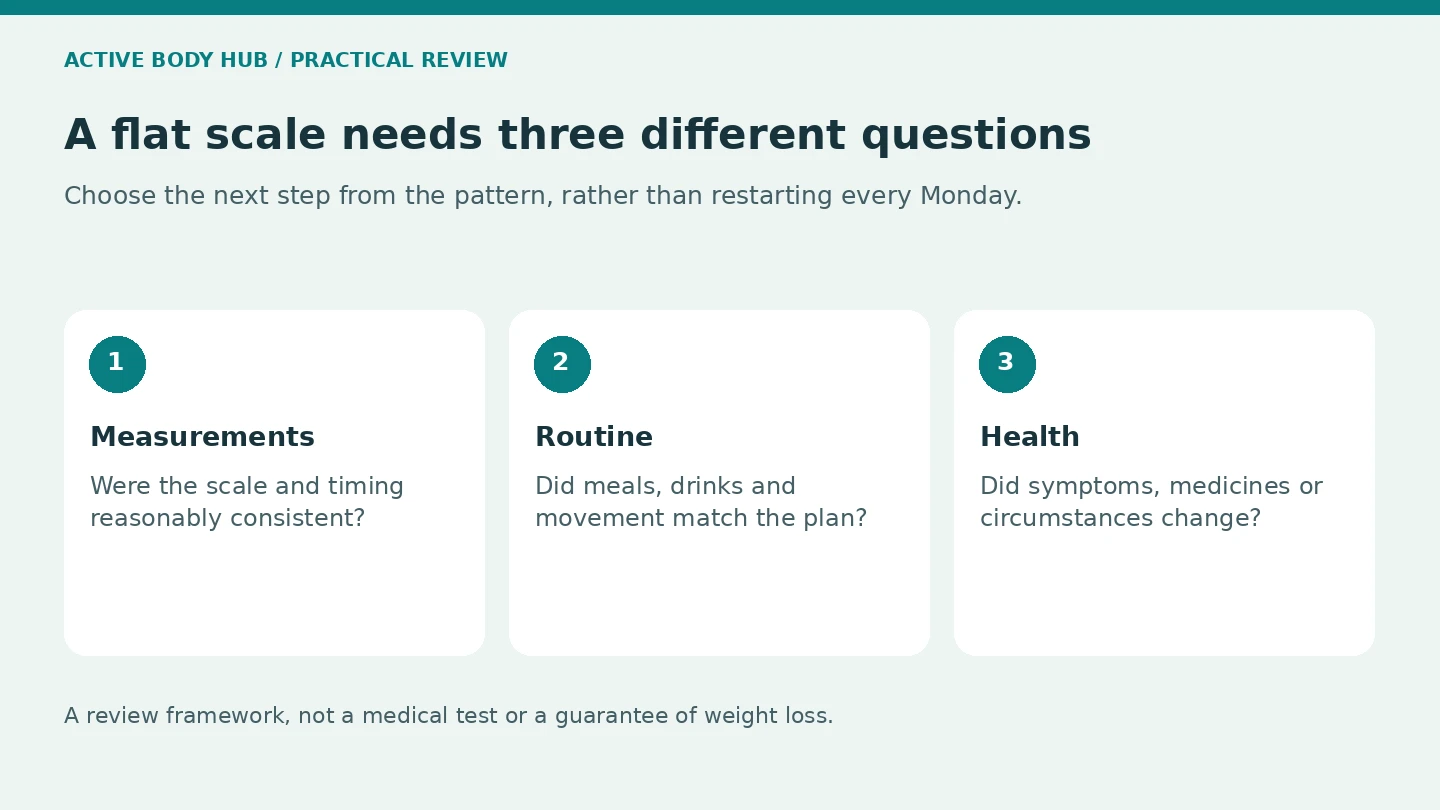
First confirm that weight loss has actually stalled
Compare morning weights collected under similar conditions and calculate weekly averages. Add a consistently measured waist. Menstrual-cycle changes, sodium, carbohydrate intake, constipation, travel, illness, a late restaurant meal, and inflammation after hard training can move water faster than body fat changes. [3]
Where intake is commonly underestimated
This is not a list of moral failures. It identifies the highest-value places to measure briefly rather than tracking every lettuce leaf.
The movement drop you may not notice
Structured workouts are only one part of expenditure. When food intake falls, people may sit more, take fewer steps, avoid chores, or recover longer without realizing it. A new desk project, pain, bad weather, driving, or fatigue can also reduce non-exercise activity.
Compare current steps or active time with your earlier baseline. Do not respond by adding punishing daily workouts. Restore an attainable walking range, break up long sitting, and keep resistance training compatible with recovery.
When the plan is technically correct but practically wrong
A plan that repeatedly produces intense evening hunger, weekend overeating, poor sleep, or avoidance of social life is not being followed consistently—and may not be followable. That is a design problem. A smaller planned deficit with complete meals can outperform a larger target that triggers compensation.
Review meal protein, fiber, food volume, timing, and preferred foods. Add structure at the point where the day first becomes difficult. For example, a substantial lunch or planned afternoon snack may do more than trying to resist nighttime hunger. [5]
Medicines, health conditions, and symptoms
Some medicines can affect appetite, fluid balance, fatigue, glucose, or activity. Thyroid disorders, sleep apnea, PCOS, menopause, depression, pain, and other conditions may influence weight management, but symptoms cannot diagnose them. Do not stop prescribed treatment because the scale changed.
Seek medical review for rapid or unexplained change, swelling, shortness of breath, marked fatigue, increased thirst or urination, menstrual changes, persistent digestive symptoms, or weight change beginning after a medication adjustment. Bring a timeline rather than a list of internet diagnoses. [2]
A 14-day review of the routine
- Standardize measurements. Use the same scale and conditions; record waist once each week.
- Photograph or record all intake. Include drinks, cooking fats, bites, restaurant meals, and weekends.
- Track movement. Record steps, workouts, pain, and unusually sedentary days.
- Log context. Note sleep, hunger, cycle phase, sodium, illness, stress, and medication changes.
- Compare averages. Look for direction and consistency rather than the lowest number.
- Choose one correction. Fix the earliest measurable bottleneck and review it after another two weeks.
If detailed tracking increases distress or food preoccupation, use a simpler meal-pattern review with professional support instead.
Three patterns that deserve different responses
| Pattern | What it may mean | What to do next |
|---|---|---|
| Weight flat, waist smaller | Body composition or temporary water changes may be involved | Continue comparable measurements; neither measure proves the cause. |
| Weight and waist flat, routine inconsistent | The intended deficit may not be happening reliably | Simplify one difficult meal or weekend situation. |
| Flat trend with weakness or severe hunger | The plan may be unsuitable, or health needs review | Seek support rather than automatically cutting more food. |
A two-week audit is a practical observation period, not a diagnostic threshold or a promise that the scale must fall by day fourteen. Water shifts and a small deficit may require longer interpretation. Symptoms take priority over completing a log.
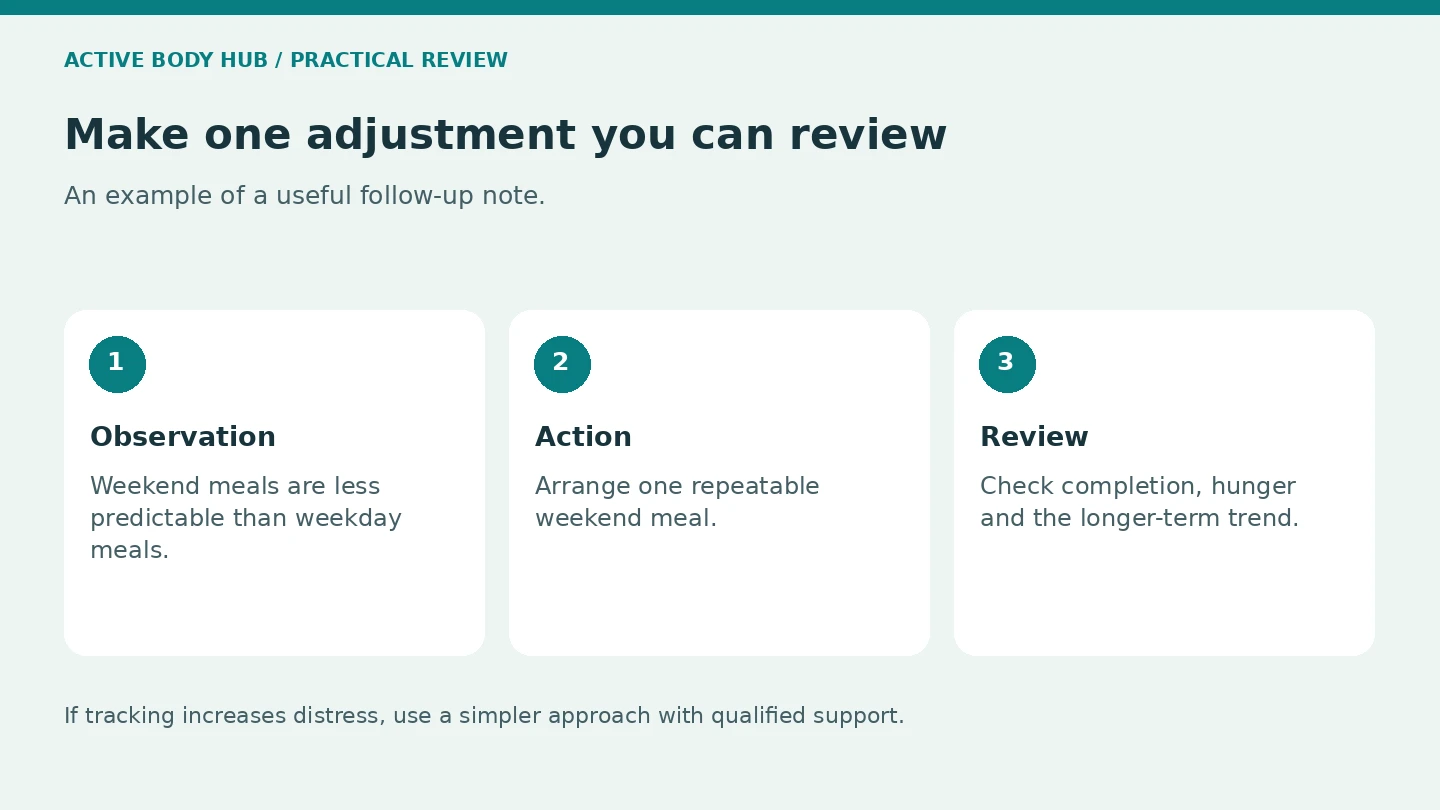
Make one decision you can revisit
If the records show a repeatable obstacle, choose one change and write down when you will review it. For example: “Weekend lunches are unpredictable, so I will prepare one reliable option and check whether I used it.” This tests whether the plan became easier to follow; it does not promise a particular weight change.
If you already have a consistent routine and the trend remains flat, review the target with a dietitian or clinician. A calorie calculator estimates needs; it does not measure your expenditure or prove a deficit. NIDDK’s Body Weight Planner is intended for adults and excludes pregnancy and breastfeeding. [1]
Ask whether continued weight loss is appropriate, what support is available, and which health or functional outcomes matter alongside weight. Structured care can include nutrition, behavior support and, when appropriate, prescribed treatment. [4]
When glucose or treatment is part of the problem
If you have prediabetes or type 2 diabetes, do not respond to a plateau by independently changing medicines or adding a stimulant. Review food, activity, glucose monitoring and treatment together. Use the prediabetes starting plan or read the type 2 diabetes weight-management guide.
Can Fat Burn Active break a stall?
A stimulant sensation cannot identify why the scale stopped changing. The evidence reviewed does not establish that the finished product reliably resolves a weight-loss plateau. It cannot correct inaccurate measurements, an unsustainable routine or an untreated health problem.
If you still want to evaluate it, read the Fat Burn Active review for formula facts and evidence limits. The review contains affiliate links; we may earn a commission if you buy.
Frequently asked questions
Can I gain muscle while losing fat?
Yes, particularly in some beginners or people returning to training. Waist, strength, and weight trends together are more informative than the scale alone.
Should I lower calories immediately?
No. Confirm the trend and execution first. If a change is justified, make one modest adjustment and define when the result will be reviewed.
How long should I wait?
Several weeks of comparable data are usually more useful than a few days, unless symptoms or safety concerns require earlier care.
Sources and editorial notes
- NIDDK: Body Weight Planner and Its Limits
- NIDDK: Factors Affecting Weight and Health
- Mayo Clinic: Getting Past a Weight-Loss Plateau
- NIDDK: Treatment for Overweight and Obesity
- NIDDK: Choosing a Safe and Successful Weight-Loss Program
Sources reviewed October 25–26, 2026. Prepared with AI assistance to organize evidence and practical planning examples. No clinical review, personal product use or laboratory testing is claimed. This is educational information for adults, not an individual treatment plan.