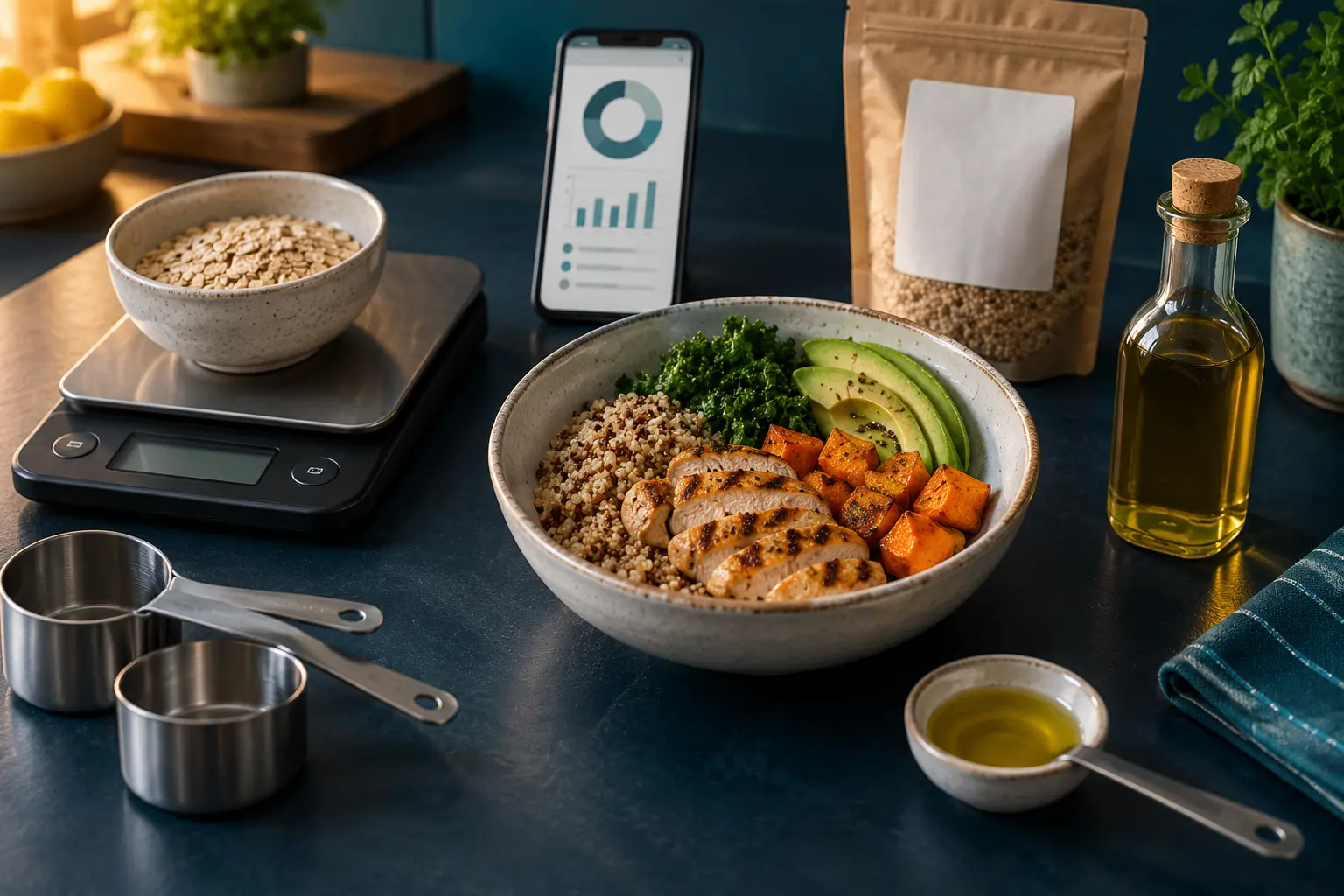
Why a perfect-looking diary can be wrong
A tablespoon guessed as a teaspoon, dry rice logged as cooked, and restaurant dish selected from the smallest database estimate may each seem minor. Together they can erase the intended deficit while the diary still appears exact.
The answer is not obsessive precision. Focus effort on foods with high calorie density, uncertain portions, or frequent repetition.
The seven common tracking errors
- Not weighing cooking oil or dressings.
- Confusing raw and cooked food entries.
- Logging one serving while eating the package.
- Using unverified database records.
- Ignoring drinks, tastes, and weekend food.
- Forgetting recipe yield.
- Eating back every wearable calorie.
How to use a kitchen scale
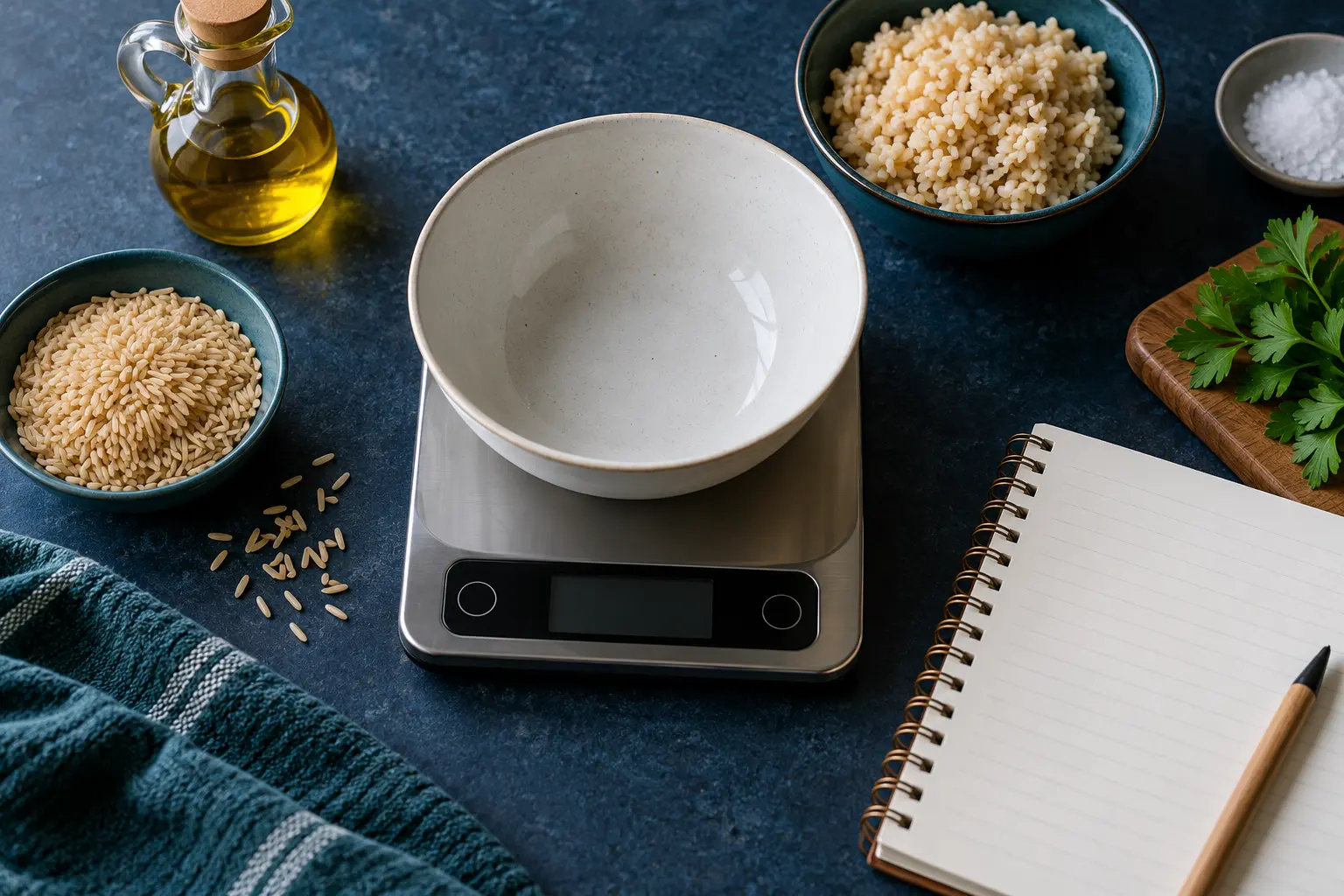
Place the container on the scale, tare it, add the food, and record the unit that matches the database entry. For spreads or oil, weighing the container before and after use can be easier. Consistency matters more than choosing grams over ounces.
Track a mixed recipe
Record every ingredient, including oil and sauce, then record the total cooked yield by weight or the exact number of portions. Divide consistently. Water loss changes food weight but does not remove calories, which is why a cooked gram cannot always be matched to a raw entry.
Labels and databases are estimates too
Food labels permit rounding and natural products vary. Restaurant values and wearable expenditure are also estimates. Use official or verified entries when possible and choose the same reliable record each time.
Selective precision
When tracking becomes harmful
Stop or seek professional support if tracking produces fear, compulsive checking, compensatory restriction, binge eating, or social withdrawal. Portion templates, regular meals, or dietitian-guided approaches can provide structure without constant numbers.
Track the plan before crediting a supplement
If a supplement is introduced, change nothing else and define the outcome in advance. Our Fat Burn Active review explains why ingredient mechanisms do not prove finished-product fat loss.
Choosing a tracking method
Apps with barcode scanners and large food databases make tracking quicker, but check entries against labels. A digital kitchen scale gives more reliable portions than measuring cups for calorie-dense foods. Photo-based logging can work for people who find detailed counting stressful.
Tracking in periods
Many people track carefully for two to four weeks to learn portions, then switch to a lighter approach such as tracking only weekdays or only calorie-dense foods. Return to detailed tracking if progress stalls.
Run a tracking accuracy audit
Choose three ordinary days, including one weekend day. Photograph everything before eating and compare the photos with the final diary. Check oils, sauces, drinks, bites during cooking, package servings, recipe yield, and raw-versus-cooked entries. Then identify the two errors with the largest likely impact. Correct those first and leave minor vegetable estimates alone. Accuracy improves fastest when attention follows uncertainty and calorie density rather than when every crumb receives equal effort.
Interpret the number as a range
Even careful tracking contains label rounding, food variation, database error, restaurant uncertainty, and imperfect expenditure estimates. Treat daily intake as a useful estimate rather than laboratory truth. Consistent error can still support decisions because the same method creates a comparable trend. When results differ from expectation, check adherence, portion changes, body-weight averaging, activity, and time before cutting intake. A modest adjustment tested for several weeks produces better information than repeatedly changing the target after individual weigh-ins.
Before you change the strategy
Frequently asked questions
Must I weigh every food?
No. Weigh calorie-dense foods such as oils, nuts, cheese and grains; estimate vegetables.
Should I subtract exercise calories?
Usually not; devices often overestimate them.
Why has my calorie target stopped working?
Weight loss lowers your energy needs; update the target every few months.
Treat Fat Burn Active as an optional addition, not a substitute for the steps in this guide. Review its listed ingredients and limitations in our product analysis. If the evidence, warnings, and cost fit your decision, check the current price and formula on the official site. We may earn a commission.
Sources
- NIDDK Body Weight Planner
- FDA nutrition facts label
- Wearable energy expenditure accuracy review
- USDA FoodData Central
Evidence reviewed September 8, 2026. Educational information only; not medical advice.