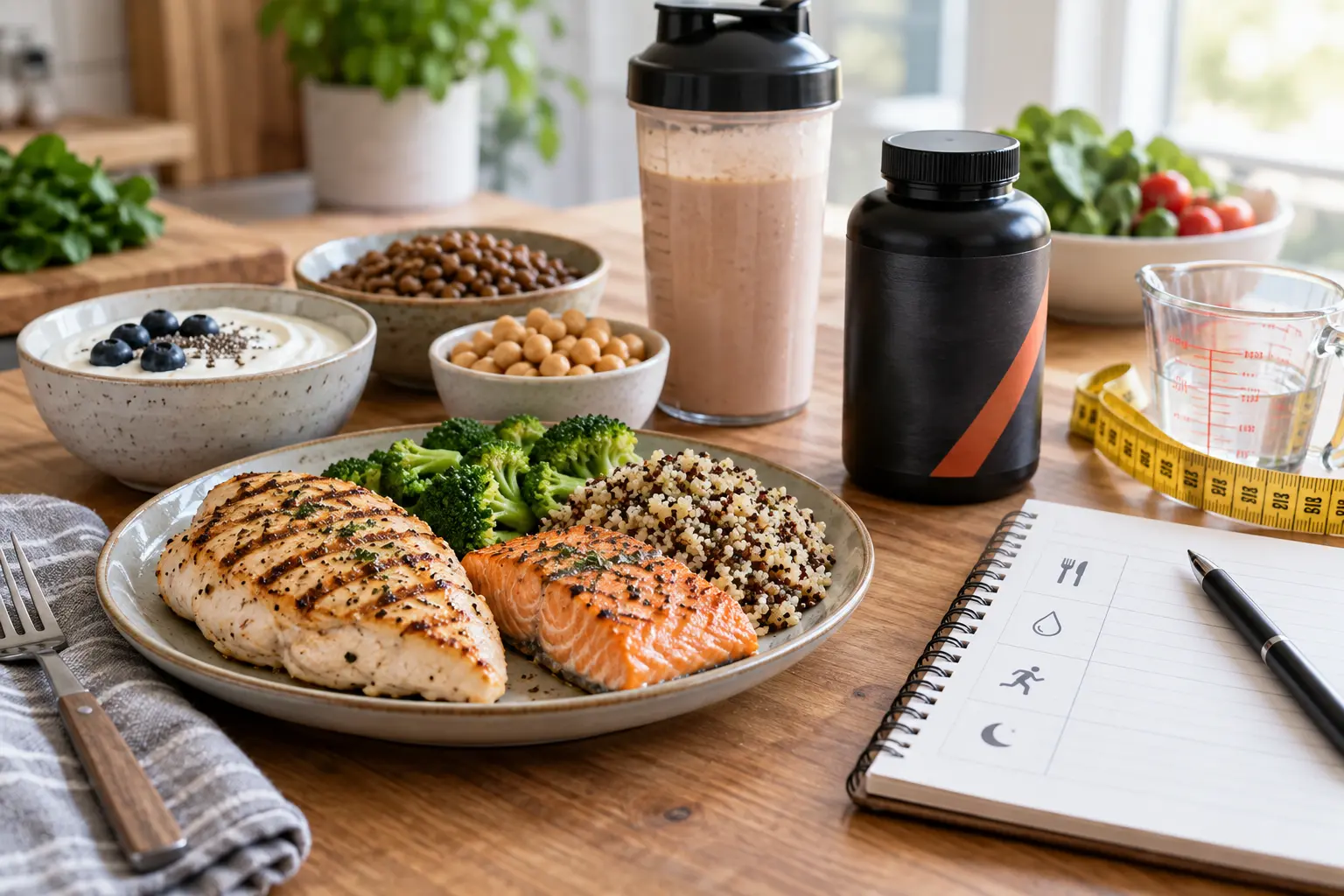
Keep the roles separate
No row cancels another. Protein cannot make unlimited calories disappear, and a stimulant cannot replace an adequate diet or training plan.
High protein still needs dietary context
A useful plan includes varied protein foods plus vegetables, fruit, legumes or whole grains when appropriate, dietary fats, and enough total energy for health and training. Shakes and bars can be convenient, but they are not automatically more filling or nutritious than meals.
“High protein” is not one standardized dose. Needs differ with body size, age, training, calorie deficit, food pattern, kidney function, and clinical goals. People with kidney disease or other relevant conditions should use individualized professional guidance rather than internet targets.
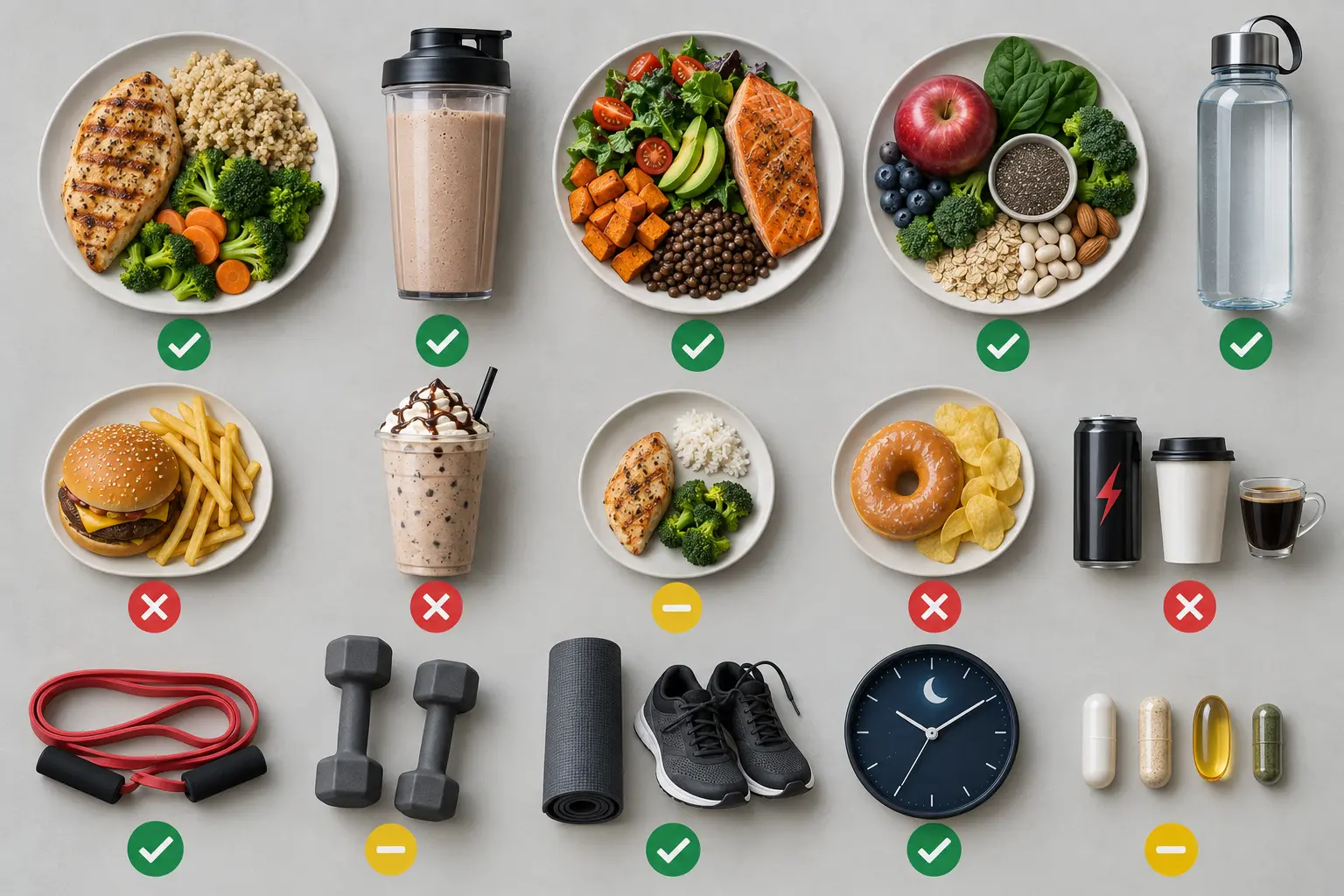
Appetite suppression can hide under-fueling
Protein may increase fullness, and a stimulant may reduce appetite. Together, that may make it easier to skip meals—but easier is not always better. Consistently inadequate energy, carbohydrate, fat, fiber, or micronutrients can reduce training quality, bowel regularity, recovery, and adherence.
Watch for fatigue, dizziness, irritability, constipation, declining performance, and evening rebound eating. The response is to review the meal plan and supplement, not to praise an inability to eat as stronger fat burning.
Worked example: the shake-plus-capsule trap
A person replaces breakfast with a protein shake and takes a stimulant fat burner. Hunger disappears until late afternoon, but training performance falls and dinner becomes very large. The scale fluctuates, and the person assumes the product stopped working. In reality, the routine created an unstable eating pattern.
A better experiment restores a complete breakfast or lunch with protein, produce, carbohydrate and fat appropriate to the person, keeps caffeine exposure known, and tracks training and evening hunger. If the supplement adds no defined benefit beyond the structured meals, there is no reason to preserve it.
Frequently asked questions
Do protein and fat burners work synergistically?
No convincing finished-product evidence establishes a special combined fat-loss effect.
Can a protein shake count as the required food?
The official page says not to use the product on an empty stomach but does not define a minimum meal. Use a normally tolerated, nutritionally useful meal and seek clarification if needed.
Can protein cancel supplement side effects?
No. Food may change tolerance, but it cannot make an unsuitable stimulant formula safe.
Does more protein always mean more fat loss?
No. Protein still contributes energy, and benefit depends on the whole diet, training, and adherence.
Sources
- Fat Burn Active official directions and cautions
- NIH ODS: Dietary Supplements for Weight Loss
- FDA: How Much Caffeine Is Too Much?
- Dietary Guidelines for Americans
- International Society of Sports Nutrition position stand: protein and exercise
Sources reviewed September 16, 2026. This article is general educational information, not medical advice, diagnosis, or treatment.