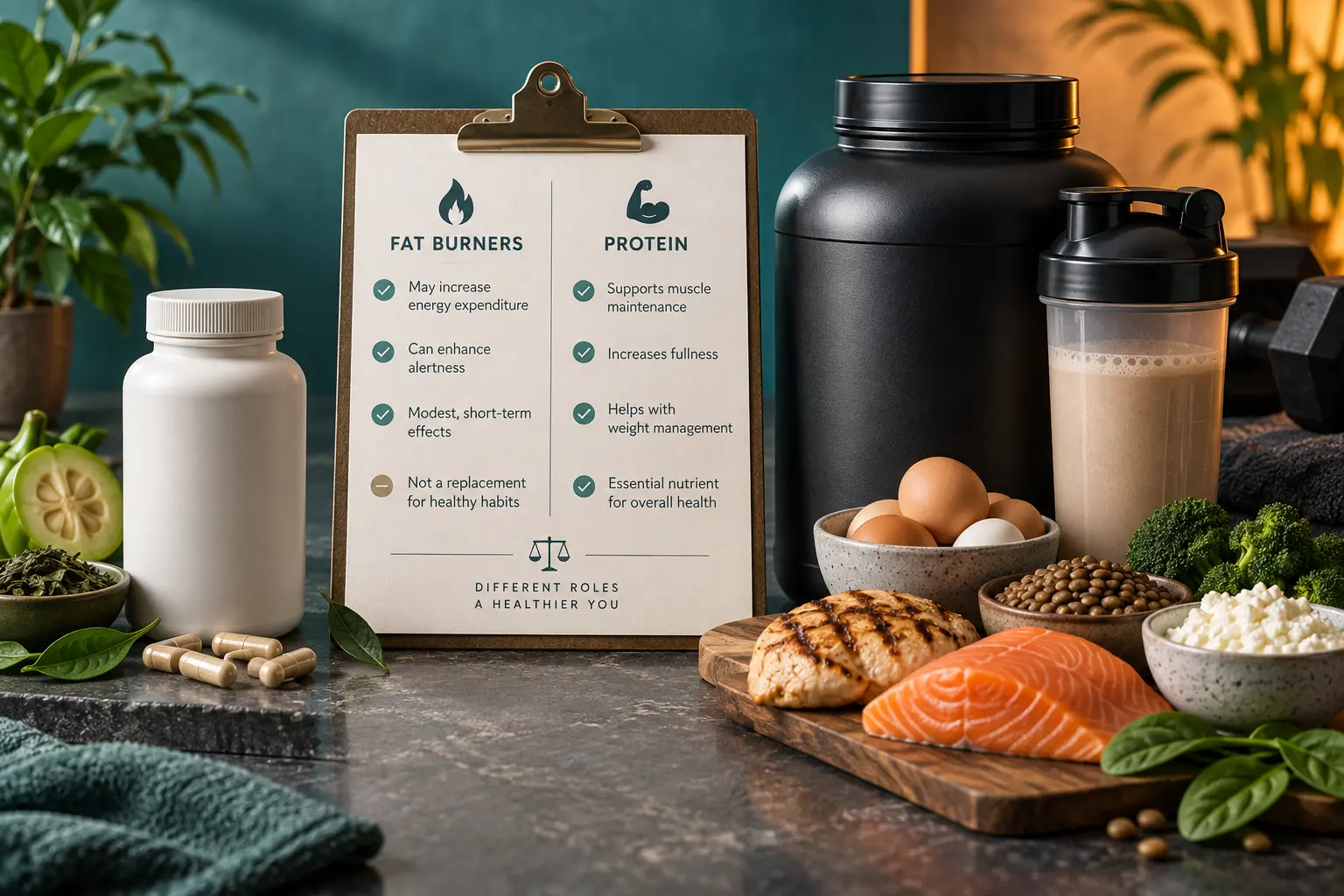
They solve different problems
Protein is an essential nutrient; “fat burner” is a marketing category. That does not make every protein powder necessary or every formula suitable. Whole foods can supply protein with fiber, micronutrients, and chewing volume, while a powder can be convenient when appetite, time, cooking access, or portability makes food difficult.
Protein helps only when the full diet works
A shake added on top of usual intake can increase calories. Used as a planned replacement for a lower-protein snack or as part of a calorie-controlled meal, it may make the diet easier to follow. During an energy deficit, adequate protein and resistance exercise are relevant to preserving fat-free mass; a powder is only one way to reach the target.
Fat burners do not supply the structural material needed for muscle. Stimulants may improve alertness or training effort in some situations, but sleep disruption can undermine recovery, hunger control, and performance. Compare weekly intake, training quality, and sleep—not the intensity of the first dose.
Worked example: the afternoon hunger problem
A dieter regularly reaches 4 p.m. with little protein at lunch and buys a thermogenic for cravings. The stimulant reduces hunger briefly but delays sleep. A more direct test is to add a planned protein-rich lunch or a measured shake with fruit, then track hunger, total intake, digestion, and evening eating for two weeks.
If protein intake was already adequate and the shake simply adds calories, it is not solving the problem. If hunger improves and the plan becomes easier without excess calories, the benefit came from meal structure and protein delivery—not from a special fat-burning property.
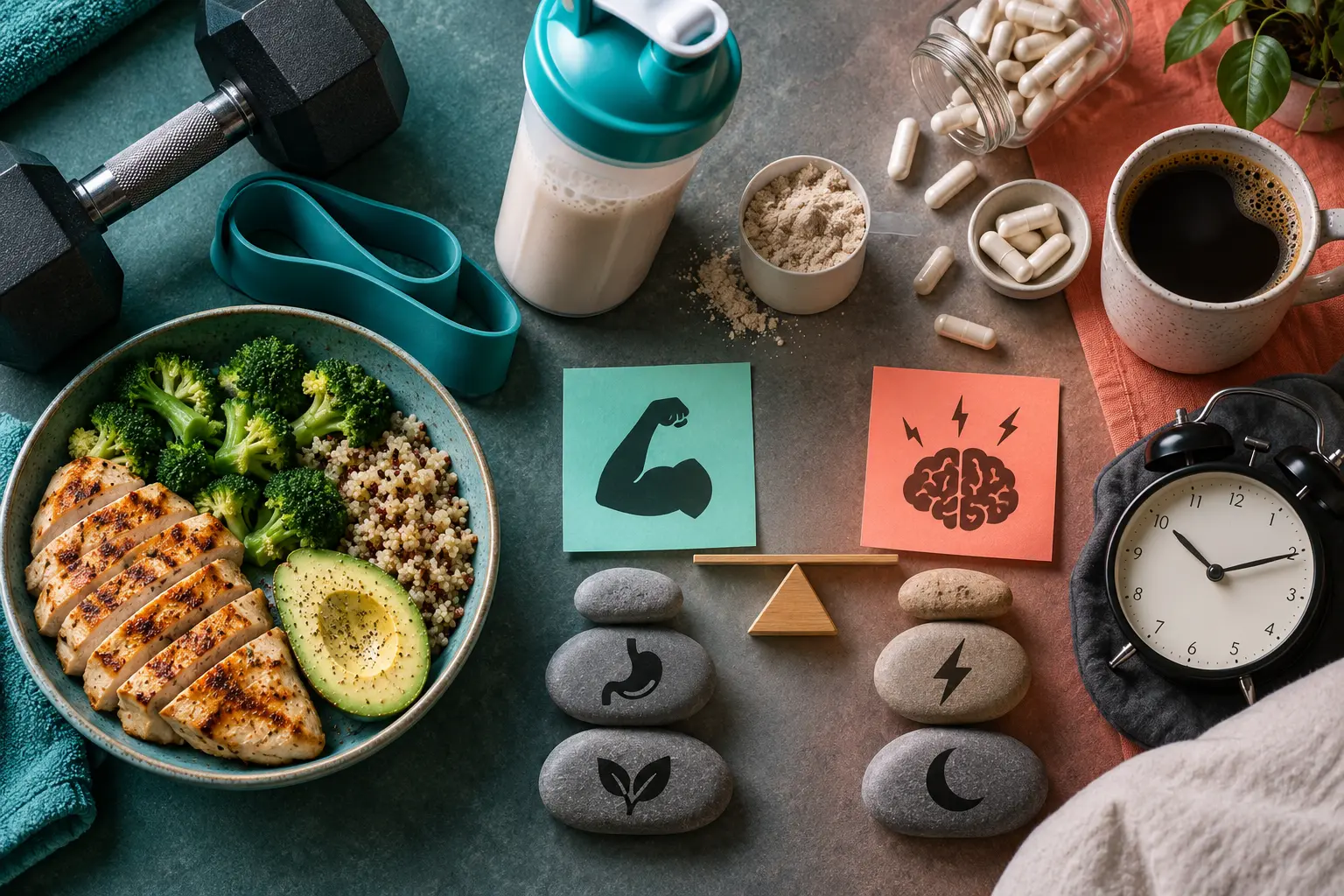
Put the trade-offs on one page
Where Fat Burn Active fits
If the actual problem is low protein intake or muscle retention, Fat Burn Active is the wrong tool for that job. It does not replace protein-containing foods or a suitable protein supplement.
Fat Burn Active remains an optional stimulant-containing supplement, not a substitute for adequate nutrition, an effective training plan, or medical care. Its public information does not establish that the finished formula produces clinically meaningful fat loss. Read our independent Fat Burn Active review for the label, evidence, dose, and safety limitations.
Fat Burn Active is relevant here because its official listing identifies standardized plant extracts, caffeine sources, vitamins, and zinc in one formula. First read our independent review. If the formula, stimulant profile, evidence limits, and warnings fit your situation, check the current Fat Burn Active price on the official website. We may receive a commission at no additional cost.
Safety differences
Protein powders are food products with a low risk profile for most people, though some contain added sugars, sweeteners or contaminants, so third-party tested products are preferable. People with kidney disease should follow their doctor's advice on protein. Stimulant fat burners carry more risk: raised heart rate and blood pressure, anxiety and sleep problems, and interactions with medicines such as antidepressants and stimulants.
Frequently asked questions
Is protein powder a fat burner?
No. It is a concentrated protein source with calories, not a thermogenic product.
Can protein make weight loss easier?
It may support fullness and lean-mass retention when the overall diet and training plan are appropriate.
Can I use both?
Possibly, but stacking adds cost and may add stimulant risk without addressing a clear need. Review the whole plan first.
Is food better than powder?
Food often supplies more nutrients and texture; powder can be a convenient way to close a defined protein gap.
Sources
- NIH ODS: Dietary Supplements for Weight Loss
- USDA MyPlate: Protein Foods
- Protein intake and lean mass during energy deficit
- Protein supplementation and resistance training meta-analysis
- FDA: Dietary Supplements Questions and Answers
Sources reviewed September 16, 2026. This article is general educational information, not medical advice, diagnosis, or treatment.