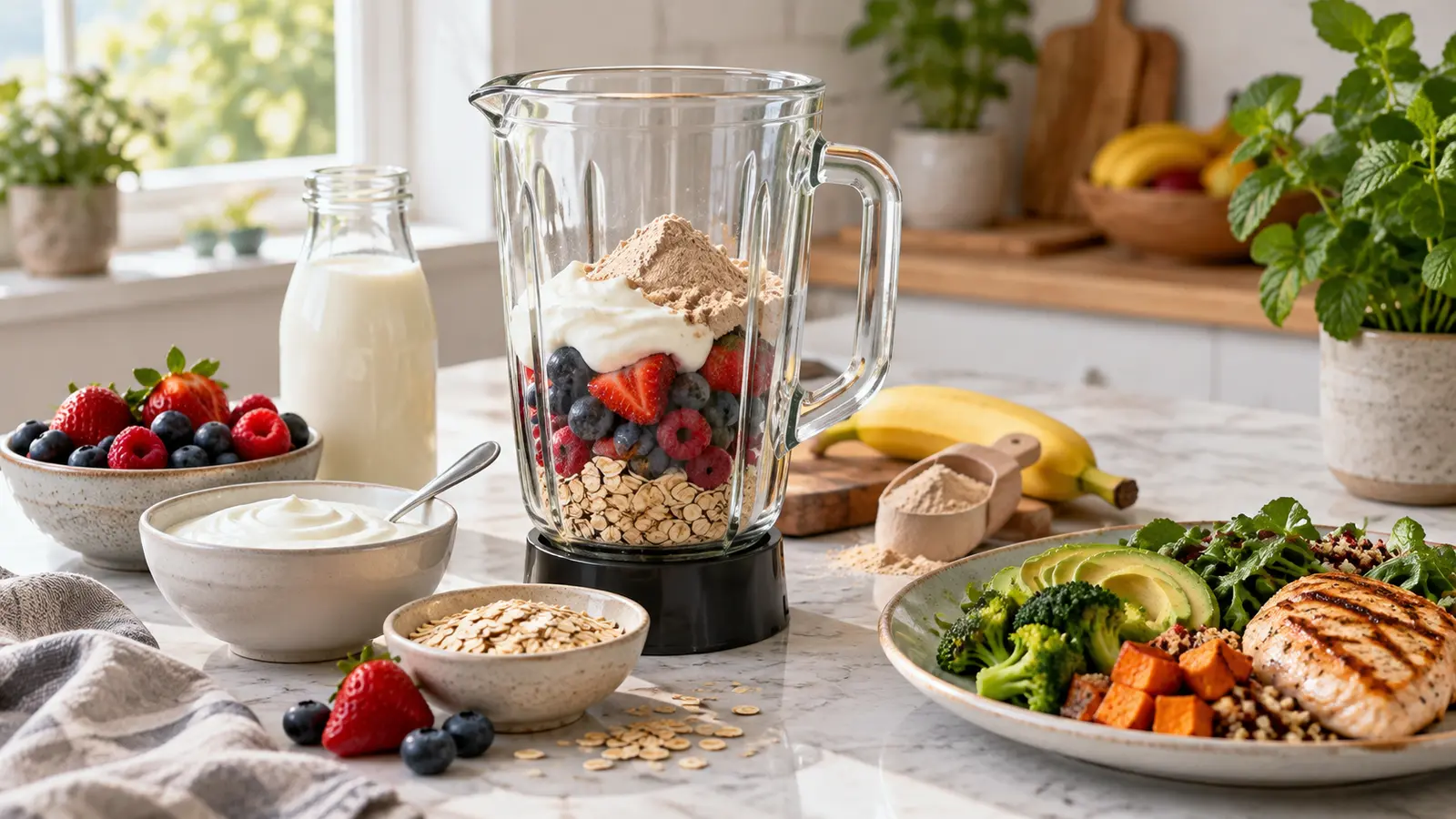
Protein supplement is not automatically a meal replacement
A scoop of protein powder mixed with water may provide protein but little fiber, essential fat or produce. A formulated meal replacement may include a broader nutrient profile, yet products vary. Read the label and do not assume a smoothie becomes balanced because it contains fruit.
Whole-food meals usually provide more chewing, texture and variety. Shakes may be valuable after training, during travel, for low appetite or when a conventional meal is temporarily impractical. The tradeoff is convenience versus satiety and dietary completeness.
Solve the add-versus-replace problem

Build the smallest shake that does the job
- Choose a protein source and verify the serving on the label.
- Select water, milk or another base deliberately.
- Add whole fruit or another fiber source when the shake replaces food.
- Measure calorie-dense additions at least once.
- Blend a portion you can finish comfortably.
- Keep allergen, medication and kidney-disease considerations in view.
Third-party testing can reduce—but not eliminate—quality uncertainty. Avoid products that promise rapid fat loss or hide ingredient amounts.
Run a shake utility test
Use the shake in one repeatable situation for two weeks. Record what it replaces, hunger two to four hours later, gastrointestinal comfort, total intake and cost. If you need another meal immediately, the liquid format may be too weak for that occasion.
Meal-replacement studies can show greater weight loss in structured programs, but that evidence applies to the whole program and specific products—not every homemade or commercial protein drink. A shake remains a tool whose outcome depends on the context.
What studies show
Trials of meal-replacement programs, which use nutritionally complete shakes in place of one or two meals a day, have shown greater weight loss than standard diets over a year. Plain protein shakes are different: they help when they replace a less filling snack or make it easier to reach a protein target, but add calories if drunk on top of usual meals.
Choosing a shake
- Look for 20–30 g of protein per serving.
- Check calories and added sugars on the label.
- Use a meal-replacement product, or add fruit and oats, if it replaces a full meal.
- People with kidney disease should check protein needs with their doctor.
Where a supplement fits
A protein shake and a stimulant fat burner do different jobs. Neither works if total calories stay too high.
Fat Burn Active is not a protein source or meal replacement; if considered at all, it belongs after the food plan is coherent. Fat Burn Active is optional and cannot repair an eating environment, replace sleep or treat emotional eating. Its current official page lists at least 120 mg caffeine per serving from caffeine anhydrous and guarana, additional unquantified caffeine from green-tea extract, and bitter-orange extract standardized to 6 mg synephrine. Feeling more alert or less hungry for a short time is not proof of meaningful fat loss.
Once the practical steps in this guide are working, decide whether an optional supplement adds enough value. Start with the Fat Burn Active review; if the formula and limitations are acceptable, see the current price on the official site. We may receive a commission.
Frequently asked questions
Do protein shakes help weight loss?
They can when they replace a less filling food or a meal, not when added on top.
Are meal-replacement shakes effective?
Structured meal-replacement programs have good evidence for weight loss in trials.
Can I have a shake every day?
Yes, if it fits your calorie and nutrition needs.
Sources
- Mayo Clinic: Protein shakes and weight loss
- Meal replacements systematic review and meta-analysis
- Meal-replacement interventions systematic review
- FDA: Dietary supplements
Sources reviewed September 13, 2026. This article is general educational information, not medical advice, diagnosis, or treatment.