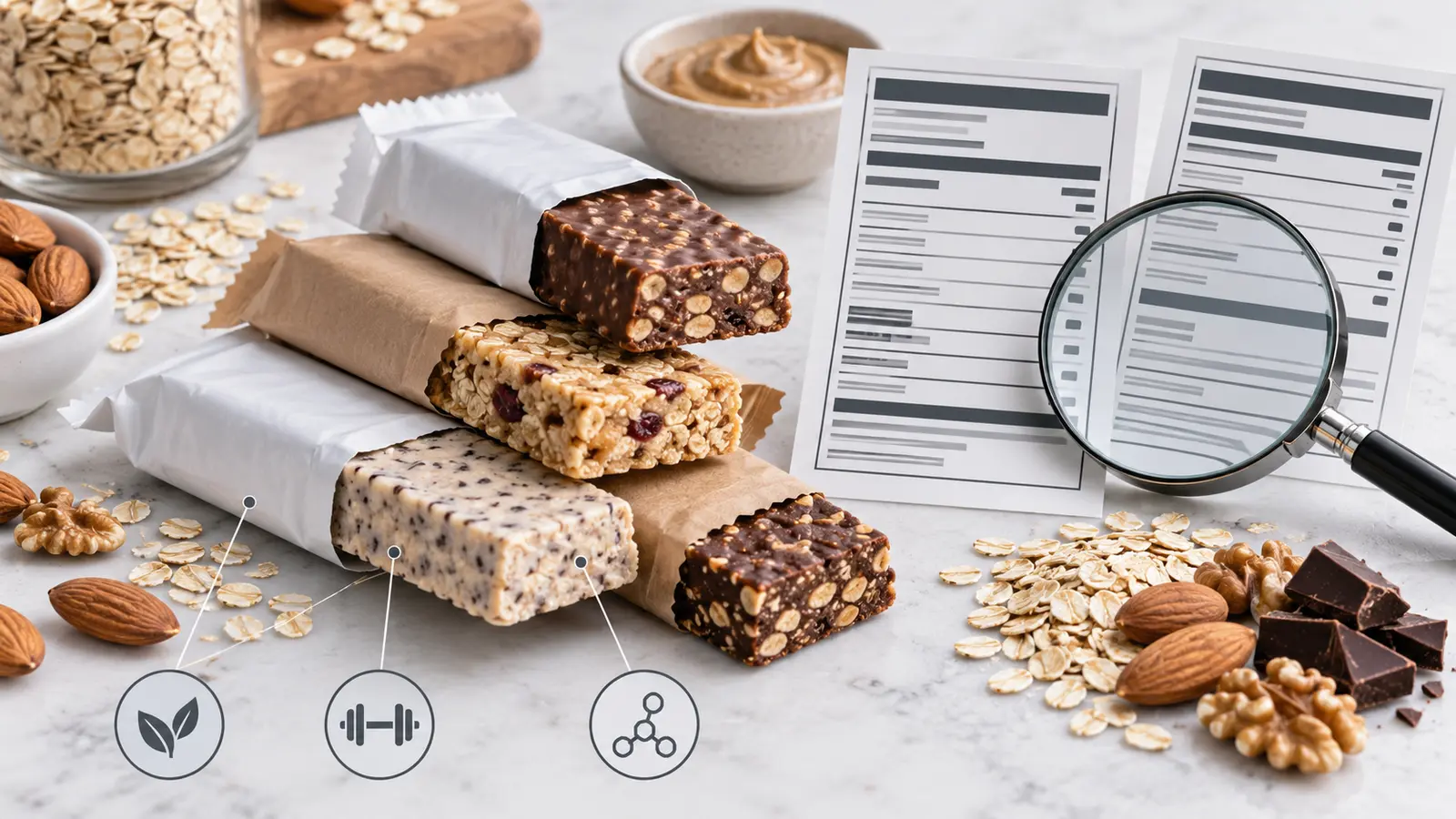
Use a six-point label audit
- Serving size: confirm whether the package is one or multiple servings.
- Calories: match the amount to a snack or meal role.
- Protein: compare grams with total calories and your daily needs.
- Fiber: distinguish intact food ingredients from large isolated-fiber doses.
- Added sugars and sugar alcohols: check quantity and tolerance.
- Ingredients and allergens: note protein source, nuts, milk, soy and unfamiliar blends.
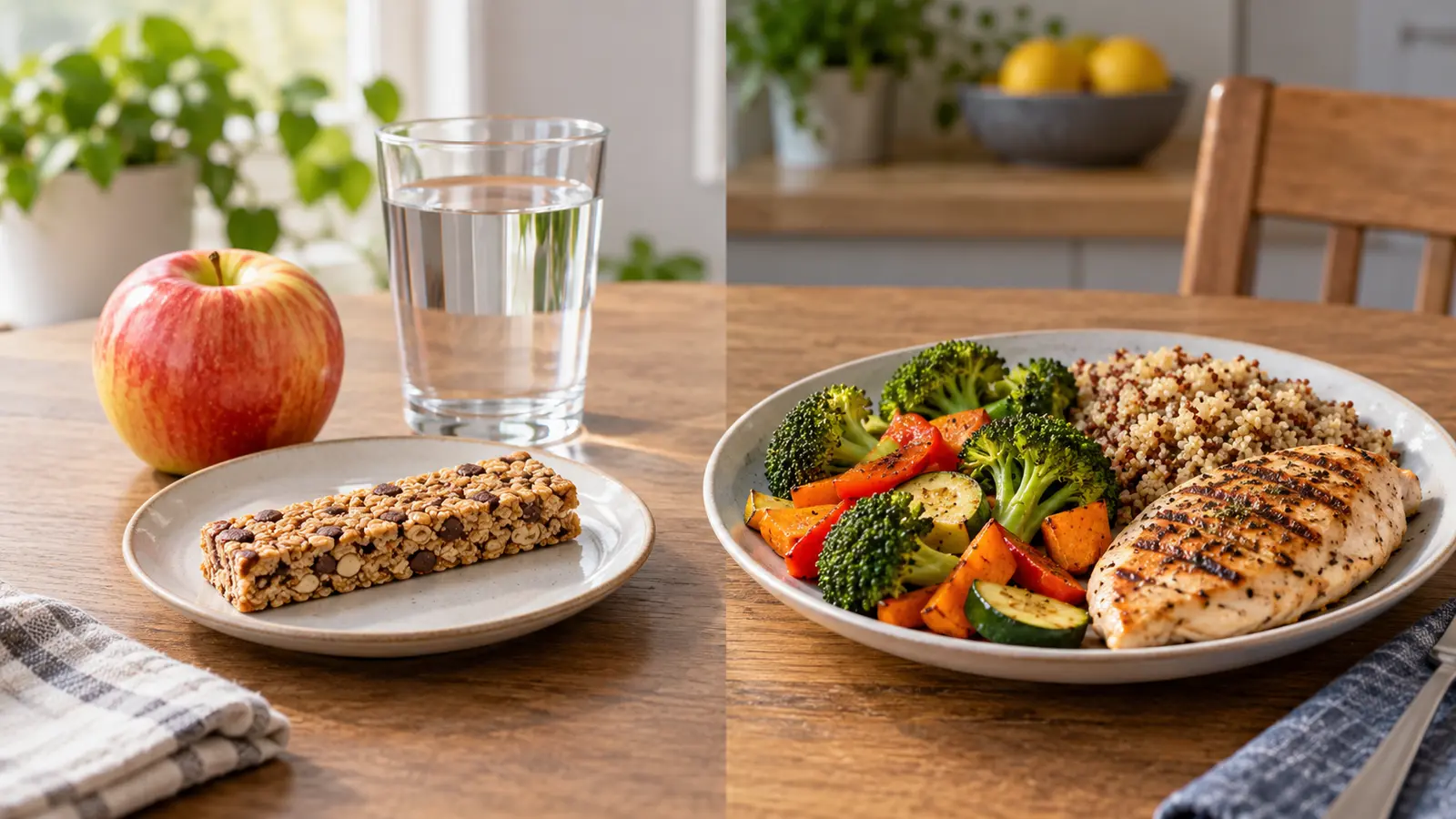
Snack, meal component or emergency ration?
Common marketing and tolerance traps
Front labels such as “keto,” “natural,” “low net carb” or “high protein” do not answer whether the product fits your goal. Compare products at the same serving size. A large bar may supply more protein partly because it supplies more of everything.
Inulin, chicory root fiber and sugar alcohols can cause gas, bloating or diarrhea in some people, especially in large doses. A long ingredient list is not automatically harmful, but proprietary or vague blends make the dose harder to interpret. People with food allergies must verify the allergen statement and shared-equipment warnings.
Compare the bar with its real alternative
For one week, use the bar only in the situation it is designed to solve. Record hunger before, satisfaction afterward and what happens at the next meal. Then compare it with a portable whole-food option such as yogurt and fruit, an egg and fruit, or hummus and vegetables at similar calories.
Keep the bar if convenience improves adherence without digestive problems or compensation. Drop it if it triggers more snacking, tastes like a compromise or costs more than a better alternative.
What to look for on the label
A useful snack bar for weight loss typically has around 150–250 calories, at least 10–20 g of protein, a few grams of fiber and limited added sugar. Many bars marketed for protein contain over 300 calories and as much added sugar as a candy bar. Sugar alcohols can lower the sugar count but may cause bloating in some people.
Whole-food alternatives
Greek yogurt, a boiled egg with fruit, cottage cheese, a small handful of nuts with an apple, or roasted chickpeas can provide similar protein with more nutrients and fullness. Bars are most useful as a convenient backup rather than a daily staple.
Where a supplement fits
A protein bar is a food choice; a fat burner is not a substitute for checking total calories.
A protein bar and a stimulant supplement solve different problems; neither earns a place merely because its marketing mentions weight control. Fat Burn Active is optional and cannot repair an eating environment, replace sleep or treat emotional eating. Its current official page lists at least 120 mg caffeine per serving from caffeine anhydrous and guarana, additional unquantified caffeine from green-tea extract, and bitter-orange extract standardized to 6 mg synephrine. Feeling more alert or less hungry for a short time is not proof of meaningful fat loss.
Treat Fat Burn Active as an optional addition, not a substitute for the steps in this guide. Review its listed ingredients and limitations in our product analysis. If the evidence, warnings, and cost fit your decision, check the current price and formula on the official site. We may earn a commission.
Frequently asked questions
Are protein bars good for weight loss?
They can be if they replace a less filling snack and fit your calories.
How much sugar is too much?
Look for bars with less than about 5–8 g of added sugar.
Can a protein bar replace a meal?
Occasionally, but most bars lack the volume and nutrients of a meal.
Sources
- FDA: How to understand Nutrition Facts
- FDA: Added sugars on the label
- FDA: Food allergies
- NIDDK: Weight-management treatment
Sources reviewed September 13, 2026. This article is general educational information, not medical advice, diagnosis, or treatment.