Replacement and add-on are different strategies
Check the intended serving, calories, protein, fiber, added sugars, fats, micronutrients, allergens, and preparation instructions. “Protein shake” can mean protein powder with water; that is not necessarily sufficient as a meal. Conversely, a complete replacement may still be unsuitable for a person’s medical, cultural, or practical needs.
Structure is the plausible advantage
A planned replacement reduces decisions and makes one eating occasion predictable. That may help people facing rushed mornings, travel, limited food access, or portions that are hard to estimate. The advantage disappears when the drink fails to satisfy, displaces varied foods indefinitely, or is added rather than substituted.
Fat burners may create a sense of action without changing the meal environment. If caffeine suppresses breakfast appetite but increases evening hunger after poor sleep, the net result can be unhelpful. Evaluate the whole day and week.

Worked example: the rushed lunch
A worker buys lunch reactively and wants a fat burner to offset it. A two-week test uses a nutritionally appropriate shake on genuinely rushed days, plus fruit or vegetables when needed. Calories, hunger, afternoon energy, dinner intake, digestion, and adherence are recorded.
The shake is useful only if it improves the complete pattern. If it leaves the person hungry and triggers grazing, a prepared whole-food lunch may work better. A stimulant added to the same chaotic lunch does not provide meal structure.
Put the trade-offs on one page
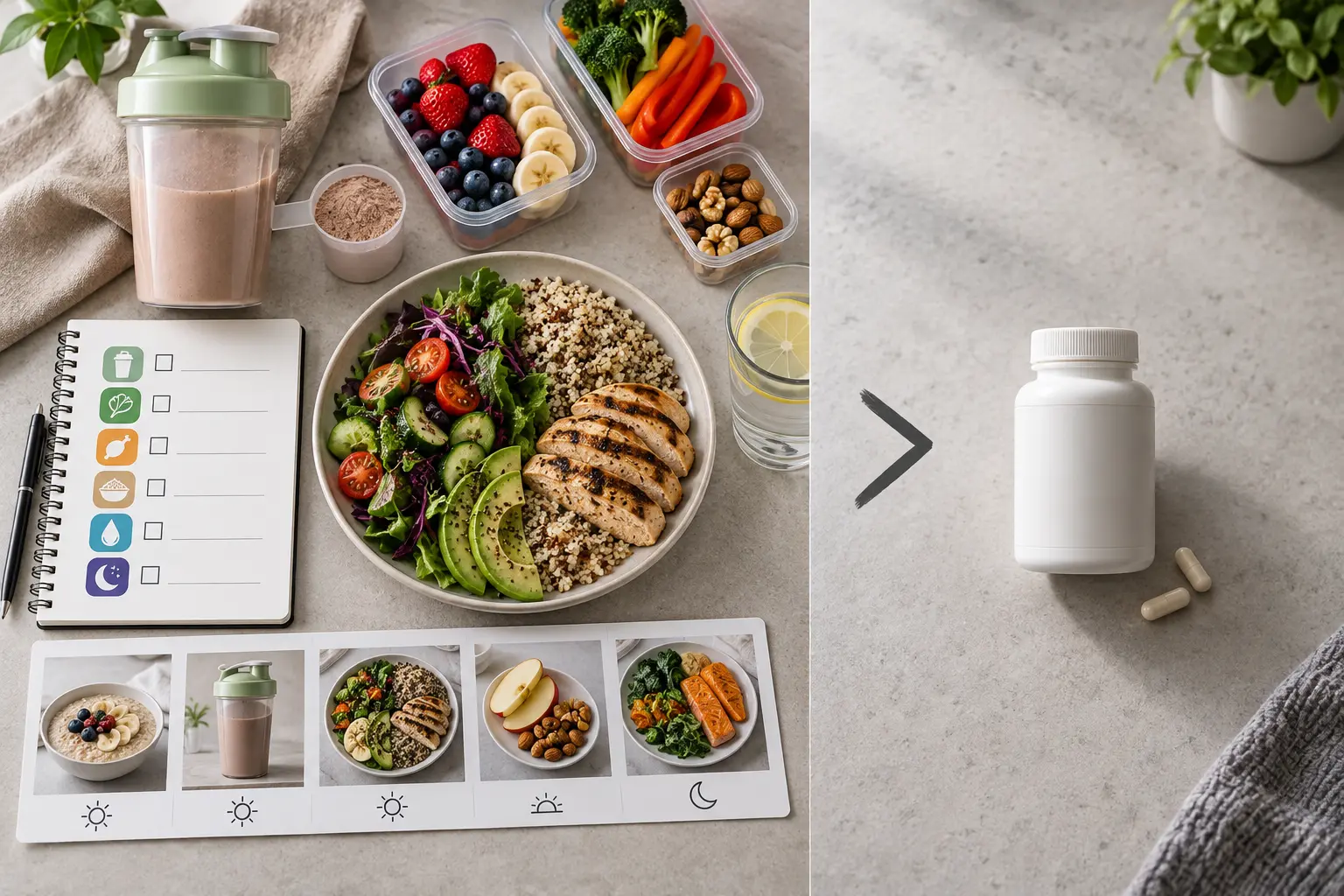
Where Fat Burn Active fits
Fat Burn Active does not replace a meal and should not be counted as nutrition. If predictable intake is the problem, a food plan or suitable meal replacement addresses that job more directly.
Fat Burn Active remains an optional stimulant-containing supplement, not a substitute for adequate nutrition, an effective training plan, or medical care. Its public information does not establish that the finished formula produces clinically meaningful fat loss. Read our independent Fat Burn Active review for the label, evidence, dose, and safety limitations.
The official Fat Burn Active page lists a multi-ingredient thermogenic formula, but the buying decision should follow the evidence check above. Compare our independent review, then, if the product remains a reasonable fit, check the current price and label on the official site. We may receive a commission at no additional cost.
Safety and suitability
Nutritionally complete meal-replacement shakes are generally safe for most adults when used as directed, but people with diabetes using insulin or sulfonylureas may need medicine adjustments because calorie and carbohydrate intake falls. Very low-calorie programs built on shakes should be medically supervised. Stimulant fat burners carry cardiovascular and sleep risks that shakes do not.
Frequently asked questions
Is a protein shake a meal replacement?
Not automatically. A meal replacement should provide enough energy and a broader nutrient profile for the meal it replaces.
Can a meal replacement cause weight loss?
It may help create structured lower intake, but the full-day pattern and adherence determine the result.
Can I take a fat burner instead of eating?
No. A stimulant or thermogenic product does not supply the nutrition of a meal.
Are liquid meals less filling?
Responses vary. Track hunger and later intake rather than assuming the label predicts satiety.
Sources
- NIH ODS: Dietary Supplements for Weight Loss
- NIDDK: Choosing a Safe and Successful Weight-loss Program
- Meal replacements and weight loss meta-analysis
- FDA: How to Understand and Use the Nutrition Facts Label
- Dietary Guidelines for Americans
Sources reviewed September 16, 2026. This article is general educational information, not medical advice, diagnosis, or treatment.