The cheap package can create an expensive week
A low sticker price is not automatically good value. Food may be wasted, provide few servings, require missing ingredients, or leave you hungry enough to buy extras. Conversely, a slightly higher-priced item that supplies several protein-rich meals may lower the cost per useful serving.
Budget plans also fail when they assume unlimited cooking time, freezer space, transport, or bulk cash. The goal is not the theoretical cheapest diet; it is the lowest-cost system you can store, prepare, enjoy, and repeat.
Use the pantry-first budget audit
- Write the exact weekly amount available for food.
- Inventory refrigerator, freezer, and cupboards before shopping.
- Mark foods that must be used in the next three days.
- Choose three proteins, two starches, and four produce options that overlap across meals.
- Reserve money for one fast backup and one enjoyable extra.
- Make the list in quantities, not vague categories.
This turns forgotten food into part of the budget and limits purchases that have no assigned meal.
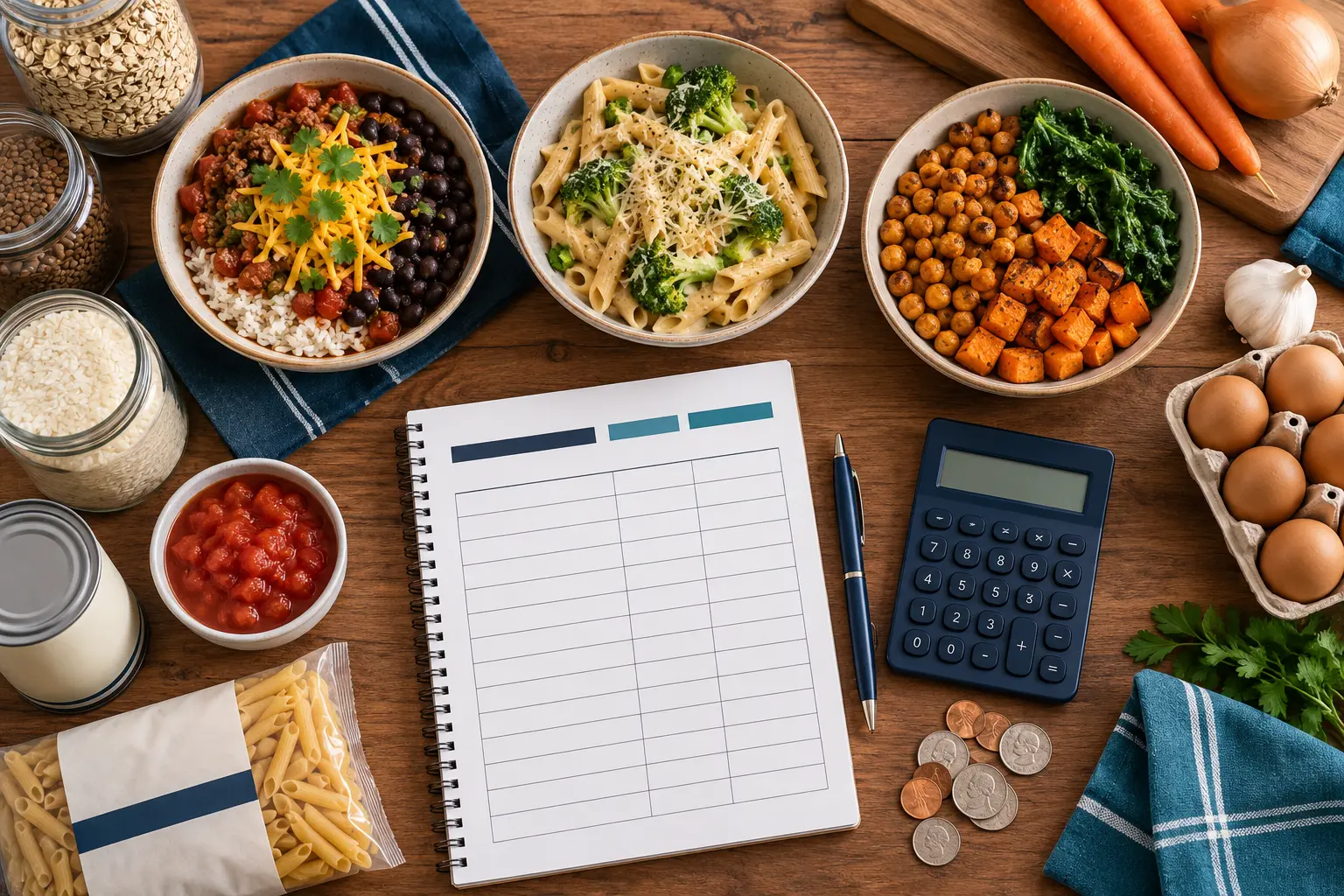
Use the budget protein food comparison to choose useful servings rather than chasing a package price alone.
Compare foods by job and unit price
Store brands and frozen produce can offer comparable function for less. Check sodium, added sugar, and the complete label when those matter medically.
Create a three-base meal rotation
Base one is oats: breakfast with milk or yogurt and fruit, or savory oats with egg. Base two is a bean-and-tomato mixture: use it for chili, rice bowls, soup, or baked potatoes. Base three is a tray or pan meal: combine potatoes or rice, frozen vegetables, and eggs, tofu, chicken, or canned fish.
Change spices and formats rather than buying a new ingredient list for every recipe. Freeze portions promptly, label dates, and schedule leftover lunches. Waste reduction is a nutrition strategy because food that reaches the bin provides no satiety or nutrients.
Example: redesigning an expensive healthy basket
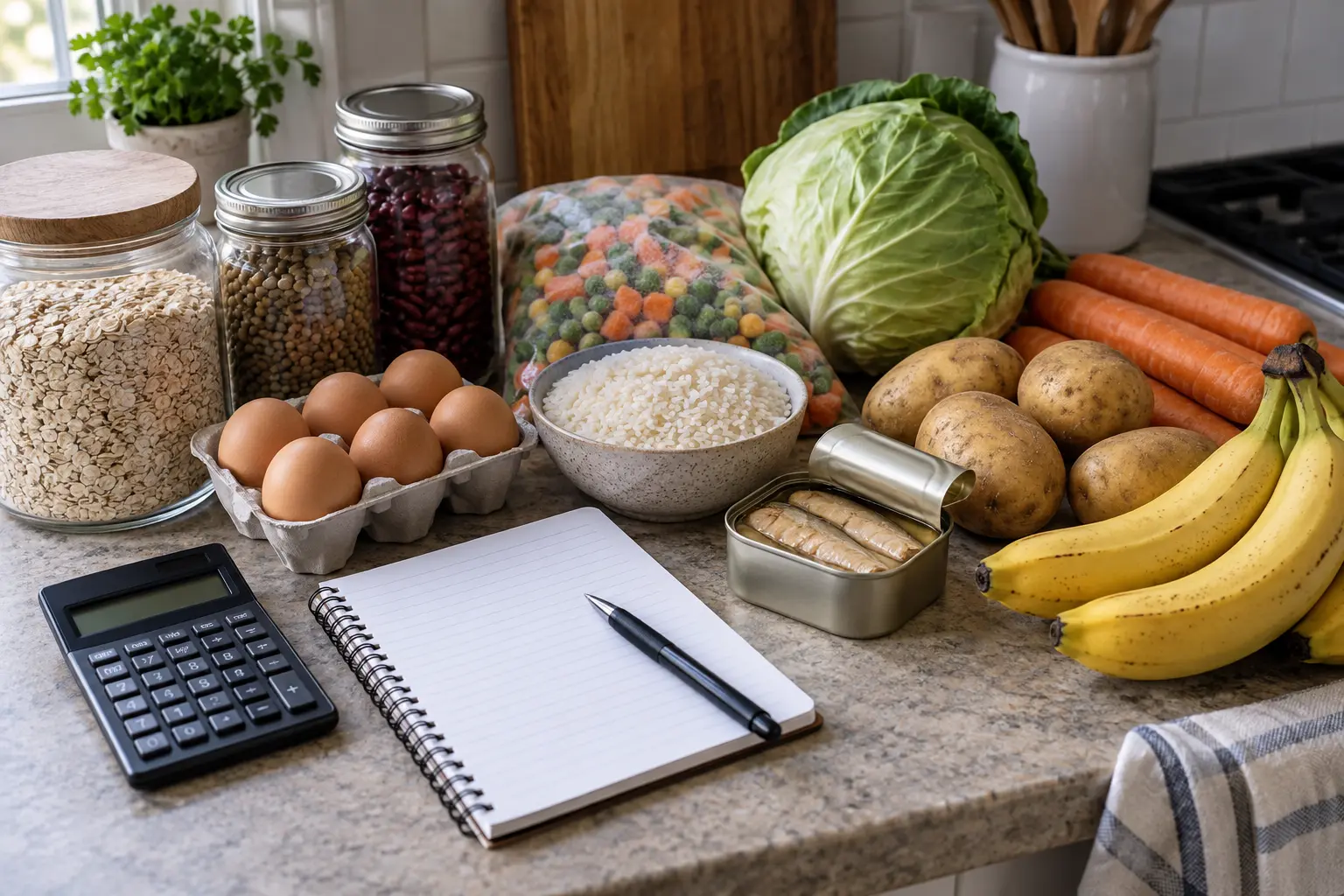
Leo's basket contains protein bars, fresh berries, individual salads, premium chicken breasts, and diet drinks. They appear weight-loss friendly but consume the budget by midweek. He replaces them with oats, bananas, plain yogurt, frozen berries, cabbage, carrots, lentils, eggs, store-brand chicken thighs, rice, and canned tomatoes.
He keeps one convenience item for late shifts and one preferred snack. The plan becomes cheaper because ingredients repeat across meals and fewer perishables are discarded—not because every meal is the absolute lowest-calorie option.
Protect nutrition while reducing cost
Do not let the budget become an excuse for an extremely low-calorie menu. Include protein across meals, varied produce as access allows, and sources of dietary fat. Rinse canned beans or vegetables when reducing sodium is appropriate. Food assistance, community meals, benefits, and local services are legitimate parts of a food plan, not failures.
Review receipts after two weeks. Calculate spending on planned meals, unplanned food, drinks, and waste. Keep substitutions that reduce cost without increasing hunger or preparation burden. If a medical diet is required, ask a dietitian or relevant service for affordable substitutions rather than eliminating whole food groups.
Make the system work on an imperfect week
Calculate the edible unit price when packages differ. Divide cost by usable ounces, servings, or protein-containing portions after accounting for bones, skins, or likely waste. A bulk package is a saving only when cash flow, transport, storage, and consumption make it usable. Share or freeze bulk purchases when safe instead of buying more than the household can protect.
Build a price book for fifteen staples. Record store, package size, unit price, and date. After several trips, a real sale becomes easier to distinguish from promotional signage. Compare store brands, but keep taste in the equation: food nobody eats is expensive. Coupons should serve the list rather than pull the plan toward products that were never needed.
Use a weekly rescue sequence before ordering food: first check scheduled leftovers, then assemble eggs or beans with frozen vegetables and a starch, then use the planned convenience meal. This is not a ban on takeout. It prevents exhaustion from making the most expensive option automatic. If takeout is valued, budget and plan it explicitly.
Track cost per satisfying meal, not cost per calorie alone. Oils, sweets, and refined snacks can provide cheap energy but limited meal volume or protein; premium diet foods may provide very expensive branding. Combine affordable staples so meals contain protein, fiber-rich carbohydrates, produce, and enough flavor. The cheapest sustainable basket is the one that meets nutrition needs, limits waste, and reduces unplanned purchases.
Sources
- Nutrition.gov: Nutrition on a Budget
- USDA: Healthy Eating on a Budget
- CDC: Six Tips for Eating Healthy on a Budget
- Harvard Nutrition Source: Strategies for Eating Well on a Budget
Sources reviewed September 14, 2026. This article is general educational information, not medical advice, diagnosis, or treatment.