Use a four-factor satiety screen
No score guarantees fullness. Sleep, stress, meal timing and the size of the deficit can outweigh food choice.
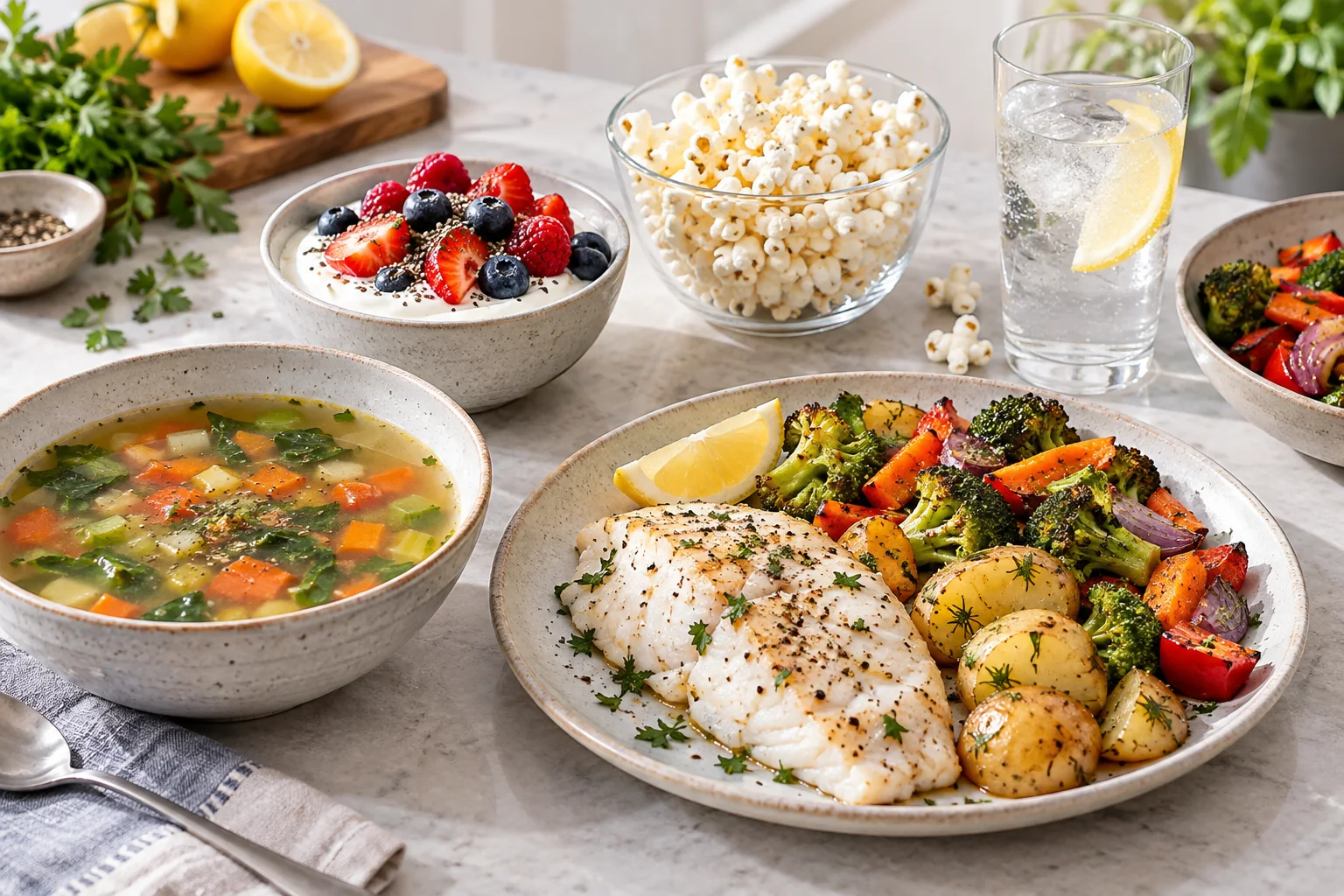
Filling options by eating occasion
Meals: broth-based vegetable and bean soup, white fish with potatoes and vegetables, eggs with whole-grain toast and fruit, or a tofu-bean bowl. Breakfast: Greek yogurt with berries and oats, eggs with vegetables, or oatmeal strengthened with a protein source. Snacks: fruit with yogurt, vegetables with hummus, cottage cheese with tomatoes, or a measured portion of popcorn beside protein.
Preparation matters. Frying, heavy sauces and large oil additions can raise energy density quickly. That does not make them forbidden; it means they should be visible in the plan.
Three low-calorie traps
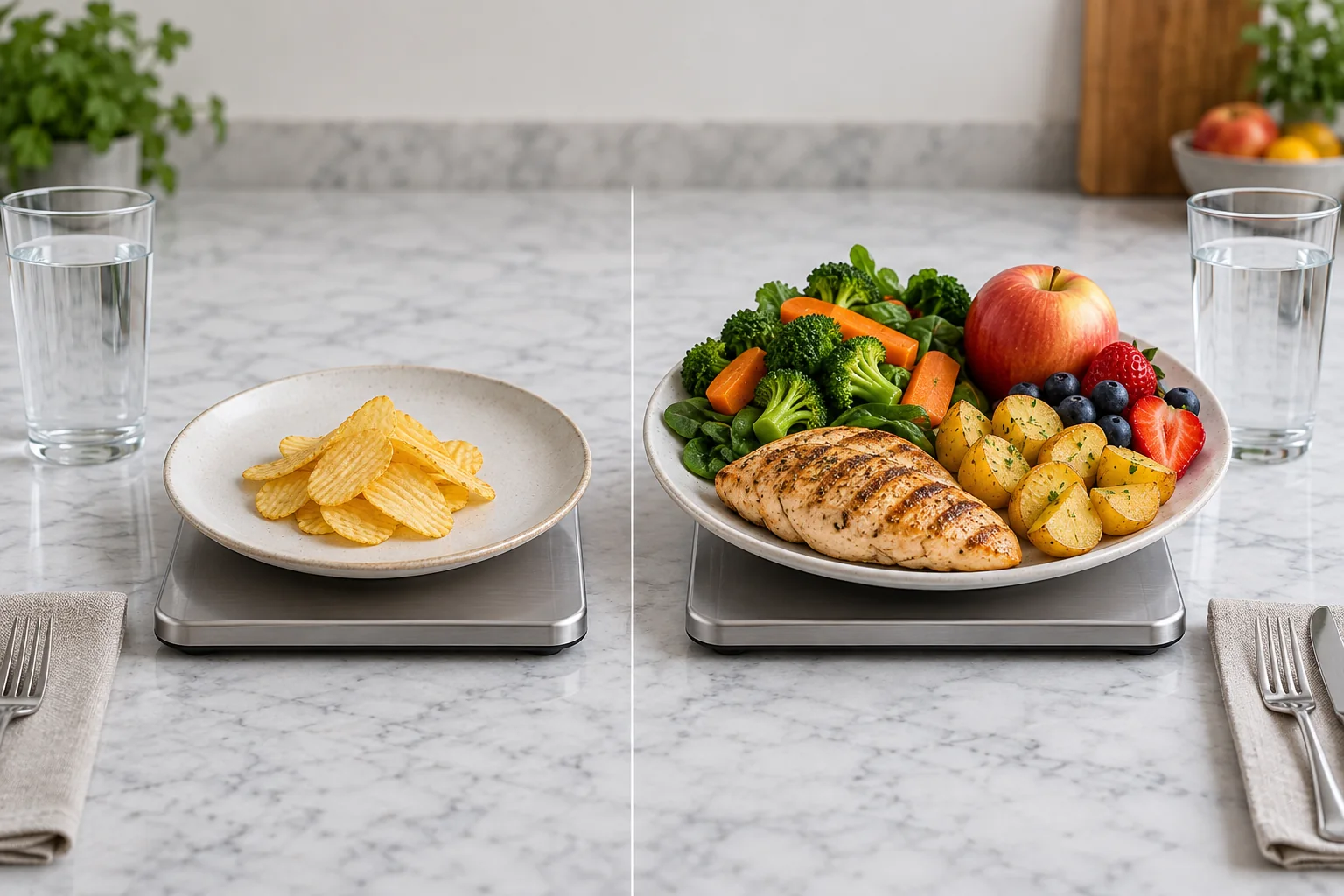
- Too small: the snack delays hunger for twenty minutes but does not solve it.
- Protein-free: vegetables alone become a substitute for a needed meal.
- Diet-product rebound: an unsatisfying substitute leads to both the substitute and the original food.
The correction may be to spend more calories on a complete meal. Sustainable fat loss is not a contest to eat the lowest possible number at every occasion.
Test foods in the setting that matters
Choose one recurring problem—late-afternoon hunger, post-dinner grazing or a weak breakfast. Try one structured option for five to seven comparable days. Record how long it lasts, whether you enjoy it, and what you eat afterward. A food that is filling in a laboratory but inconvenient at work is not your best solution.
Keep the smallest combination that reliably bridges to the next planned meal. If extreme hunger continues, review the overall calorie target, sleep, medications and medical symptoms rather than stacking more “free foods.”
Volume eating in practice
Fill half the plate with vegetables, start meals with a soup or salad, and bulk out dishes such as pasta and curry with extra vegetables. This keeps portion sizes satisfying while lowering calories per bite.
Where a supplement fits
Filling, low-calorie foods help control hunger in a way no fat burner can.
A stimulant cannot turn an incomplete snack into a satisfying meal or justify an excessively low calorie target. Fat Burn Active is optional and cannot repair an eating environment, replace sleep or treat emotional eating. Its current official page lists at least 120 mg caffeine per serving from caffeine anhydrous and guarana, additional unquantified caffeine from green-tea extract, and bitter-orange extract standardized to 6 mg synephrine. Feeling more alert or less hungry for a short time is not proof of meaningful fat loss.
A supplement is not required to benefit from this guide. If your foundations are already in place, use the independent Fat Burn Active review to judge whether the formula has a useful optional role. If it fits your expectations and stimulant tolerance, check the current price on the official site. We may receive a commission.
Frequently asked questions
What is the most filling food?
Boiled potatoes, eggs, oats, legumes and broth-based soups rank highly in satiety studies.
Are diet snacks filling?
Often not. Many are low in calories but also low in protein and fiber.
Can I eat as much vegetables as I want?
Non-starchy vegetables are very low in calories; watch added oils and dressings.
Sources
- Dietary energy density and behavior
- Portion size and energy density review
- Dietary protein and appetite
- NIDDK: Weight-management treatment
Sources reviewed September 13, 2026. This article is general educational information, not medical advice, diagnosis, or treatment.