The most useful fiber-food groups
Why fiber is helpful—but not magic
Different fibers vary in viscosity, fermentability and water-holding capacity, so appetite findings are inconsistent. A systematic review found that many tested fibers did not reliably reduce appetite or food intake in acute studies. This is a reason for precision, not dismissal.
Foods such as beans, oats, fruit and vegetables can improve diet quality and displace less satisfying choices even when a single hunger rating does not change. Long-term weight outcomes still depend on total intake, adherence and the wider eating pattern.
Add fiber without creating a digestive revolt
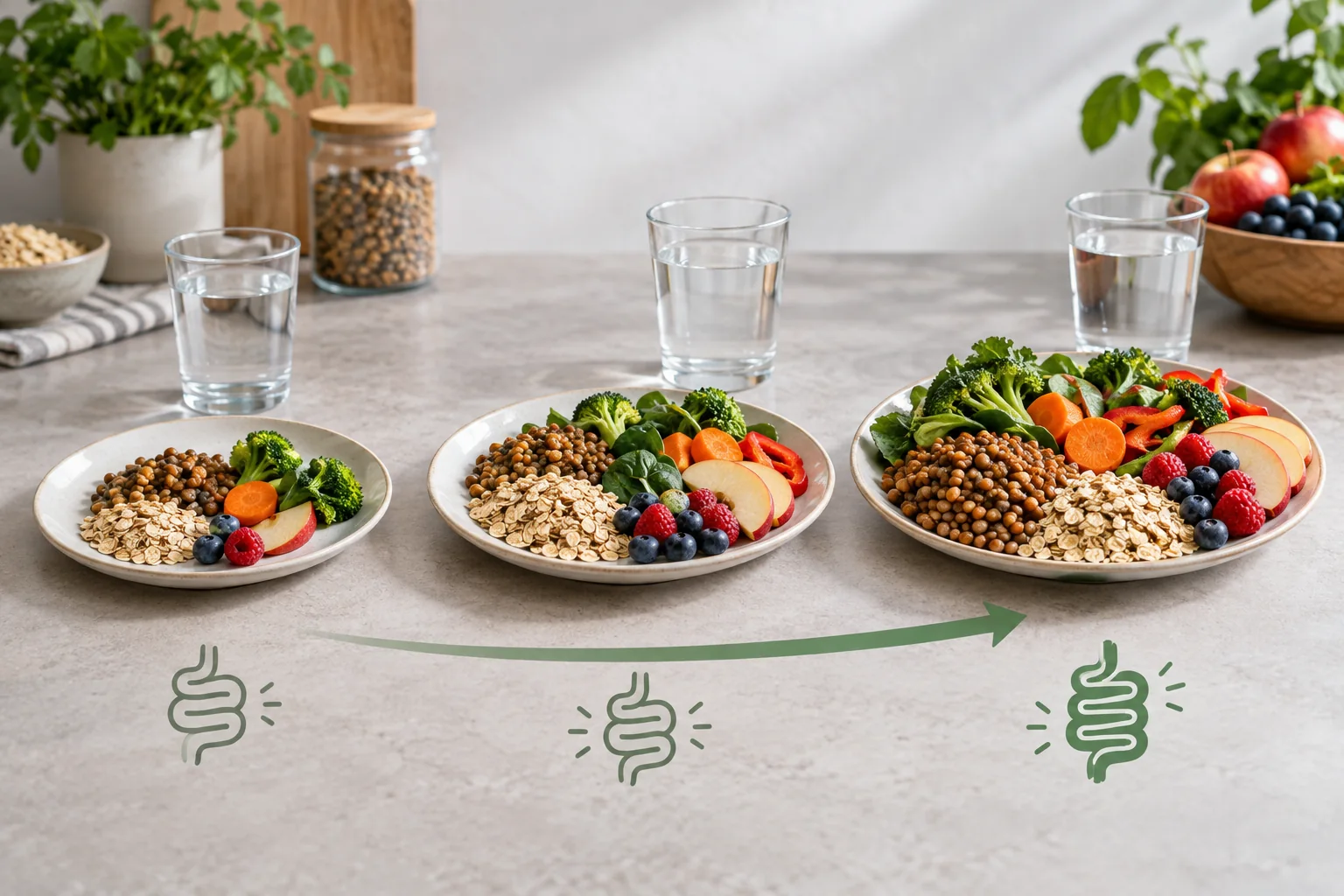
- Estimate your current pattern before setting a target.
- Add one serving every few days rather than changing every meal.
- Cook legumes or vegetables more thoroughly if that improves tolerance.
- Spread fiber across the day and include appropriate fluid.
- Keep protein and adequate energy in the meal.
- Reduce the dose if pain, severe bloating or bowel disruption persists.
People with inflammatory bowel disease, strictures, gastroparesis, pelvic-floor problems or clinician-directed restrictions need tailored advice.
Use function-matched fiber swaps
Add lentils to a soup, replace part of refined cereal with oats, choose whole fruit for a routine snack, or mix beans into a grain bowl. These changes preserve the role of the original food. Replacing every familiar item at once creates unnecessary friction.
Compare labels by serving size, not front-of-pack claims. A food marketed as “high fiber” can still be easy to overeat, and a naturally fiber-rich food may not advertise itself. Supplements can help selected needs but do not reproduce the full food matrix.
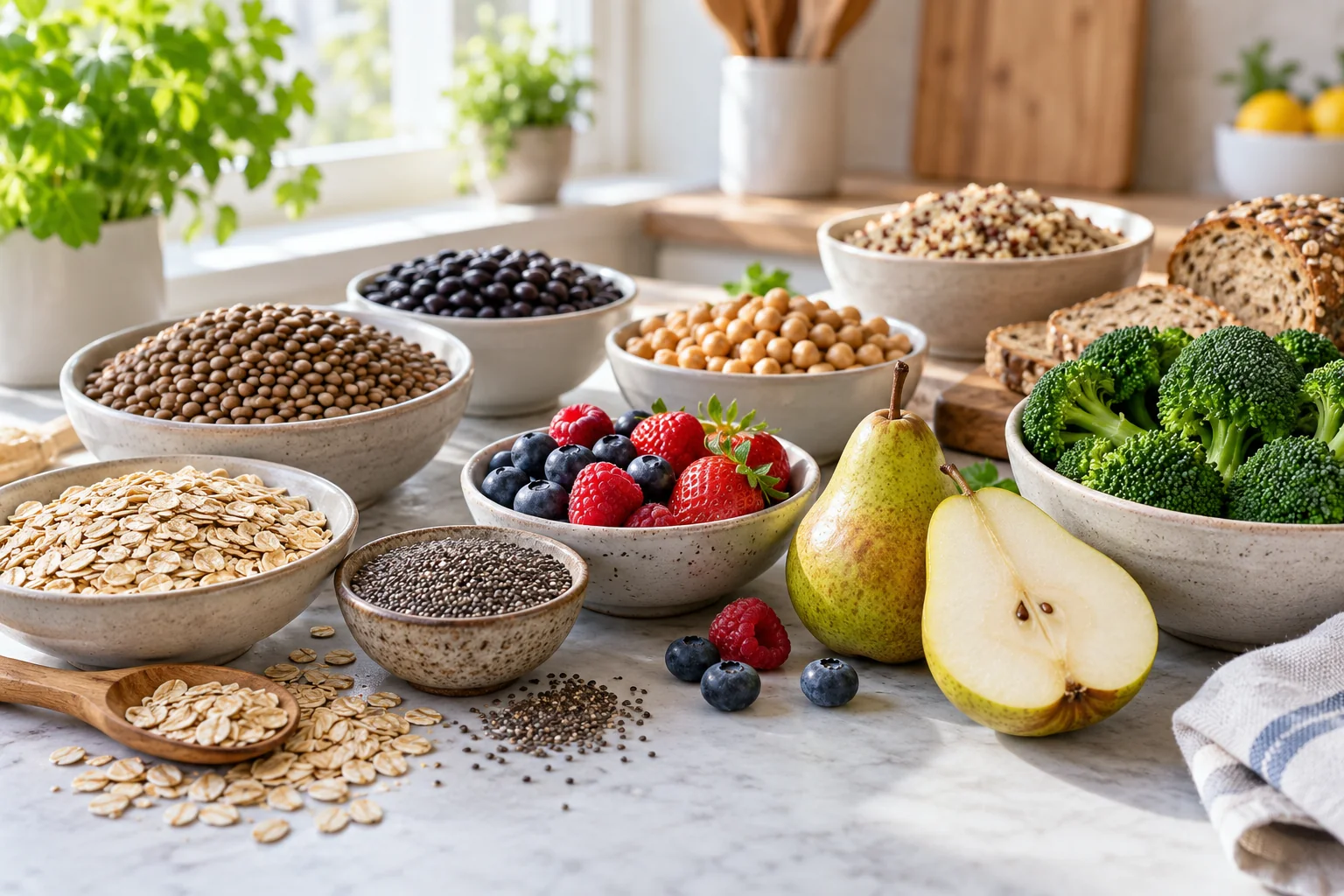
High-fiber foods with fiber per serving
- Lentils, cooked (1 cup): about 15 g.
- Black beans, cooked (1 cup): about 15 g.
- Raspberries (1 cup): about 8 g.
- Pear, medium with skin: about 5–6 g.
- Oats, cooked (1 cup): about 4 g.
- Broccoli, cooked (1 cup): about 5 g.
- Chia seeds (1 tablespoon): about 4 g.
Putting them into meals
Add beans to soups, salads and chili, stir berries into yogurt or oats, choose barley or whole-wheat pasta, and fill half your plate with vegetables. These foods add bulk and fullness for relatively few calories.
Where a supplement fits
Fiber-rich food builds fullness; a fat burner does not. Increase fiber gradually to avoid bloating.
A capsule cannot replace the food volume, bowel regularity and nutrient contribution of a tolerable fiber-rich pattern. Fat Burn Active is optional and cannot repair an eating environment, replace sleep or treat emotional eating. Its current official page lists at least 120 mg caffeine per serving from caffeine anhydrous and guarana, additional unquantified caffeine from green-tea extract, and bitter-orange extract standardized to 6 mg synephrine. Feeling more alert or less hungry for a short time is not proof of meaningful fat loss.
A supplement is not required to benefit from this guide. If your foundations are already in place, use the independent Fat Burn Active review to judge whether the formula has a useful optional role. If it fits your expectations and stimulant tolerance, check the current price on the official site. We may receive a commission.
Frequently asked questions
How much fiber do I need?
Roughly 25–34 g a day for most adults, depending on age and sex.
Are fiber supplements as good as food?
Food also provides nutrients and volume; supplements can fill a gap.
Why do I feel bloated?
Fiber increased too quickly. Slow down and drink enough fluid.
Sources
- Fiber and satiety systematic review
- Dietary fiber and body-weight regulation
- USDA MyPlate: Fruits and vegetables
- NIDDK: Weight-management treatment
Sources reviewed September 13, 2026. This article is general educational information, not medical advice, diagnosis, or treatment.