
Compare the jobs, not just the grams
When a supplement may be reasonable
A supplement may be considered when a person cannot reliably close a documented gap with food, needs a predictable product for bowel management under professional guidance, or values convenience enough to use it consistently.
Food deserves priority when the real gap is meal volume, diet variety, protein, micronutrients, or a regular eating structure.
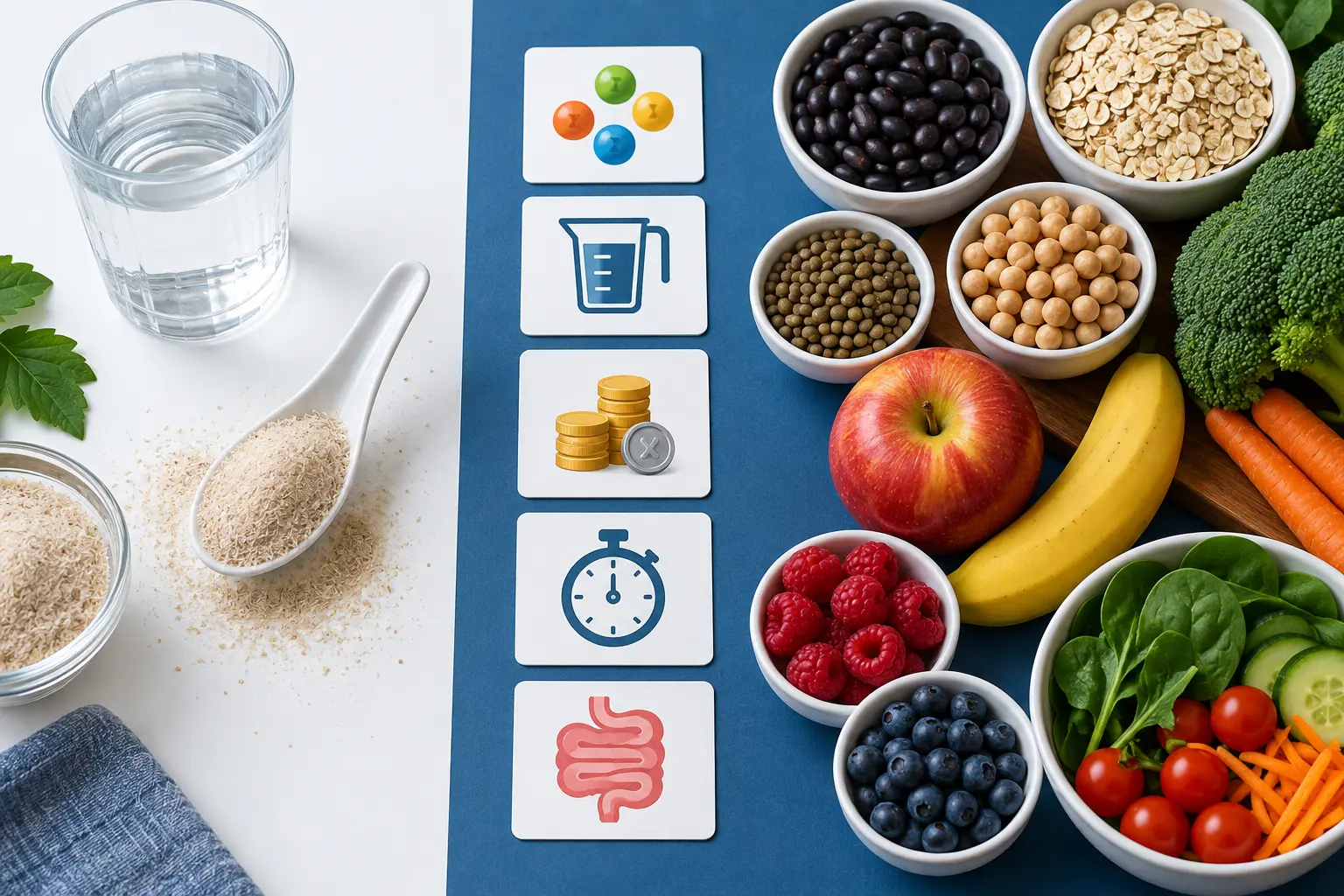
Example: convenience without replacement
Maya adds fiber gummies to a low-fiber breakfast but remains hungry because the meal is still small and low in protein. She changes breakfast to oats, berries, and yogurt, then keeps a modest supplement only on travel days after checking the label. The food change solves the meal problem; the product solves a convenience problem.
Finding your real fiber gap
Most adults fall well short of the roughly 25–34 g of fiber a day suggested for their age and sex. Before buying a supplement, count a normal day: a slice of whole-grain bread has about 2–3 g, a cup of cooked beans or lentils around 13–15 g, a medium apple about 4 g and a cup of oats about 4 g. Many people find that two or three food swaps close most of the gap.
Common supplement types compared
- Psyllium: soluble, gel-forming, well studied for bowel regularity and cholesterol; must be taken with plenty of water.
- Methylcellulose: non-fermenting, so it usually causes less gas.
- Inulin and other prebiotic fibers: feed gut bacteria but often cause bloating at higher doses.
- Glucomannan: expands strongly in water; it has a choking risk if taken dry and should not be used in tablet form without enough fluid.
Gummies often contain little fiber per serving plus sugar or sugar alcohols.
Using both sensibly
A practical approach is food first, then a supplement for the remaining gap if needed. Take the supplement with a full glass of water, start with half the label dose and increase over one to two weeks. Keep it at least two hours apart from medicines, because fiber can slow their absorption.
Where a supplement fits
A fiber supplement and a stimulant fat burner work in completely different ways. Neither replaces the fullness and nutrients that come from high-fiber meals.
Once the practical steps in this guide are working, decide whether an optional supplement adds enough value. Start with the Fat Burn Active review; if the formula and limitations are acceptable, see the current price on the official site. We may receive a commission.
Frequently asked questions
Are fiber supplements as healthy as food?
They can provide a useful fiber, but they do not reproduce every nutrient and structural feature of whole foods.
Can I use both?
Sometimes, but total intake, water, symptoms, medicines, and the reason for supplementation should be reviewed.
Which fiber supplement is best?
There is no universal winner; choose only after defining the intended outcome and checking evidence and safety for the exact fiber.
Sources
- Dietary Guidelines for Americans
- FDA: Dietary Fiber on the Nutrition Facts Label
- National Academies: Dietary Reference Intakes
- USDA FoodData Central
- NIH ODS: Weight-Loss Supplements
- Dietary fiber and appetite review
Sources reviewed September 17, 2026. This article is general educational information, not medical advice, diagnosis, or treatment.