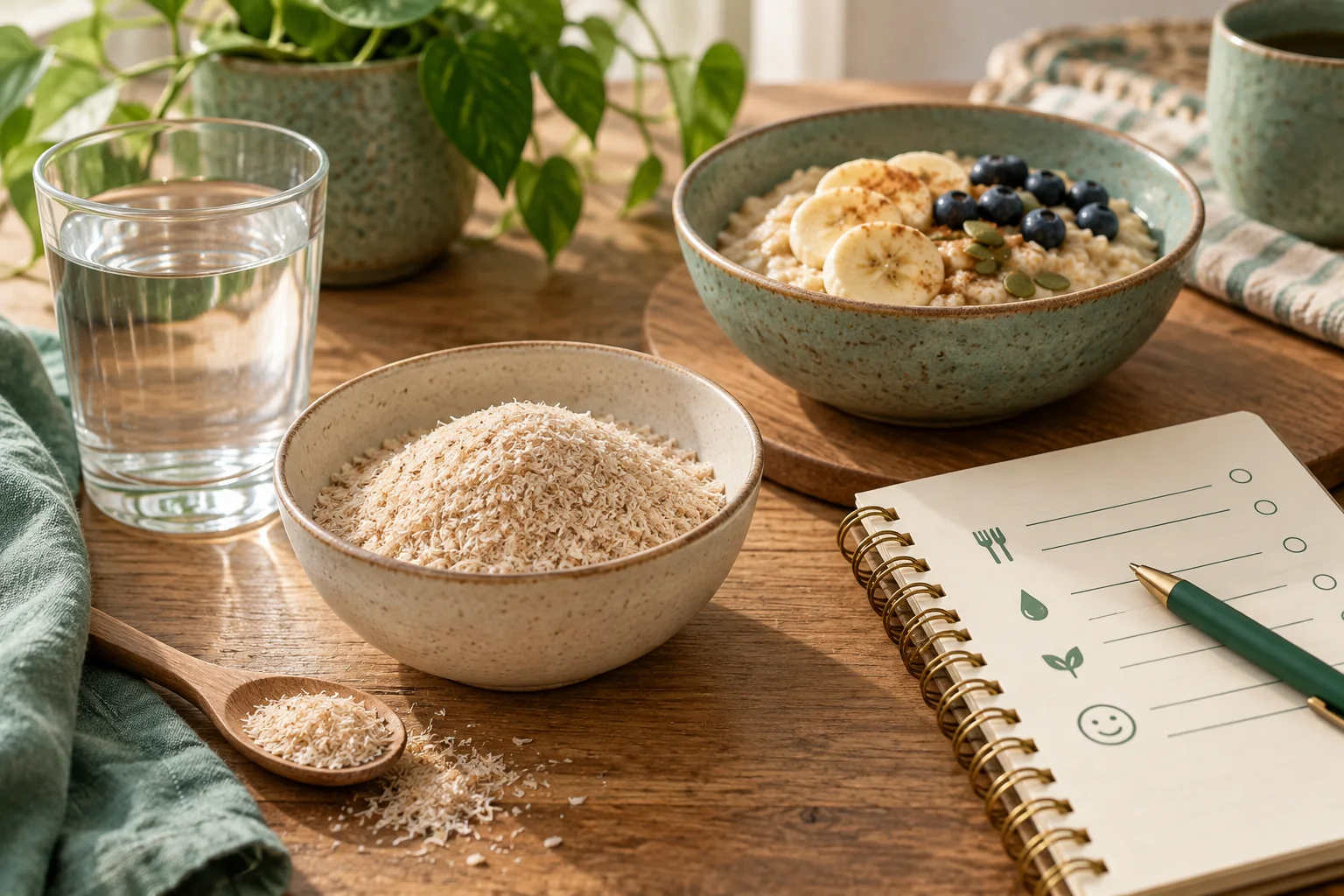
Why psyllium may change fullness
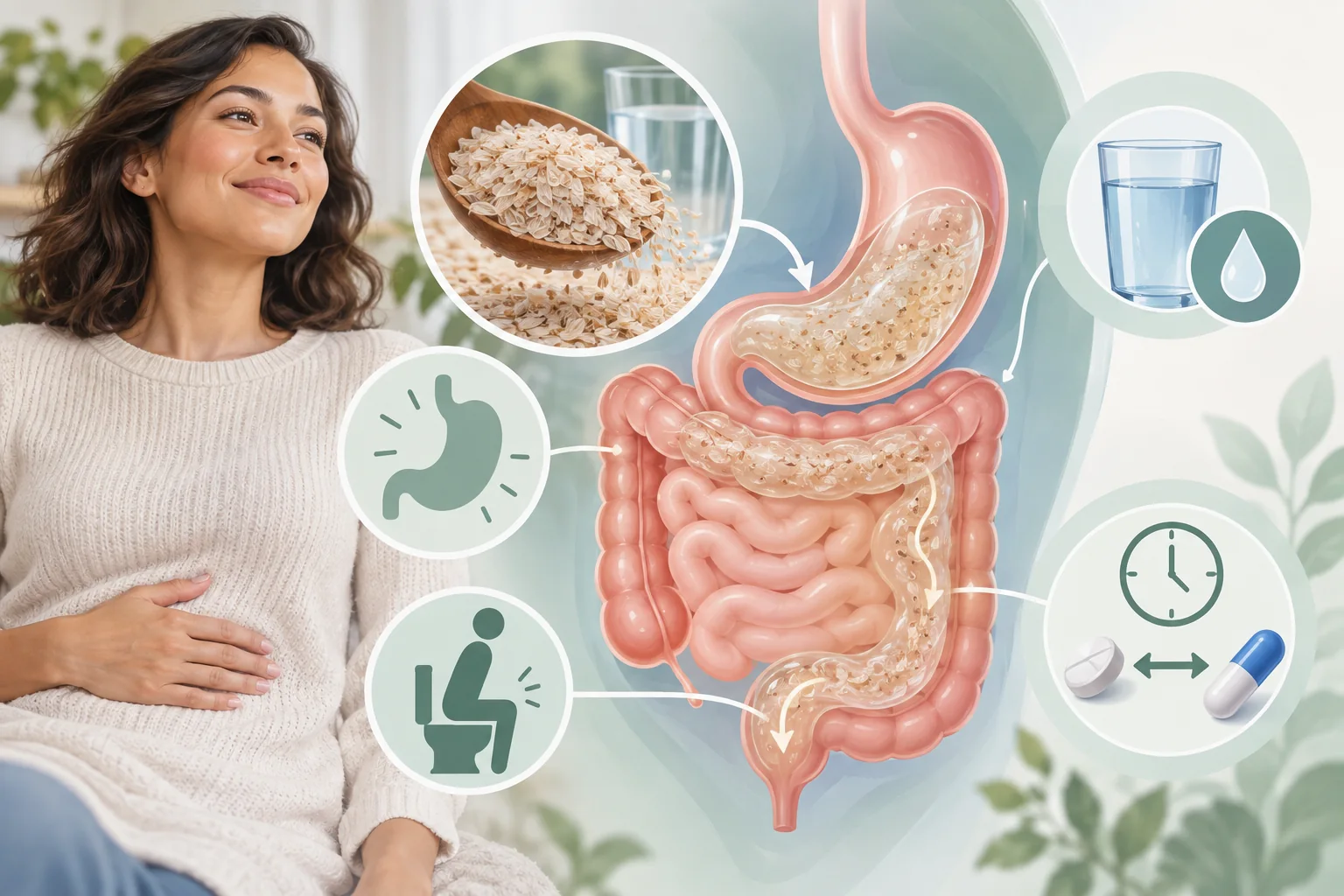
Psyllium husk absorbs water and forms a viscous gel. That gel can increase the physical volume and viscosity of stomach and intestinal contents, potentially slowing aspects of digestion and making a meal feel more substantial. The effect is not the same as blocking calories, melting fat, or permanently suppressing appetite.
Short-term appetite ratings can improve without producing a meaningful change in long-term energy intake. Conversely, a small daily difference may matter if it consistently prevents an unplanned snack. Evaluate behavior and trends, not whether the drink feels thick.
What the evidence can support
Trials and meta-analyses report mixed effects on body weight and related measures. Differences in baseline weight, diet, dose, duration, and whether psyllium was taken before meals make simple promises unreliable. Average effects, where present, are modest and do not establish that every commercial product or schedule works.
Psyllium has stronger recognition as a bulk-forming laxative, and evidence also supports LDL-cholesterol lowering when sufficient soluble fiber is consumed in an appropriate diet. Those outcomes should not be repackaged as proof of large appetite or fat-loss effects.
A cautious two-week trial
Choose one repeated meal where hunger is a genuine problem. For three baseline days, record hunger before eating, fullness afterward, and whether you snack within three hours. Then use the lowest label-directed serving at a consistent time with the full stated fluid volume. Do not improvise a spoonful or combine powders.
Hold the amount for several days. Stop and seek advice for difficulty swallowing, chest pain, vomiting, severe abdominal pain, or failure to pass stool or gas. If mild gas or bloating increases, step back rather than forcing adaptation. At two weeks, keep the practice only if the benefit justifies the burden.
Fluid, medicines, and obstruction risk
Psyllium expands. Inadequate liquid or swallowing difficulty can create choking or obstruction risk. Follow the exact product directions because formulations and serving tools differ. Do not lie down immediately after taking it, and do not use it to self-treat unexplained or severe gastrointestinal symptoms.
Fiber products can alter the absorption or timing of some medicines. A universal two-hour rule is not sufficient for every drug; ask a pharmacist about the exact prescription, over-the-counter medicine, and supplement schedule. Diabetes treatment may also require monitoring when diet and glucose response change.
Food-first alternatives
Oats, barley, beans, lentils, fruit, vegetables, chia, and other foods can increase fiber while contributing nutrients and meal structure. Psyllium can be useful when convenience or a specific bowel goal matters, but it should not crowd protein, produce, or sufficient energy out of the day.
If breakfast hunger is the issue, compare a protein-and-oat meal with a lower-protein meal before assuming a fiber powder is necessary. The meal matrix often matters more than one ingredient.
One more decision check
Do not use psyllium to delay eating when genuine hunger reflects an undersized meal. First check protein, total energy, and meal spacing.
Doses used in studies
Studies on fullness and cholesterol often used around 5–10 g of psyllium husk taken with meals, usually split into two or three doses. Start with a lower dose and increase over a week or two.
Who should be careful
People with swallowing difficulties, bowel narrowing or obstruction, or those on fluid restrictions should talk to a doctor first. Take psyllium at least two hours apart from medicines.
Where a supplement fits
Psyllium and stimulant fat burners act differently. Introduce one at a time if you use both.
If psyllium is being considered, check the product directions, fluid instructions, medication timing, and personal tolerance. Increase only according to the label or a clinician's guidance. A fiber supplement addresses a different question from a stimulant fat burner; compare them only after deciding what problem you are actually trying to solve.
Frequently asked questions
Does psyllium help weight loss?
It may increase fullness modestly; effects on weight are small.
How much water do I need?
At least a full glass with each dose.
Can it interact with medicines?
Yes, it can slow absorption; take medicines two hours apart.
Sources
- MedlinePlus: Psyllium
- FDA Health Claim for Soluble Fiber
- Dietary Fiber and Satiety Review
- NIDDK: Constipation Nutrition
Sources reviewed September 15, 2026. This article is general educational information, not medical advice, diagnosis, or treatment.