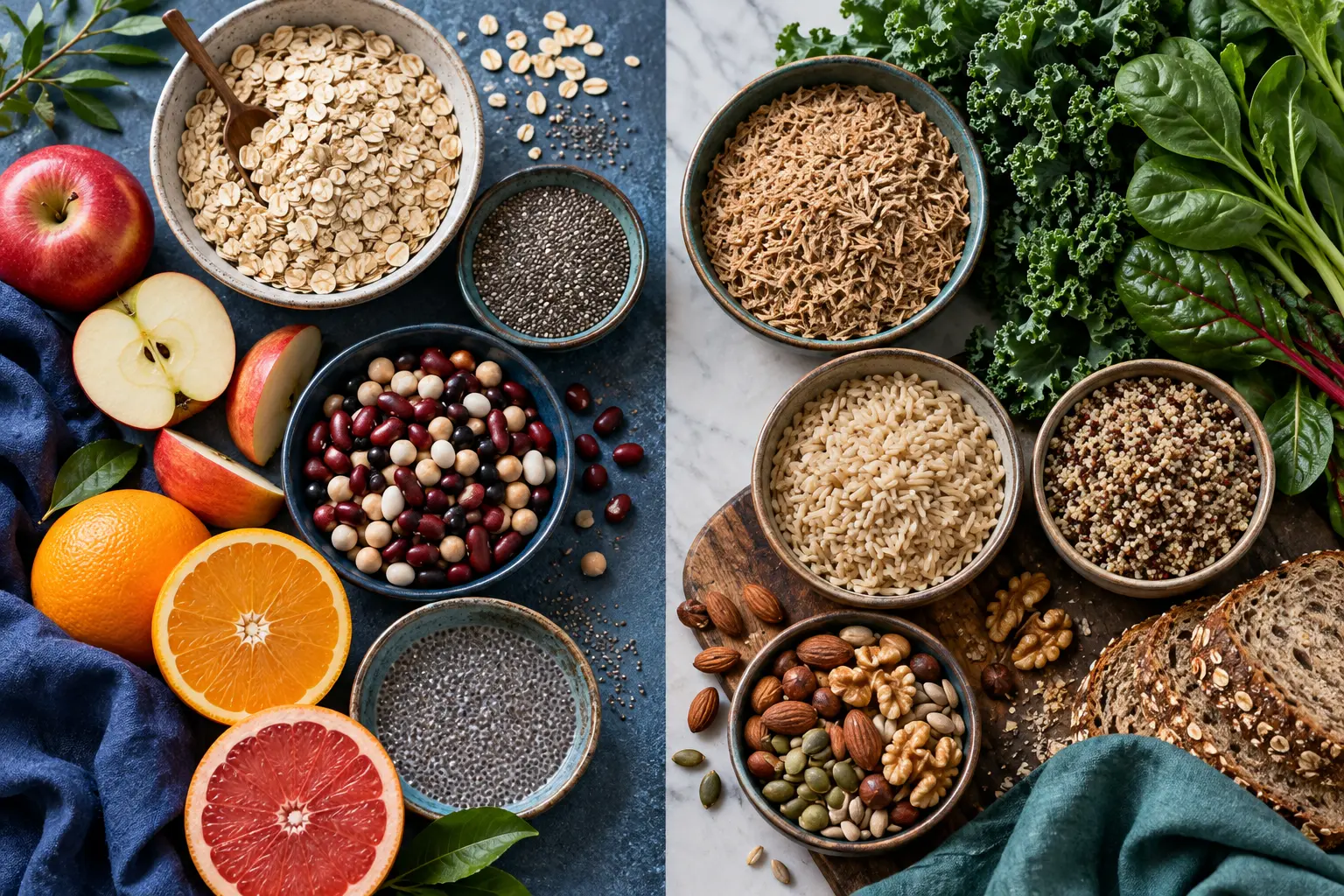
Soluble and insoluble are useful—but incomplete—labels
Soluble fiber disperses in water. Some soluble fibers form viscous gels, while others are readily fermented by gut microbes but do not become very viscous. Insoluble fiber does not dissolve in the same way and can increase fecal bulk or speed transit.
Viscosity, fermentability, particle size, dose, food matrix, and the person's gut matter. Psyllium is soluble and gel-forming but only partly fermented. Inulin is soluble and highly fermentable without the same thick gel. Wheat bran is largely insoluble.
How fiber can support weight management
Fiber-rich foods often require more chewing, occupy more volume, and deliver fewer calories per gram than many highly processed alternatives. Certain viscous fibers may slow gastric emptying or nutrient contact and increase short-term fullness. Fermentable fibers produce metabolites that may influence gut physiology, although a plausible mechanism does not guarantee meaningful weight loss.
Trials of added fiber show variable, usually modest outcomes. The benefit is most credible when fiber replaces a lower-satiety food or makes an energy-appropriate pattern easier to sustain. Adding fiber powder on top of an unchanged high-energy diet is a different intervention.
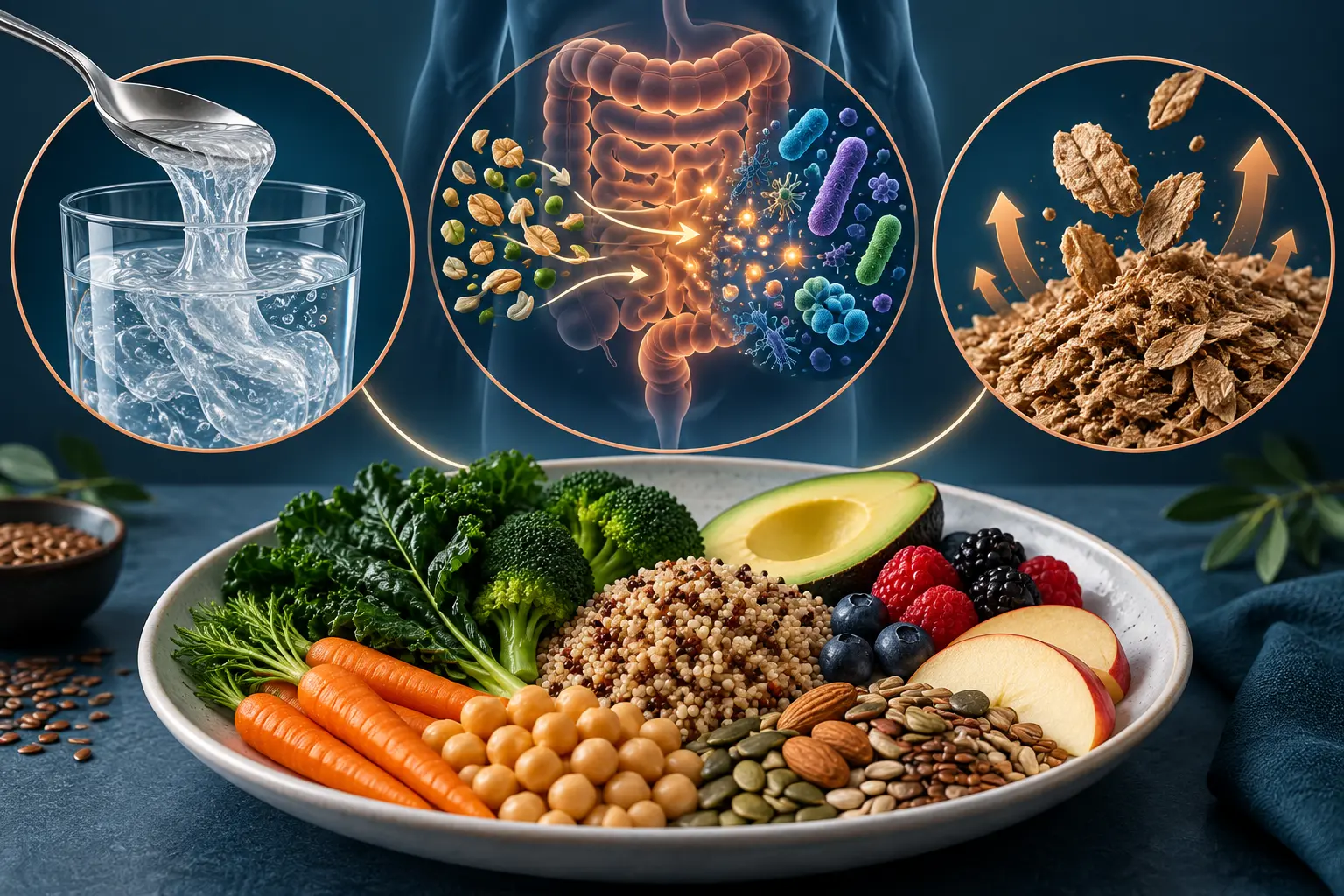
Match the property to the job
Build a mixed-fiber day
Start with oats or whole-grain cereal and fruit, include beans or lentils at one meal, choose vegetables at two meals, and add nuts or seeds if appropriate. This naturally combines viscous, fermentable, and insoluble material. Rotate foods across the week rather than chasing a perfect soluble-to-insoluble ratio, because no official target requires that split.
Measure progress with the outcome that matters. For appetite, rate hunger before and two hours after a repeated meal. For regularity, note stool frequency, form, urgency, and discomfort. For weight management, use weekly averages and waist trends while checking that the fiber change did not add large portions of oils, granola, or snack bars.
Common mistakes and safety limits
A “high-fiber” front label can sit on an energy-dense product. Read serving size, calories, protein, added sugar, and the ingredient list. Purified fibers may raise the fiber number without making the food as filling as beans or intact grains. Conversely, rejecting a food because it contains more insoluble than soluble fiber misses its complete nutritional role.
Increase intake gradually. Large jumps can cause gas, bloating, cramps, constipation, or diarrhea. People with swallowing problems, bowel strictures, severe motility disorders, or recent gastrointestinal surgery need individualized advice. Persistent symptoms are not proof that the microbiome is “detoxing.”
Good sources of each type
- Soluble: oats, barley, beans, lentils, apples, citrus fruits, carrots, psyllium.
- Insoluble: wheat bran, whole-wheat products, nuts, seeds, vegetable skins, cauliflower, green beans.
Most plant foods contain both types in varying amounts, so a varied diet provides a mix.
Which helps weight more
Viscous soluble fibers such as those in oats, psyllium and glucomannan have the most evidence for increasing fullness and modestly supporting weight loss. Insoluble fiber mainly supports bowel regularity. Both are linked with better long-term health.
Where Fat Burn Active fits
Fat Burn Active is optional and is not a substitute for fiber-rich food, adequate fluid, an appropriate calorie gap, or clinical care. Ingredient evidence does not prove that the complete formula will reproduce the same effect, and a stimulant sensation is not evidence of fat loss.
Once the practical steps in this guide are working, decide whether an optional supplement adds enough value. Start with the Fat Burn Active review; if the formula and limitations are acceptable, see the current price on the official site. We may receive a commission.
Frequently asked questions
Does more fiber always mean more weight loss?
No. Fiber can support fullness, food quality, or regularity, but body-fat change still depends on sustained energy balance. Extra fiber can also add discomfort without improving intake.
How quickly should I increase fiber?
Increase gradually and assess tolerance. Sudden large changes commonly cause gas, bloating, cramps, or altered stools. Fluid needs and the safest pace vary.
Can fiber replace vegetables and whole foods?
No. An isolated fiber may provide a specific physical effect, but whole foods also provide protein, micronutrients, water, and diverse plant compounds.
When should I seek medical advice?
Get advice for swallowing difficulty, bowel narrowing or obstruction history, severe or persistent pain, vomiting, bleeding, unexplained weight loss, major bowel changes, pregnancy, or complex medicine schedules.
Sources
- National Academies: Dietary Reference Intakes
- Dietary Fiber and Satiety Review
- Dietary Guidelines for Americans
- NIDDK: Eating, Diet, and Nutrition for Constipation
Sources reviewed September 15, 2026. This article is general educational information, not medical advice, diagnosis, or treatment.