Use two axes instead of one label
Portion by role, not by moral category
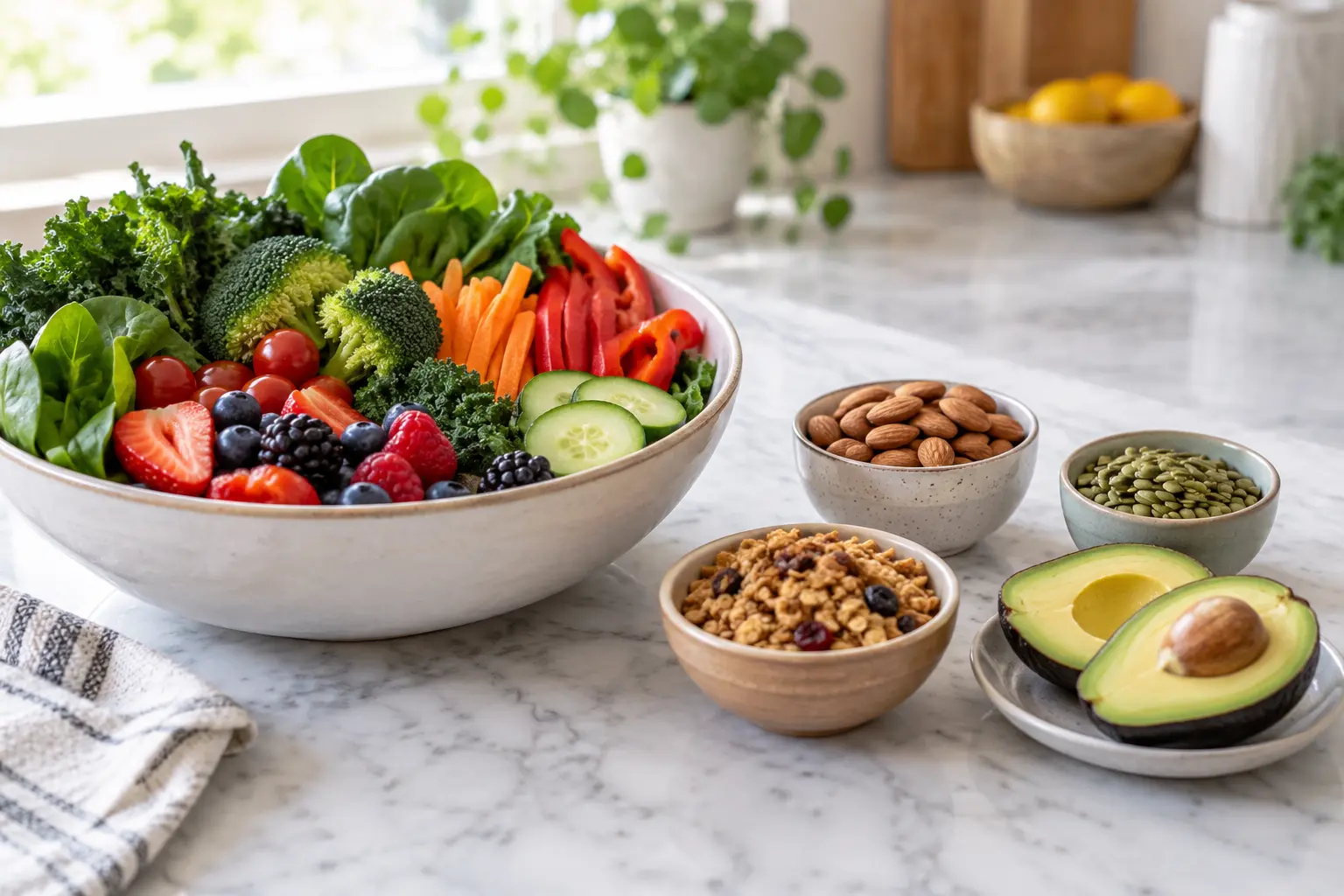
Nuts and seeds can add flavor, unsaturated fats, minerals, and fiber, but a handful can grow invisibly when eaten from a bag. Granola may combine oats, oil, sweeteners, nuts, and dried fruit. Avocado can be a useful fat source but is not interchangeable with a low-calorie vegetable. Dried fruit is compact because much of the water has been removed.
Serve these foods into a bowl or onto the meal, then pair them with higher-volume components. The goal is not to label them bad; it is to make their role visible.
Example: a healthy bowl that outgrew its job
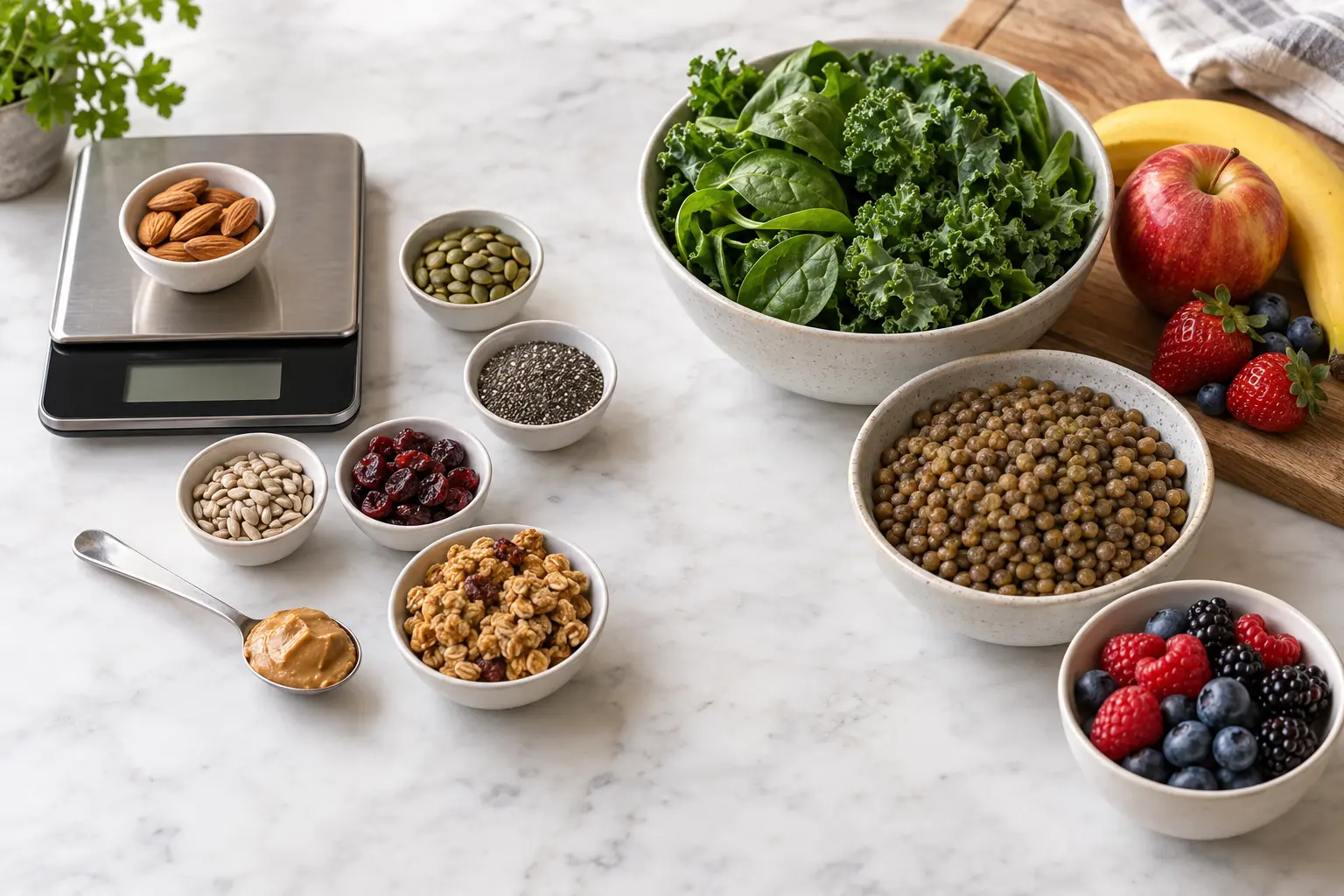
Noah builds a snack with yogurt, granola, almonds, chia, nut butter, and dried fruit. Every ingredient has nutritional value, but together they resemble a large meal. He keeps yogurt and berries, chooses either granola or nuts in a measured portion, and uses the larger combination when it is intended to replace lunch.
Calorie-dense foods that are also high in fiber
- Nuts and seeds: about 160–200 calories per 28 g handful, with 2–4 g of fiber.
- Dried fruit: the water is removed, so a small box of raisins has roughly the calories of a large bunch of fresh grapes.
- Granola and muesli bars: often made with oil, honey or syrup; a cup of granola can exceed 400 calories.
- Avocado: nutritious and fiber-rich, but a whole one is around 240 calories.
- High-fiber crackers and breads with seeds: filling, but portions add up quickly with spreads.
These foods fit well in a weight-loss diet when the portion is chosen deliberately.
Higher-volume alternatives for the same fiber
To get fiber with fewer calories, lean on vegetables, berries, apples, pears, beans, lentils, oats cooked in water and whole grains like barley. Fresh fruit instead of dried, a measured tablespoon of seeds instead of a handful, and plain oats instead of granola keep most of the fiber while cutting calories substantially.
What to check on the label
Read the serving size first, then calories and fiber per serving. Compare products using calories per serving you actually eat, not per the label's small serving. Watch for added sugars and oils in "high-fiber" cereals and bars, and note that some products add isolated fibers such as inulin, which add grams of fiber without the bulk of whole foods.
Where a supplement fits
A fat burner does not change the calorie content of food. Portioning energy-dense foods is the practical step.
A supplement is not required to benefit from this guide. If your foundations are already in place, use the independent Fat Burn Active review to judge whether the formula has a useful optional role. If it fits your expectations and stimulant tolerance, check the current price on the official site. We may receive a commission.
Frequently asked questions
Are nuts bad for weight loss?
No. They can fit well, but their energy density makes the actual portion relevant.
Is every high-fiber product filling?
No. Food structure, water, protein, portion, palatability, and the person all influence fullness.
Should I avoid avocado and seeds?
No. Treat them as useful energy-containing ingredients and portion them according to the meal.
Sources
- USDA FoodData Central
- FDA: Nutrition Facts Label
- FDA: Dietary Fiber
- Dietary Guidelines for Americans
- NIDDK Weight-Loss Programs
Sources reviewed September 17, 2026. This article is general educational information, not medical advice, diagnosis, or treatment.