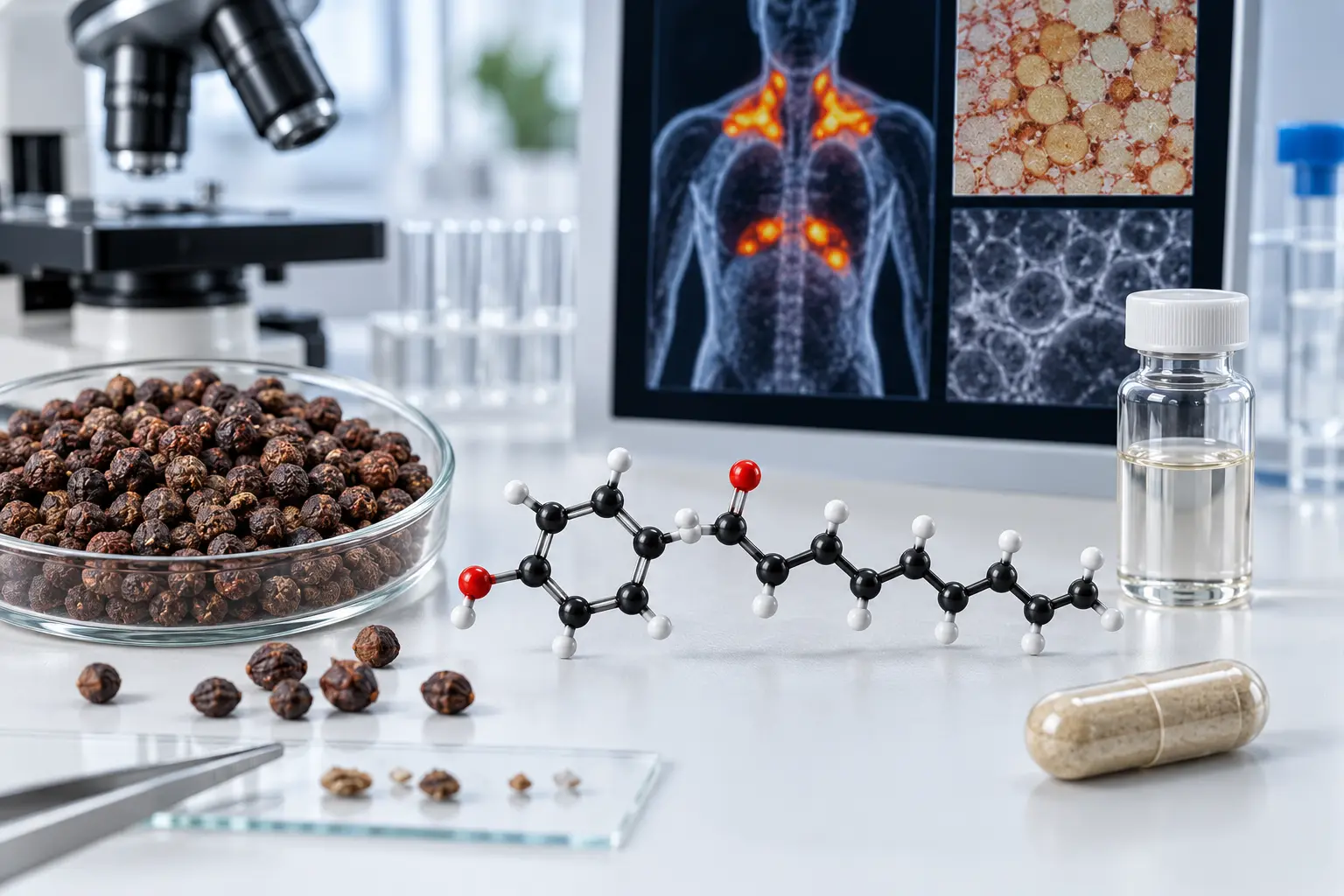
Separate compound from botanical
6-Paradol is a pungent phenolic compound found in grains of paradise and related ginger-family chemistry. A whole extract may also contain gingerols, shogaols, fats, and other constituents. Standardization to 6-paradol improves dose description but does not prove that 6-paradol alone caused the complete effect.
A purified compound, a standardized extract, and seed powder require separate evidence rows. Labels that use these names interchangeably block accurate interpretation.
The strongest isolated-compound mechanism is preclinical
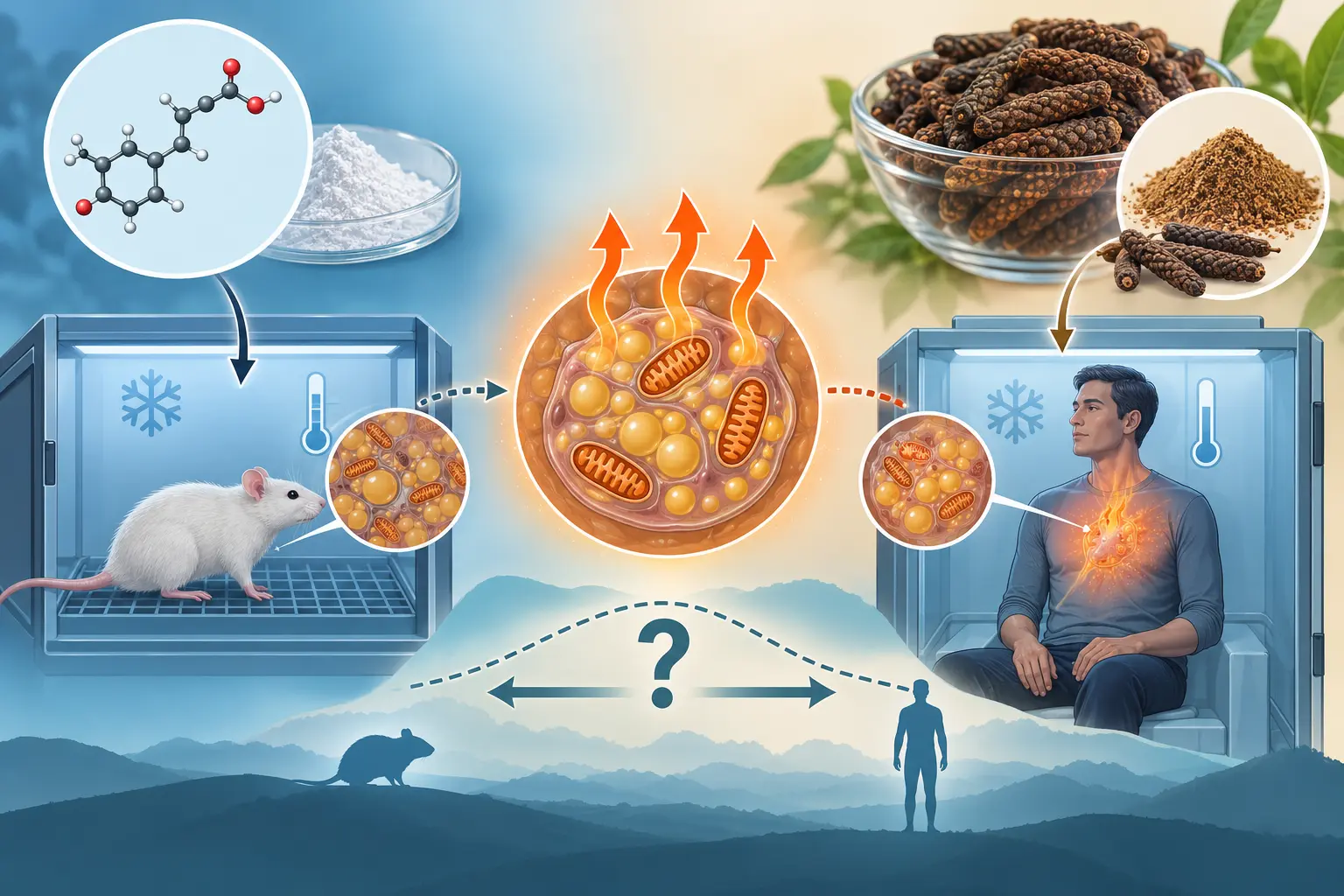
Rodent work reports sympathetic activity and brown-adipose thermogenesis after grains-of-paradise extract or isolated 6-paradol. Other animal research reports changes in weight gain, fat depots, or metabolic gene expression. These findings can guide hypotheses and dose exploration.
They cannot establish human effectiveness, a consumer dose, or long-term safety. Species metabolism, administration route, controlled feeding, and relative exposure can differ greatly from supplement use.
Human extract data do not close the isolation gap
Human trials of grains-of-paradise extract sometimes disclose a measured 6-paradol amount and report expenditure or body-fat outcomes. That makes 6-paradol relevant to characterization, but the intervention remains a mixture. Other constituents or interactions may contribute.
Require a purified-6-paradol randomized trial before making an isolated-compound weight claim. Until then, say exactly what was tested and avoid “clinically proven 6-paradol.”
Example: standardization becomes attribution
An extract provides 5 mg 6-paradol and a small human trial reports a thermogenic response. A seller launches a purified 5 mg 6-paradol capsule and cites the trial as an exact dose match. The milligrams match, but the intervention matrix does not.
The buyer records the evidence as indirect and asks for research on the isolated sold material. Chemical precision cannot repair a missing clinical comparison.
A realistic expectation
Even in the human studies with grains of paradise extract, the extra energy expenditure was small and concentrated in people with active brown fat under cool conditions. For most people, any effect would be far smaller than the calorie change from a modest dietary adjustment.
Where Fat Burn Active fits
Neither purified 6-paradol nor a grains-of-paradise standardization is identified in the currently available Fat Burn Active information. Those studies should not be transferred to it.
Fat Burn Active is optional and not required for fat loss. Ingredient plausibility cannot substitute for finished-product evidence, a complete dose match, or a sustainable calorie deficit. Sensation, sweating, appetite suppression, and short-term water change do not prove meaningful fat loss.
The official Fat Burn Active page lists a multi-ingredient thermogenic formula, but the buying decision should follow the evidence check above. Compare our independent review, then, if the product remains a reasonable fit, check the current price and label on the official site. We may receive a commission at no additional cost.
Frequently asked questions
Is 6-paradol the same as grains of paradise?
No. It is one constituent; the botanical contains a mixture of compounds.
Has isolated 6-paradol been proven for human weight loss?
No robust direct human evidence establishes that claim.
Does brown-fat activation guarantee weight loss?
No. A mechanistic response does not determine long-term energy balance or body weight.
Sources
- 6-Paradol and grains-of-paradise thermogenesis in rats
- 6-Paradol anti-obesity study in mice
- Grains-of-paradise extract human expenditure trial
- Aframomum extract randomized human trial
Sources reviewed September 14, 2026. This article is general educational information, not medical advice, diagnosis, or treatment.