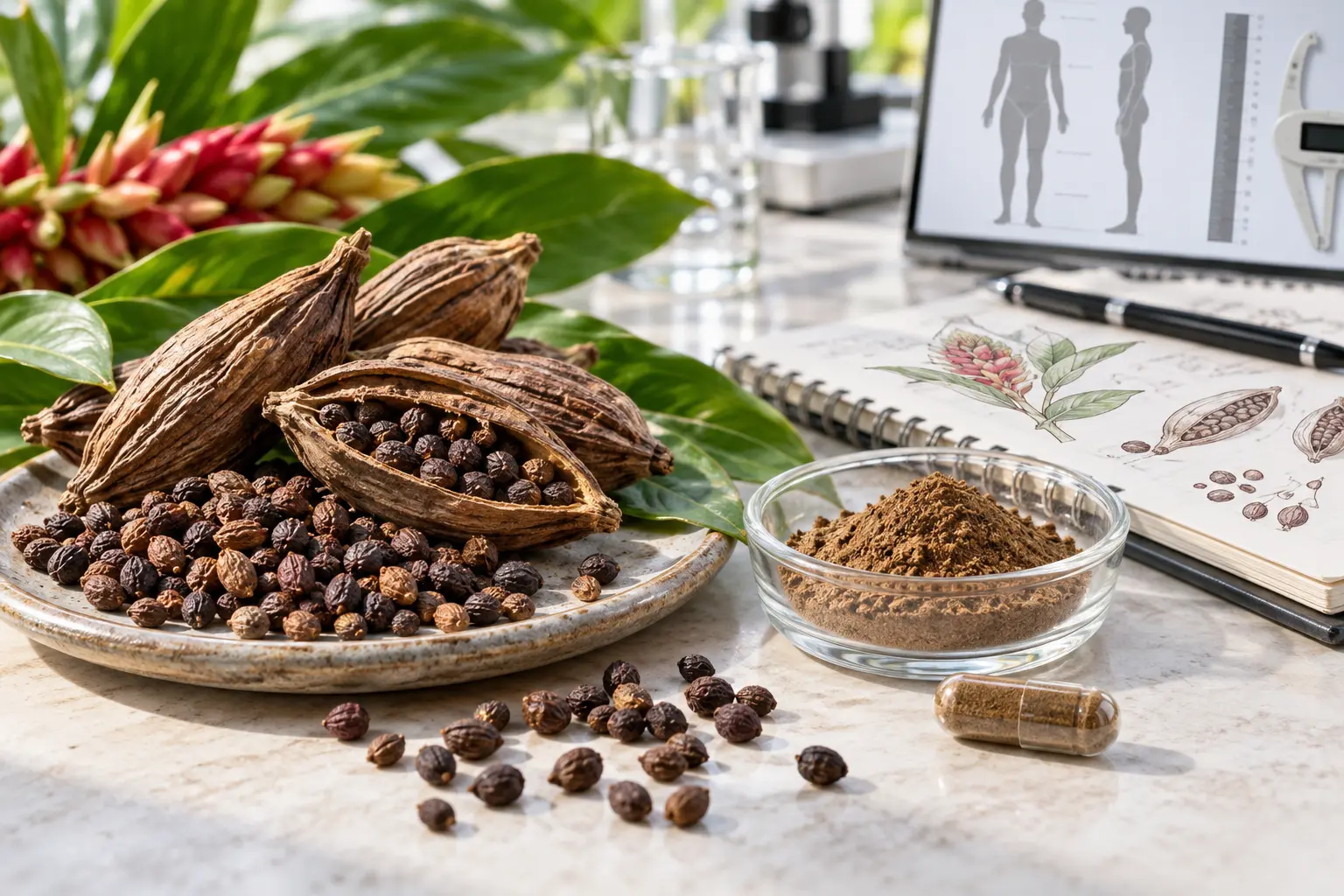
Confirm the botanical and the extract
Grains of paradise usually refers to Aframomum melegueta, a ginger-family plant whose seeds contain pungent compounds including 6-paradol, 6-gingerol, and 6-shogaol. Whole culinary seeds and an alcohol extract standardized for a constituent are not equivalent exposures.
Record Latin name, plant part, extraction method, extract amount, 6-paradol content, other standardization, serving, and maximum day. A botanical name alone cannot reproduce a study.
Brown adipose tissue changes who may respond
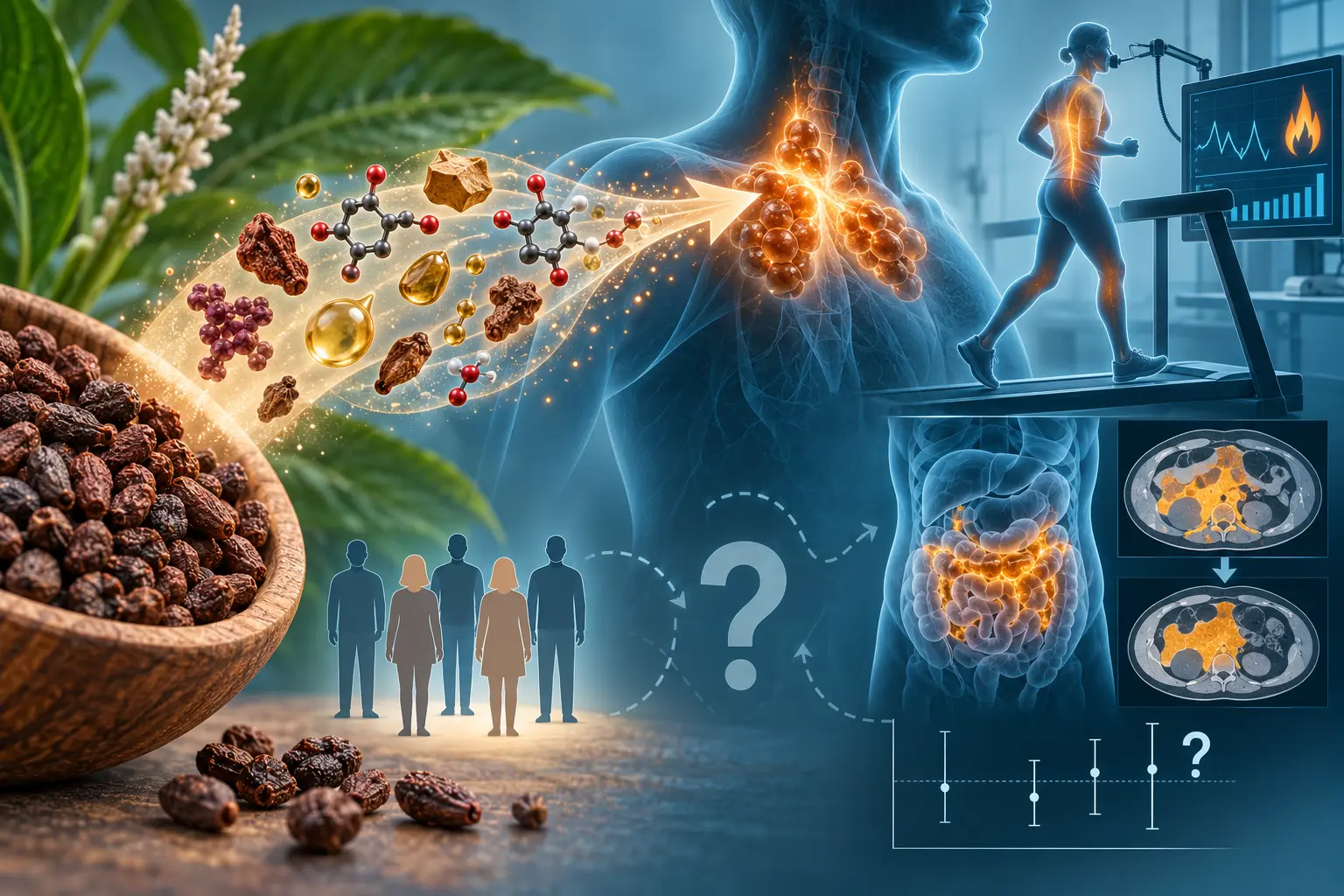
Brown adipose tissue can contribute to adaptive thermogenesis. One small acute study found an expenditure response after grains-of-paradise extract in men with active brown fat but not the same response in those with low activity. This makes participant selection central, not a footnote.
Consumers usually do not know their brown-fat activity, and research imaging is not a routine shopping test. A group-specific signal cannot become a universal promise.
Body-fat findings need proportion
Small longer studies have reported changes in visceral fat or adaptive thermogenesis under defined conditions. Examine sex, starting brown-fat status, diet, duration, imaging method, funding, and whether total body weight or subcutaneous fat changed. Visceral-fat findings do not mean spot reduction can be directed.
Replication by larger independent trials would make the estimate more stable and clarify safety across broader populations.
Example: spice name, different evidence object
A supplement lists 500 mg grains-of-paradise powder. The cited trial used 40 mg of a defined extract containing a measured amount of 6-paradol. Comparing 500 with 40 suggests the powder is stronger, but the extraction and active exposure differ.
The correct audit refuses the milligram comparison until constituent data exist. Culinary familiarity also does not establish concentrated-use safety.
Doses studied
The small human studies of grains of paradise (Aframomum melegueta) extract, mostly from Japan, used about 30–40 mg of extract a day for several weeks. Effects on energy expenditure were seen mainly in people with active brown fat and under cool conditions, and changes in body fat were modest.
Safety
Grains of paradise is used as a culinary spice, and short-term studies of the extract reported few side effects. Data on long-term use and on combinations with stimulants are limited. People who are pregnant, breastfeeding or taking multiple supplements should be cautious.
Where a supplement fits
Fat Burn Active lists grains of paradise. Whether its amount matches the studied extract can be checked in our ingredient review; the finished product itself has not been tested.
Grains of paradise or a standardized 6-paradol dose is not identified in the currently available Fat Burn Active information. Research on this botanical cannot validate the product.
Use the criteria on this page to assess Fat Burn Active rather than relying on a headline claim. Our formula evidence analysis explains the remaining uncertainty. If the product fits your needs, see the current price on the official website. We may earn a commission at no extra cost.
Frequently asked questions
Is grains of paradise black pepper?
No. It is a different botanical, commonly identified as Aframomum melegueta.
Does it activate brown fat in everyone?
No. Small research suggests baseline brown-fat activity may influence the response.
Does visceral-fat research prove belly-fat targeting?
No. Limited group findings do not establish controllable spot reduction.
Sources
- Grains of paradise, BAT and expenditure trial
- Daily grains-of-paradise extract body-fat trial
- Prolonged grains-of-paradise thermogenesis trial
- Aframomum extract randomized trial
Sources reviewed September 14, 2026. This article is general educational information, not medical advice, diagnosis, or treatment.