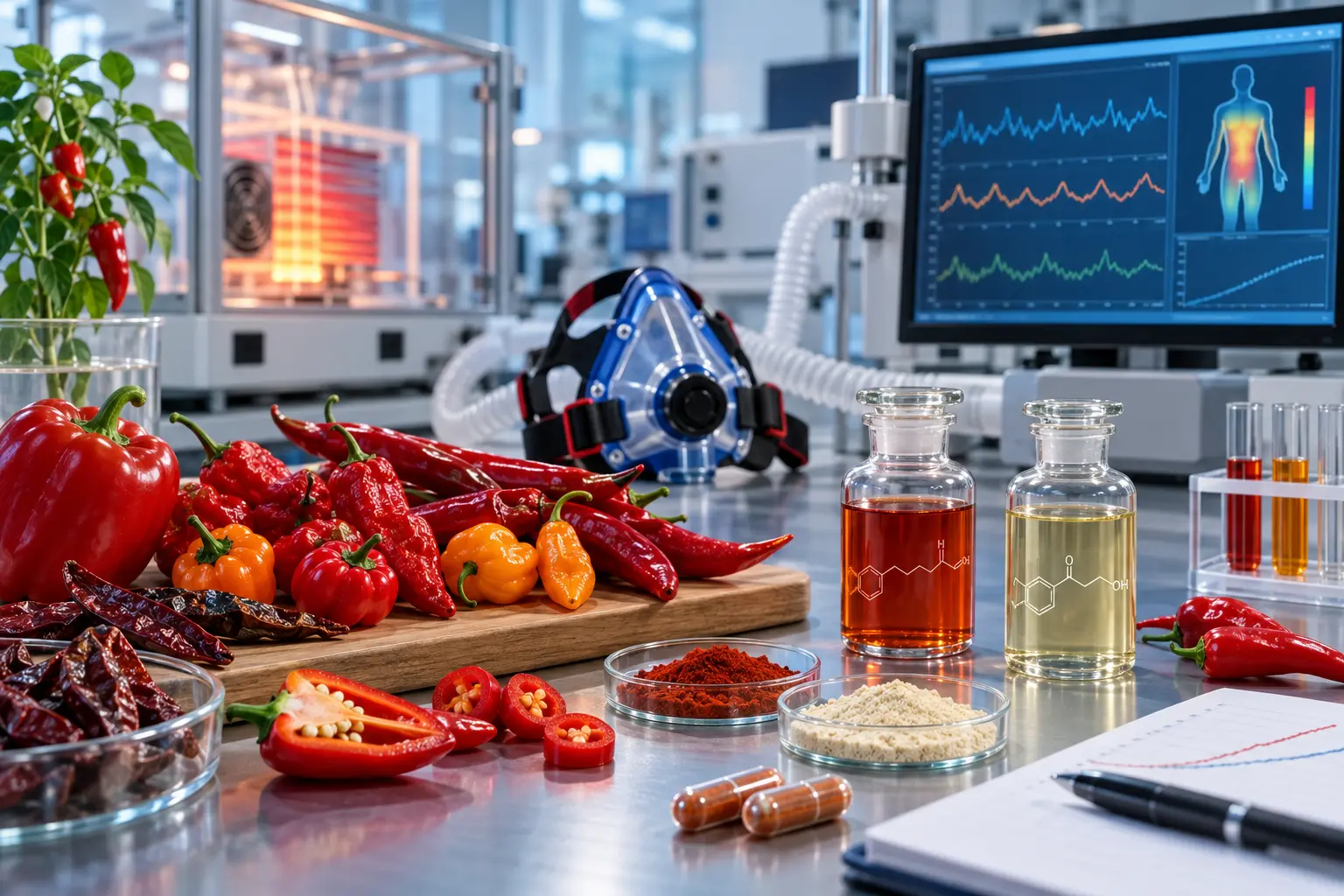
TRPV1 begins the hypothesis
Capsaicin activates transient receptor potential vanilloid 1, a channel involved in heat and irritation sensing. Researchers then examine sympathetic signaling, catecholamines, brown adipose tissue, substrate oxidation, appetite, and expenditure. This sequence creates a plausible mechanism for testing.
It does not allow a shortcut from receptor activation to kilograms lost. Each step can be small, temporary, variable, or offset elsewhere in daily energy balance.
Know what the instrument measured
Indirect calorimetry estimates energy expenditure and substrate use from respiratory gases. Resting metabolic rate, post-meal thermogenesis, respiratory quotient, and fat oxidation are related but distinct endpoints. A lower respiratory quotient does not prove net body-fat loss if total intake offsets oxidation.
A meta-analysis has reported a modest pooled increase in resting metabolic rate. Put that average beside daily food variation and possible behavioral compensation before calling it meaningful.
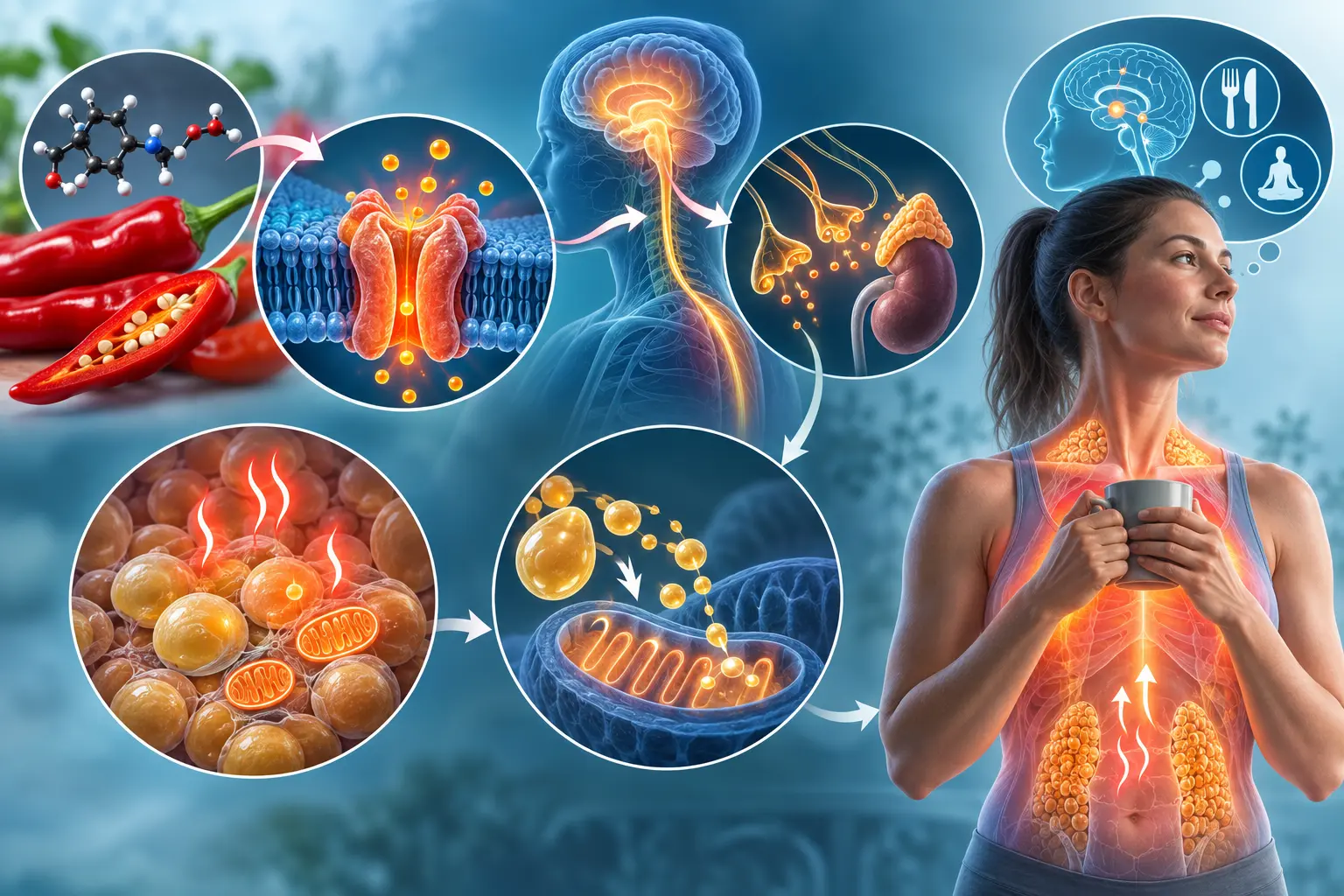
The body and behavior do not stay frozen
People may become accustomed to pungency, change portions, move less, sleep differently, or stop a product because of gastrointestinal symptoms. Extrapolating one laboratory session across months assumes those responses do not occur.
Longer trials with body-composition outcomes deserve more weight than a single calorimetry curve. Record both the acute signal and the downstream behavior it is supposed to improve.
Example: converting a daily estimate into a promise
A review reports a small average rise in resting expenditure. Marketing multiplies that number by 365 and converts it into predicted fat loss. The calculation assumes a constant response, perfect adherence, no intake change, no metabolic adaptation, and no measurement error.
A responsible interpretation reports the observed endpoint and uncertainty. It does not convert a brief group average into a guaranteed annual result.
How large the effect is
Meta-analyses of capsaicinoid studies suggest an increase in energy expenditure of roughly 50 calories a day at the doses tested, with some studies showing small increases in fat oxidation and reductions in appetite. These effects may fade with regular use and are small compared with a typical diet change.
Side effects
Burning sensation, stomach upset and heartburn are common, especially at higher doses. Capsiates, non-pungent relatives found in some sweet peppers, cause fewer of these effects but have their own limited evidence.
Where Fat Burn Active fits
A pepper-related component in Fat Burn Active would require a defined active dose before thermogenesis research could be matched. An acute pathway still would not prove the finished product causes meaningful fat loss.
Fat Burn Active is optional and not required for fat loss. Ingredient plausibility cannot substitute for finished-product evidence, a complete dose match, or a sustainable calorie deficit. Sensation, sweating, appetite suppression, and short-term water change do not prove meaningful fat loss.
Fat Burn Active is relevant here because its official listing identifies standardized plant extracts, caffeine sources, vitamins, and zinc in one formula. First read our independent review. If the formula, stimulant profile, evidence limits, and warnings fit your situation, check the current Fat Burn Active price on the official website. We may receive a commission at no additional cost.
Frequently asked questions
What is thermogenesis?
It is heat production; studies may infer it through measured energy expenditure.
Does more fat oxidation mean fat loss?
Not necessarily. Net fat change also depends on storage and total energy balance over time.
Are capsinoids capsaicin?
They are related compounds, not interchangeable doses.
Sources
- NIH ODS: Dietary Supplements for Weight Loss
- Capsaicinoids and thermogenesis meta-analysis
- Capsaicin and capsiate energy-balance review
- Capsinoids, expenditure and lipid oxidation trial
Sources reviewed September 14, 2026. This article is general educational information, not medical advice, diagnosis, or treatment.