Source and formulation matter
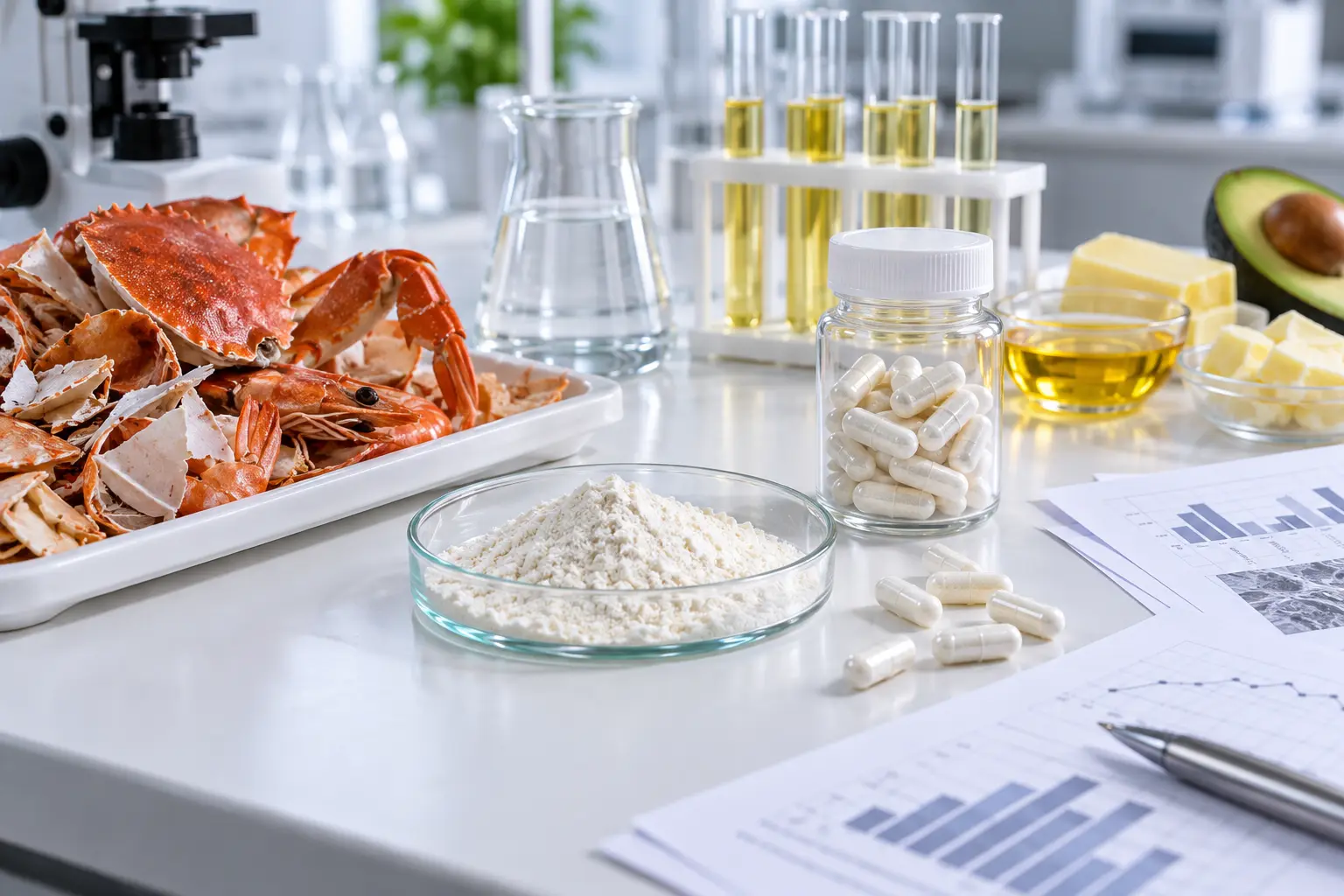
Chitosan is produced by deacetylating chitin, often from crustacean shells, though fungal sources also exist. Molecular weight, degree of deacetylation, particle size, solubility, dose, and formulation can change behavior. A large capsule count does not prove effective lipid binding.
People with relevant allergies should verify the source and manufacturing controls rather than assuming purified material is automatically suitable. Shellfish allergy usually concerns proteins, but contamination and individual circumstances still warrant label review and professional advice.
Measure absorption instead of imagining it
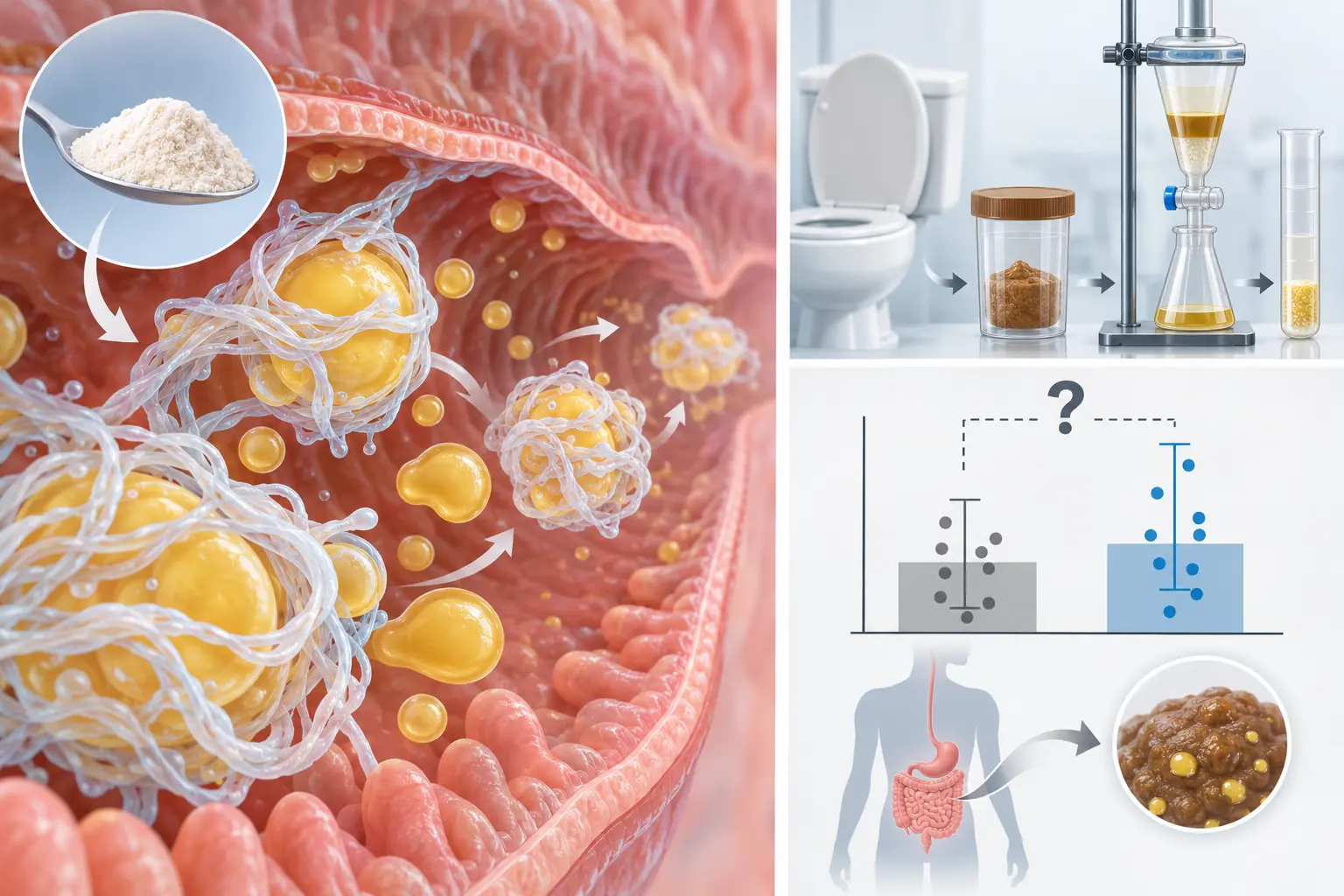
If dietary fat is meaningfully prevented from being absorbed, controlled feeding and fecal-fat measurements should detect the difference. A human balance study found the tested chitosan supplement did not increase fecal fat enough to support the advertised blocking claim.
Scale change alone cannot prove the mechanism. Water, food intake, bowel contents, counseling, and adherence can move weight. Trials also need to monitor constipation, bloating, nausea, and possible effects on medicines or fat-soluble nutrients.
Higher-quality trials shrink the expectation
Cochrane's review found that smaller or lower-quality studies produced more favorable estimates, while higher-quality trials indicated a minimal effect unlikely to be clinically meaningful. Newer meta-analyses can calculate pooled changes, but heterogeneity and study quality still determine confidence.
The category page compares chitosan with orlistat and other fat-blocking claims. This page stays ingredient-specific: the sold polymer must match the studied preparation, and evidence for a medicine cannot be borrowed.
Practical limits of a fat binder
Chitosan can only act on fat that is present in the meal. In studies measuring fat excreted in stool, the amount of dietary fat it blocks has been small, far below what marketing suggests. A Cochrane review found that apparent benefits were mainly in lower-quality trials, with little effect in better-designed studies.
Side effects and who should avoid it
Common side effects are constipation, bloating and nausea. Chitosan is usually made from shellfish shells, so people with shellfish allergy should avoid it. Because it may reduce absorption of fat-soluble vitamins and some medicines, take medicines at a different time and seek advice if you use it regularly.
Where a supplement fits
Chitosan is not part of Fat Burn Active, and fat-binding evidence does not apply to a thermogenic formula.
Chitosan is not identified in the currently available Fat Burn Active information. Fat-binding research cannot validate its formula.
Fat Burn Active is relevant here because its official listing identifies standardized plant extracts, caffeine sources, vitamins, and zinc in one formula. First read our independent review. If the formula, stimulant profile, evidence limits, and warnings fit your situation, check the current Fat Burn Active price on the official website. We may receive a commission at no additional cost.
Frequently asked questions
Is chitosan the same as orlistat?
No. They differ in mechanism, regulation, evidence, dosing, and risks.
Does chitosan remove stored body fat?
No. The claim concerns dietary fat in the gut, not adipose tissue.
Do bowel changes prove it works?
No. Symptoms are not a measurement of useful fat malabsorption.
Sources
- Cochrane: Chitosan for overweight or obesity
- Chitosan fecal-fat balance study
- Chitosan systematic review and meta-analysis
- NIH ODS: Dietary Supplements for Weight Loss
Sources reviewed September 14, 2026. This article is general educational information, not medical advice, diagnosis, or treatment.