The short answer
Supplement fat blockers—usually chitosan products—are marketed as binding dietary fat, but laboratory binding is not proof of meaningful long-term fat loss in people. No supplement cancels the energy in an unrestricted diet, and a plausible mechanism is not the same as a clinically meaningful result.
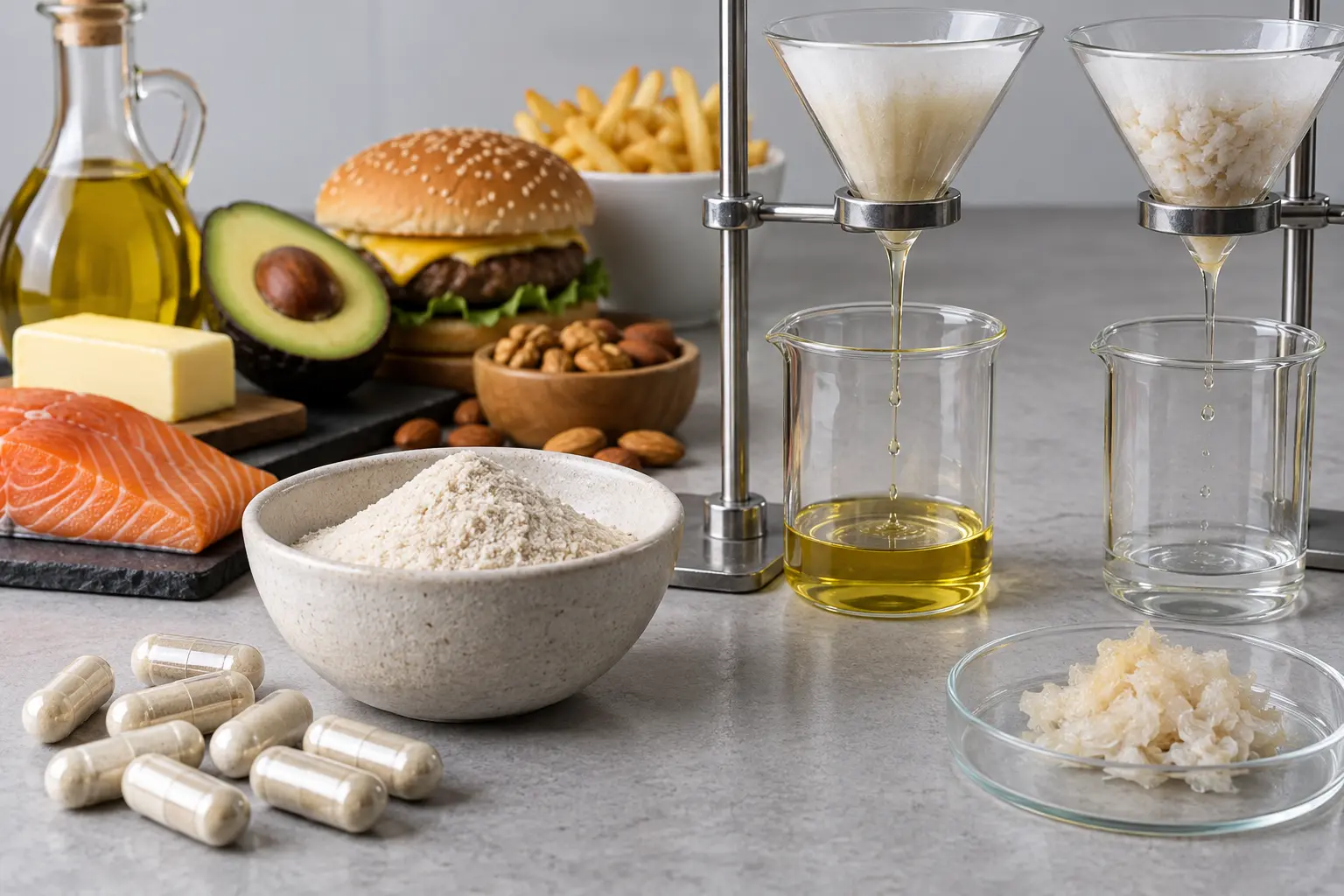
Chitosan is a fiber-like material derived from chitin. The proposed mechanism is binding some fat in the digestive tract so less is absorbed. Real digestion is more complex than a beaker experiment: dose, meal composition, acidity, timing, and adaptation all affect what happens.
What the claim means—and what it does not
Systematic reviews have found small or uncertain average effects, with higher-quality trials generally less impressive than early marketing. Chitosan supplements must not be confused with orlistat, a medicine that inhibits lipase and has its own evidence, labeling, contraindications, and adverse-effect profile.

Worked example
A product demonstrates that its powder captures oil in a glass. That experiment establishes a physical interaction under laboratory conditions. It does not show how much fat is prevented from absorption in a human meal or whether body fat changes after months.
Related Active Body Hub guides
Read the evidence review of chitosan for fat absorption and our broader answer to whether fat burners can block fat absorption.
Binding fat in a test tube is not a body-weight outcome
Supplement fat blockers often use chitosan and propose that it binds some dietary fat in the digestive tract. The mechanism is testable, but the marketing leap is much larger: how much fat is bound in a real mixed meal, whether that changes net energy intake across weeks, and whether weight differs meaningfully from placebo. Look for randomized human outcomes rather than a laboratory demonstration or a diagram of fat molecules attaching to a fiber-like substance.
Do not confuse a supplement with prescription orlistat. They differ in mechanism, evidence, regulation, dosing, and potential adverse effects. A seller's reference to a medicine's outcomes cannot substantiate a chitosan capsule. Check the exact chitosan source and dose in the cited trial against the current label. If the product lists a proprietary blend, even the basic dose comparison may be impossible.
A fat-blocking claim can also create a behavioral trap: the impression that a higher-fat meal no longer counts. No capsule makes intake irrelevant. Digestive tolerance, allergy considerations related to ingredient source, and medicines deserve attention. People who have symptoms or relevant conditions should ask a clinician or pharmacist, not increase the dose to chase a stronger binding effect.
For a practical verdict, write the absolute between-group weight difference, study duration, daily serving, adverse events, and what the product would cost for the same period. If the effect is small or uncertain, compare that cost with changes that improve the whole food pattern. A fiber supplement may support fullness through a different pathway; a carbohydrate blocker targets starch digestion. Those categories should be evaluated separately, not ranked by which label sounds most powerful.
Where Fat Burn Active fits
Use the criteria on this page to assess Fat Burn Active rather than relying on a headline claim. Our formula evidence analysis explains the remaining uncertainty. If the product fits your needs, see the current price on the official website. We may earn a commission at no extra cost.
Sources
- Cochrane: Chitosan for overweight or obesity
- Chitosan evidence review
- Meta-analysis of chitosan randomized trials
- NIH ODS: Weight-loss dietary supplements
- Dietary supplements for body-weight reduction review
Evidence reviewed September 16, 2026. Educational information only; not medical advice.