
What is the practical difference?
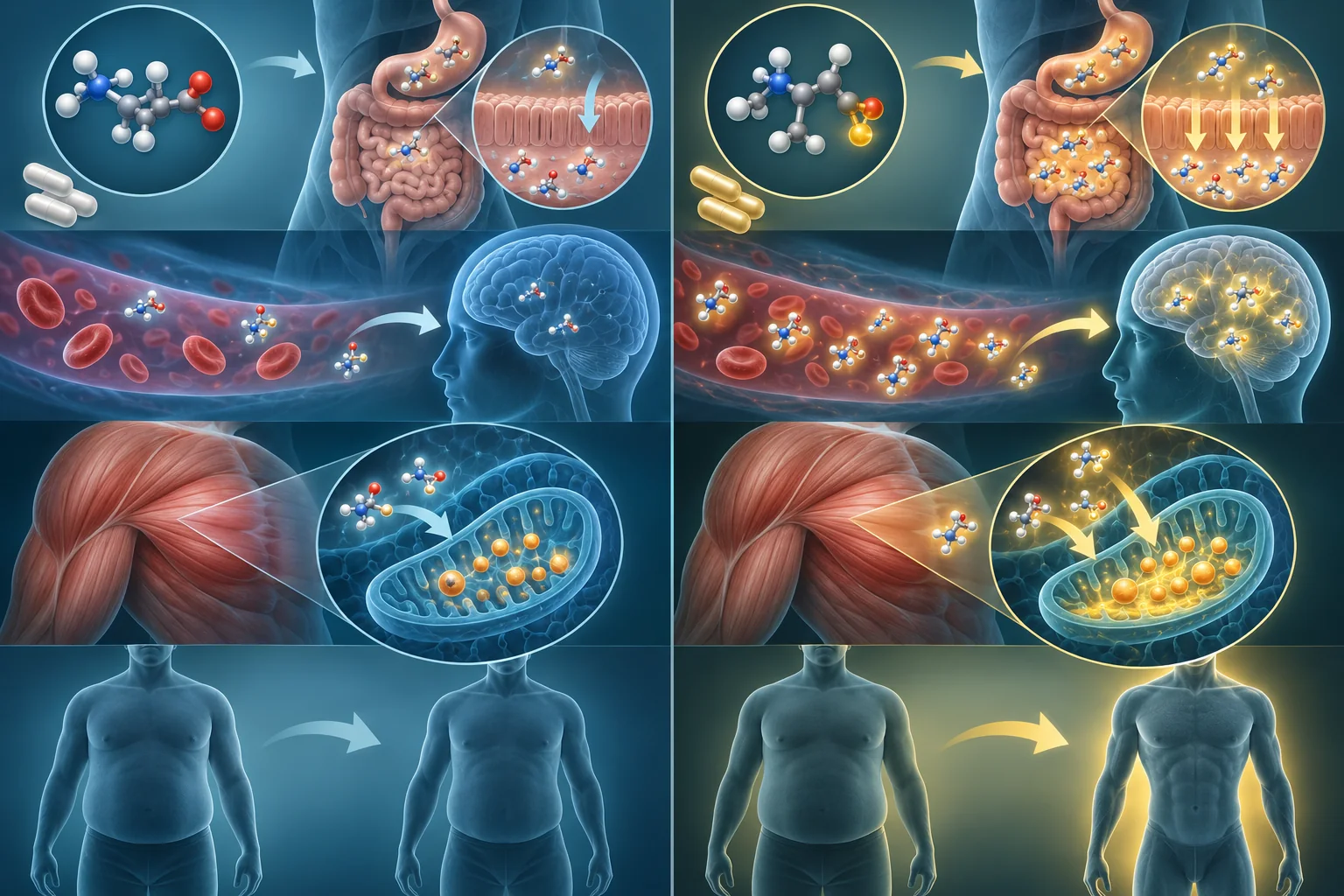
L-carnitine helps transport long-chain fatty acids into mitochondria, where they can be oxidized. Acetyl-L-carnitine, often shortened to ALCAR, is an acetylated derivative that crosses the blood-brain barrier more readily and participates in acetyl-group metabolism. These biochemical differences create different research traditions, but they do not automatically create different weight-loss effects.
Most commercial comparisons jump from “mitochondrial transport” to “burns stored fat.” That leap ignores the rate-limiting role of energy balance, carnitine status, transport into muscle, dose, duration, and the population studied. A molecule participating in fat metabolism is not proof that supplementing it causes meaningful fat loss.
What human weight-loss evidence shows
Meta-analyses of L-carnitine trials have reported small average reductions in body weight or related measures, with substantial differences among studies. Trials vary in baseline weight, health status, co-interventions, form, dose, length, and risk of bias. A small pooled result should not be presented as a predictable personal outcome.
ALCAR research is more commonly focused on neurologic, fatigue, or metabolic contexts than on direct weight-management trials. Evidence from standard L-carnitine cannot simply be transferred to ALCAR milligram for milligram. If a seller claims the acetyl form is superior for fat loss, ask for direct randomized human comparisons using relevant outcomes.
Is one form better for body fat?
There is no strong direct evidence that ALCAR produces more weight or fat loss than standard L-carnitine. Standard L-carnitine is the better-researched category for this specific question, but “better researched” does not mean the benefit is large or certain. Some apparent advantages may reflect the people enrolled or accompanying diet and exercise programs.
A fair comparison requires equivalent active exposure, matched populations, a credible control, sufficient duration, and body-composition outcomes—not only blood carnitine, exercise markers, or subjective energy. Without that trial, superiority remains a marketing inference.
Labels may use several carnitine forms
Products can list L-carnitine, L-carnitine L-tartrate, acetyl-L-carnitine hydrochloride, propionyl-L-carnitine, or blends. The compound weight and the amount of elemental or active carnitine are not always communicated consistently. Do not assume equal milligrams across salts and forms.
Check the exact chemical form, amount per full daily serving, number of capsules, added stimulants, and whether the cited research tested the same material. A proprietary blend prevents a reliable evidence match. Third-party identity testing improves confidence in contents but does not prove weight-loss efficacy.
Who might respond differently?
Carnitine status and clinical context may influence results. People with specific deficiencies or medical conditions are not interchangeable with healthy adults buying a fat-loss supplement. Findings in older adults, dialysis patients, people with diabetes, or athletes should not be generalized without caution.
Dietary pattern matters because carnitine is found mainly in animal foods and the body also synthesizes it. A vegan diet does not automatically mean clinically important deficiency or guaranteed response. Testing and medical context, not identity labels, should guide treatment of deficiency.
Safety, tolerability, and interactions
Carnitine supplements can cause nausea, abdominal cramps, diarrhea, or a fishy body odor. High doses and long-term use deserve professional review, particularly with seizure history, thyroid treatment, kidney disease, pregnancy, or medicines. Product purity and dose transparency matter.
Do not combine forms to create a “complete carnitine stack.” That raises exposure without establishing added weight-loss benefit. Record the product, dose, timing, symptoms, and relevant clinical advice.
A sensible buying decision
For weight management alone, do not pay extra for ALCAR based on “brain access” or a more advanced name. Consider standard L-carnitine only with modest expectations and a label that matches the evidence reasonably well. Skip either form when claims promise rapid fat burning, targeted belly-fat loss, or transformation without dietary change.
Set a review date and track a weight trend, waist, adherence, training, and adverse effects. If no meaningful benefit appears, continued spending is not justified by a biochemical mechanism.
Cost also belongs in the evidence decision. Compare the monthly price with the likely absolute benefit and with alternatives such as higher-fiber foods, protein, activity support, sleep treatment, or professional nutrition care. An inexpensive capsule can still be poor value when the expected outcome is negligible or the label cannot be matched to research.
How this compares with Fat Burn Active
The official Fat Burn Active listing emphasizes a multi-ingredient thermogenic formula rather than carnitine as its central proposition. Carnitine evidence therefore does not prove that product, and thermogenic-ingredient evidence does not validate ALCAR. These are separate categories with different mechanisms and safety questions.
If comparing them, first decide whether you want a non-stimulant single ingredient or a stimulant-containing multi-ingredient formula. Then evaluate the exact label, finished-product evidence, sleep, medicines, and realistic effect size.
Frequently asked questions
Is ALCAR more bioavailable?
It has different distribution and is used in different research contexts, but that does not establish superior weight loss.
Can carnitine burn fat without exercise?
Participation in fatty-acid transport does not override energy balance or prove meaningful fat loss without lifestyle change.
Is L-carnitine a stimulant?
No, but finished products may combine it with caffeine or other stimulants.
Can vegans benefit more?
Dietary intake differs, but vegan status alone does not prove deficiency or a larger weight-loss response.
Sources
- NIH ODS: Weight-Loss Supplements
- NIH ODS: Carnitine Fact Sheet
- PubMed: L-Carnitine and Adult Weight Loss Meta-analysis
- PubMed: Carnitine Supplementation and Body Composition
- FDA: Dietary Supplement Questions and Answers
Sources reviewed September 18, 2026. Educational information only; not medical advice.